
Much like the words “blockchain”, “AI” and “cloud”, “smart contract” is one of those phrases that get a lot of hype.
After all, what can be better than being able to trust what will happen instead of using the judicial system? The promises of smart contracts include:
- Enforcing contracts automatically, trustlessly and impartially
- Taking out the middle men in contract construction, contract execution and contract enforcement
- (By implication) Removing lawyers
I sympathize with the hype. After all, how much more efficient could things be if we could just remove the need for trusting the other party to execute?
What the heck is a smart contract, anyway? And isn’t that the domain of Ethereum? Isn’t this the way of the future? Why would you stand in the way of progress?
In this article, I’m going to examine what smart contracts are and the engineering reality that goes with it (spoiler: it’s not so simple and very hard to secure).
What is a Smart Contract?
A normal contract is an agreement between two or more parties that binds them to something in the future. Alice may pay Bob some money in return for use of Bob’s house (aka rent). Charlie may agree to repair any damage to Denise’s car in the future in return for a monthly payment (aka car insurance).
What’s different about a “smart” contract is that the conditions are both evaluated and executed by computer code making it trustless. So if Alice agrees to pay Bob $500 for a couch for delivery 3 months from now (aka couch future), some code can determine whether the conditions are true (has Alice paid Bob? has it been 3 months yet?) and do the execution (deliver the couch from escrow) without giving either party the ability to back out.
The key feature of a smart contract is that it has trustless execution. That is, you don’t need to rely on a third party to execute various conditions. Instead of relying on the other party to make good on their word or even worse, relying on lawyers and the legal system to remedy things should something go wrong, a smart contract executes what’s supposed to happen timely and objectively.
Smart Contracts are Pretty Dumb
The use of the word “smart” implies that these contracts have some innate intelligence. They don’t. The smart part of the contract is in not needing the other party’s cooperation to execute the agreement. Instead of having to kick out the renters that aren’t paying, a “smart” contract would lock the non-paying renters out of their apartment. The execution of the agreed-to consequences are what make smart contracts powerful, not in the contracts innate intelligence.
A truly intelligent contract would take into account all the extenuating circumstances, look at the spirit of the contract and make rulings that are fair even in the most murky of circumstances. In other words, a truly smart contract would act like a really good judge. Instead, a “smart contract” in this context is not intelligent at all. It’s actually very rules based and follows the rules down to a T and can’t take any secondary considerations or the “spirit” of the law into account.
In other words, making a contract trustless means that we really can’t have any room for ambiguity, which brings up the next problem.
Smart Contracts are Really Hard
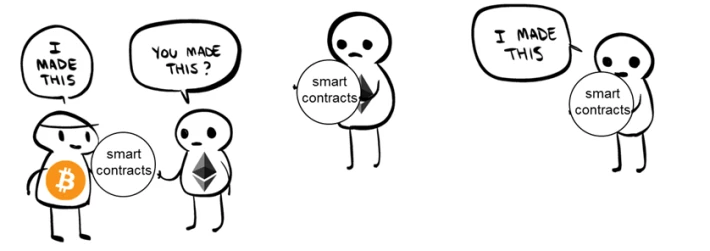
Because of a lot of centralized marketing from Ethereum, there’s a mistaken belief that Smart Contracts only exist in Ethereum. This is not true. Bitcoin has had, from the very beginning in 2009, a pretty extensive smart contract language called Script. In fact, smart contracts existed before Bitcoin as far back as 1995. The difference between Bitcoin’s smart contract language and Ethereum’s is that Ethereum’s is Turing-complete. That is, Solidity (ETH’s smart contract language) allows for more complicated contracts at the expense of making them more difficult to analyze.
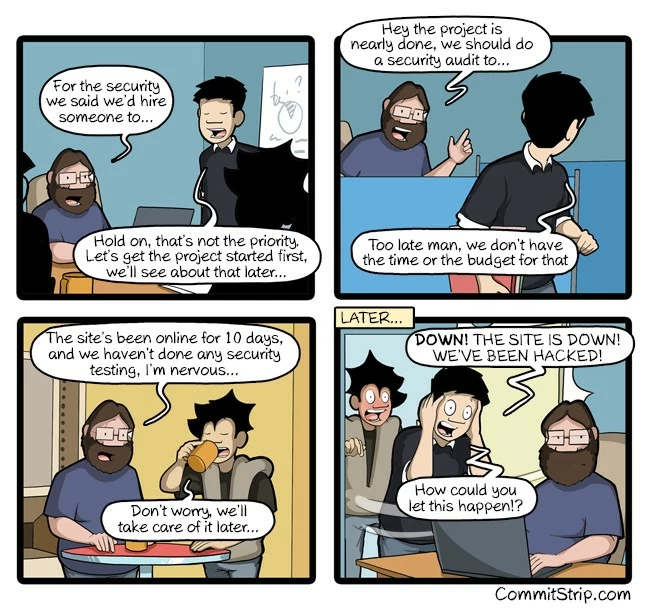
There are some significant consequences of complexity. While complex contracts can allow for more complicated situations, a complex contract is also very difficult to secure. Even in normal contracts, the more complicated the contract it is, the harder it gets to enforce as complications add more uncertainty and room for interpretation. With smart contracts, security means handling every possible way in which a contract could get executed and making sure that the contract does what the authors intend.
Conclusion
I wish smart contracts could be more useful than they actually are. Unfortunately, much of what we humans think of as contracts bring in a whole bunch of assumptions and established case law that don’t need to be explicitly stated.
Furthermore, it turns out utilizing Turing completeness is an easy way to screw up and cause all sorts of unintended behavior. We should be labeling smart contract platforms Turing-vulnerable, not Turing-complete. The DAO incident also proved that there’s a “spirit” of the contract which is implicitly trusted and helps resolve disputes more so than we realize.
Smart contracts are simply too easy to screw up, too difficult to secure, too hard to make trustless and have too many external dependencies to work for most things. The only real place where smart contracts actually add trustlessness is with digital bearer instruments on decentralized platforms like Bitcoin.





