
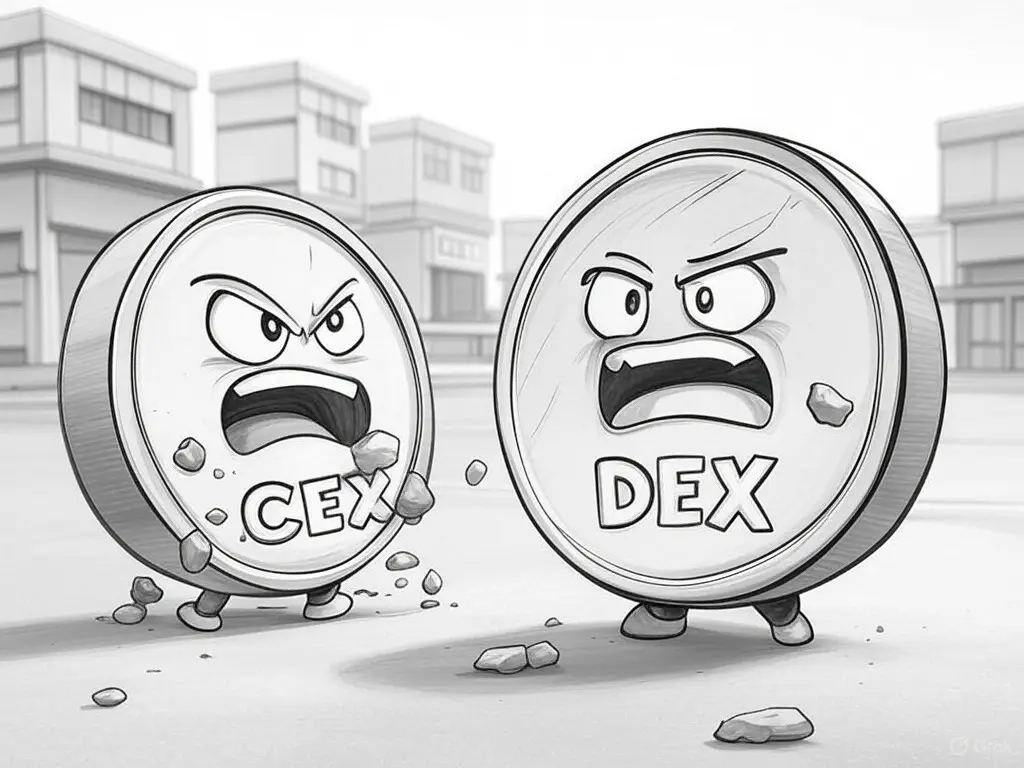
The crypto industry has long been defined by the tension between centralized exchanges (CEXs) and decentralized exchanges (DEXs). While CEXs like Binance and OKX dominate with their vast liquidity pools, user-friendly interfaces, and regulatory clout, DEXs like Hyperliquid champion decentralization, transparency, and user autonomy. The recent JELLYJELLY exploit on Hyperliquid has brought this rivalry into sharp focus, revealing the lengths to which CEXs might go to capitalize on vulnerabilities in their decentralized counterparts.
On March 26, 2025, Hyperliquid suffered a calculated exploit involving the low-cap token JELLYJELLY. A trader deposited over $7 million across three accounts and manipulated the token’s price by leveraging long and short positions. The scheme forced Hyperliquid’s Liquidity Provider Vault (HLP) to absorb massive unrealized losses of $13.5 million as JELLYJELLY’s price skyrocketed by over 400%. Although Hyperliquid acted swiftly, delisting JELLY futures, adjusting its oracle price, and forcibly closing positions, the damage was done. The trader managed to withdraw $6.26 million before restrictions were imposed.
Hyperliquid’s response was decisive but controversial. Validators voted to nullify manipulated gains by setting JELLYJELLY’s price to $0.0095, raising questions about whether such interventions undermined the principles of decentralization. Nevertheless, the exchange pledged to reimburse unaffected users while excluding wallets tied to the exploit.
As Hyperliquid grappled with the fallout, Binance and OKX made a surprising move: both exchanges listed JELLYJELLY futures shortly after the exploit became public knowledge. This decision sparked outrage within the crypto community, with many accusing these centralized giants of opportunism at best, and sabotage at worst.
The listing of JELLY futures during a period of extreme volatility was no accident. The token’s dramatic price movements attracted speculative traders eager to profit from its instability. High volatility drives trading volume, which translates into lucrative fees for exchanges. Binance and OKX capitalized on this frenzy, positioning themselves as platforms for traders seeking exposure to JELLYJELLY despite its manipulation-tainted reputation.
Some observers argue that Binance and OKX’s actions were part of a broader strategy to destabilize Hyperliquid, a rising competitor in perpetual futures trading. By listing JELLY futures during Hyperliquid’s liquidity crisis, these CEXs exacerbated the pressure on the DEX’s vaults and forced it to delist the token altogether. This move aligns with suspicions that centralized exchanges may use their market dominance to suppress competitors in the decentralized space.
Blockchain investigators uncovered links between wallets involved in the Hyperliquid exploit and funding from centralized exchanges, including Binance and OKX. While direct involvement remains unproven, these findings have fueled speculation that CEXs may have indirectly facilitated or benefited from the manipulation.
The JELLYJELLY incident is not an isolated event but part of a larger pattern of challenges facing DEXs in their battle against CEX dominance. Earlier in March 2025, Hyperliquid faced another exploit involving ETH liquidation mechanics that disrupted its operations. These attacks highlight vulnerabilities in decentralized systems that CEXs can exploit, whether through direct manipulation or opportunistic actions like listing manipulated tokens.
For DEXs like Hyperliquid, such incidents underscore the need for robust safeguards against market manipulation while maintaining their commitment to decentralization. However, interventions like forcibly closing trades or adjusting oracle prices risk alienating users who value autonomy over centralized decision-making.
The rivalry between CEXs and DEXs is more than just a competition for market share, it represents a fundamental clash of ideologies. Centralized exchanges offer deep liquidity, institutional-grade infrastructure, and regulatory compliance that attract mainstream users. Decentralized platforms prioritize transparency, censorship resistance, and user control over funds but often struggle with scalability and security.
The JELLYJELLY saga epitomizes this divide. While Binance and OKX leveraged their centralized power to profit from volatility, Hyperliquid's decentralized nature left it vulnerable to exploitation, forcing it to intervene in ways that blurred its ideological lines.
The events surrounding JELLYJELLY reveal an unsettling reality: in the war between CEXs and DEXs, there are no rules. Opportunistic listings by Binance and OKX showcased how centralized exchanges can exploit crises for gain while undermining competitors like Hyperliquid. Meanwhile, DEXs face mounting pressure to balance decentralization with security measures that prevent such attacks.
As this rivalry intensifies, users must navigate an increasingly fragmented landscape where trust is hard-earned but easily lost. Whether through regulation or innovation, the crypto industry must address these tensions if it hopes to fulfill its promise of financial freedom for all. Until then, the battle between CEXs and DEXs rages on, leaving casualties in its wake.





