
In our previous article, we talked about IoNet, a massive project that plans to build the world’s largest AI compute DePIN. The token is set to launch in the first week of May, and the tokenomics just came out a few days ago, so let’s take a look !
What to Look for When Analyzing Tokenomics :
- The Supply (at launch and maximum supply)
- The Utility of the token
- The emission rate (inflation, investors, team)
There are other variables to consider, however, those are the main ones.
The Distribution
So let’s start with the fundamentals :
- Maximum supply : 800M
- Supply at Token Generation Event (TGE) : 500M
We can note that there are a lot of tokens that will be in circulation at TGE. Volatility is going to be important, if you want to buy the token very early, I would recommend waiting to see the price action.
Moreover, we do not know the price of listing at the time of writing. At least having a lot of tokens released will reduce the inflation rate for the years to come.
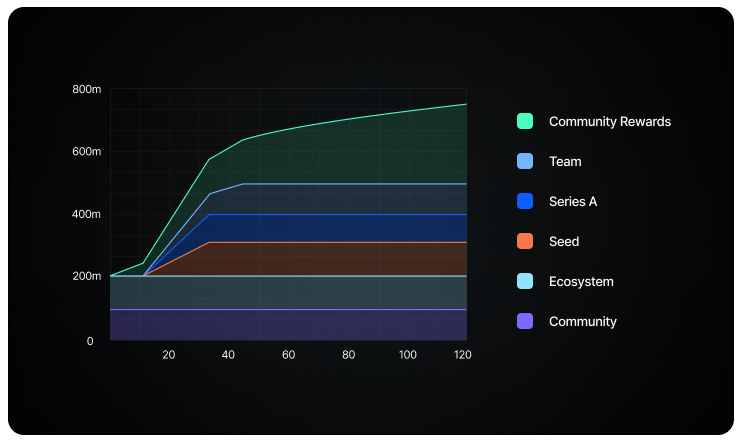 There an error because 500M will be emmited on TGE
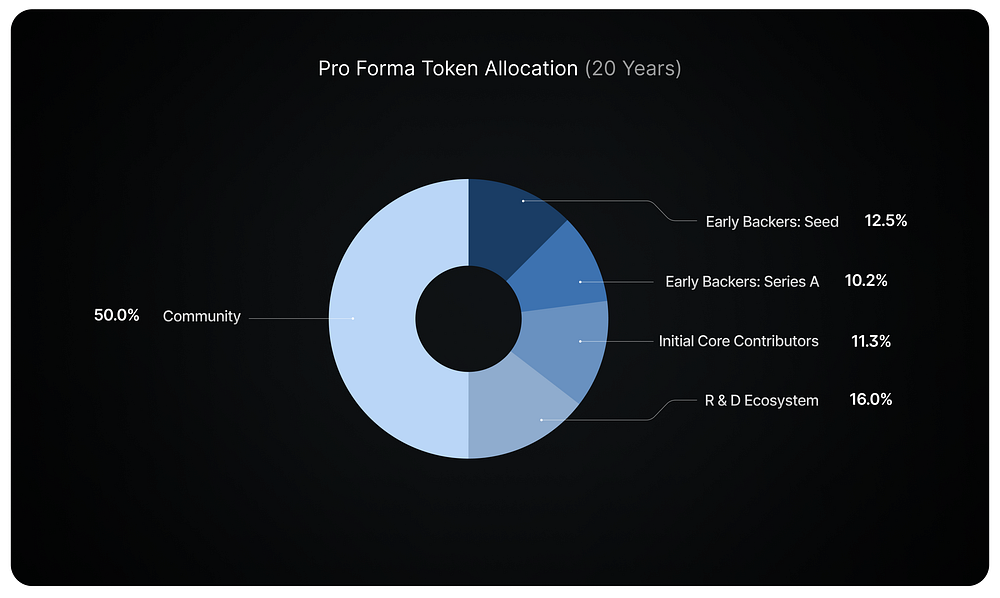
To further explain the distribution, 50% will be allocated to the community through incentives, including the initial airdrop of 100 million tokens (12.5% of the total supply).
22.7% of the tokens are for investors; they are locked for a period of 13 months after the TGE, and there will be a cliff unlock of 24 equal tranches that will take 36 months to fully unlock (after TGE).
11.3% is allocated to the initial core contributors such as the team. Their tokens are also locked for 13 months, and after that, there will be a cliff unlock of 48 months after TGE.
The rest (16%) will be distributed to contribute to the research and development of the ecosystem.
The utility of $IO
Understanding the utility of a token is key, it helps to know why holding the token is important (or not). For example, the BNB coin’s main use is to pay the fees of transactions on Binance (the world’s largest crypto exchange). Knowing this information, you understand that the demand is high, so the price will be pushed upward.
Similarly, $IO is the center of a vast ecosystem, the IOG Network, which comprises all the GPUs available. It consists of owners who lend their GPUs and renters who rent the GPUs.
The owners can be paid with $USDC, but they will have to pay an additional 2% fee. However, by using the $IO token, renters will not pay those fees.
$IO can also be used in staking to protect the network :
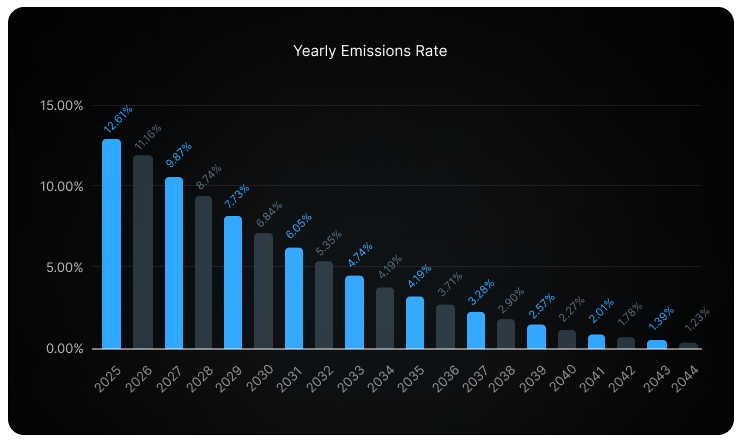
Rewards will be released to suppliers and their stakers hourly over 20 years. Following a disinflationary model, starting at 8% in the first year and decreasing by 1.02% per month until reaching the cap of 800 million $IO (Max supply).
This allows for a reduction in inflation :
Furthermore, suppliers of the IOG network will need 100 $IO to create a node that can be used as collateral if the suppliers don’t do a good job. This will add buying pressure because the more GPUs join the network, the more $IO must be bought to create a node.
Burn Mechanism
$IO uses a burn system where revenues generated by io.net from the IOG Network are used to purchase and burn $IO. This reduces the outstanding supply of coins and creates deflationary pressure on $IO. Io.net generates revenue by charging fees to both users and suppliers:
- Io.net charges reservation fees (0.25%) when a reservation for computational power is made.
- It also charges payment fees depending on how the user chooses to pay for the reservation and how the Supplier chooses to withdraw Hire Fee earnings (2% if they use USDC and 0% if they use $IO).
Conclusion
The $IO will be the center of a very promising ecosystem with a useful purpose. Additionally, investors cannot put selling pressure within a year. All of that makes it a very promising token.
Source : https://developers.io.net/docs/io-coin-1
As always thank you for reading !
Read exclusive articles on publish0x and if you want to support me for free you can sign in with this link
Disclaimer : This is not a financial advice, you need to do your own research !






