
The explosion of cryptocurrency has made many people very rich. It's attracting more people by day and with them comes hackers, thieves and scams. The complexity of tech underlying blockchain networks leaves people open to simple mistakes, and in several occasions has lead to millions of dollars being stolen.
Hackers steal over $40 million worth of bitcoin from one of the world’s largest cryptocurrency exchanges
Using multiple stolen accounts and well-executed transactions, hackers were able to steal Bitcoin from several Binance users. In this case it was covered in full, but some exchanges may not be able to 'fork' (no pun intended) up this kind of money.
Lessons learned:
- Don't keep money in exchanges
Hackers Have Stolen Millions Of Dollars In Bitcoin -- Using Only Phone Numbers
Phone network of an early bitcoiner was social engineered into moving his phone number to another provider. This gave the 'hacker' easy access to reset his email and other passwords.
Lessons learned:
- Rather than phone text, use another 2FA option where available like Google authenticator / Authy
- Don't keep money in exchanges or, ideally, even on internet-connected hard drives at all
Wallet Types
Now that we've pointed out the importance of controlling your funds, let's discuss the different options for holding your cryptocurrency.
Exchange / Hot Wallets

Hot wallets are ready to be spent or exchanged. With a click of a button and (ideally) a 2 factor authentication, your money is sent. When you need to spend money on something or you want to make an opportunistic trade for another currency, this convenience can be useful. Long term, however, you may leaving your money open to higher risk.
Software Wallets
Most wallets you will use are software wallets. They store your keys on your computer or phone hard drive, usually encrypted with a password or key to keep them (somewhat) safe from hackers even if they managed to access your device. When you mine or stake cryptocurrency, an active node is usually required, meaning a software wallet connected to the network.
Exodus, available for computers and mobile devices, supports a wide variety of coins.
https://www.exodus.io/
Coinomi is another wallet supporting many altcoins
https://www.coinomi.com/en/
Paper Wallets
There is a key to every Bitcoin address. It's a long string of characters which is passed through a mathematical algorithm to create an address. This key, being simply letters and numbers, can be printed out. A QR code is just an image representing a series of characters, so it's not a huge stretch to generate a QR code from this key, giving you an easy way to send money to it from apps that support QR code.

This type of wallet is, in theory, ideal for security purposes. No virus created has the capacity to infect a piece of paper. You can send Bitcoin to this address, then tuck away your paper in a safe knowing that your funds aren't stored on a computer. This solution has some caveats, though.
If you're going to be using this wallet to pay for things at all, you have to import the private key into a software wallet on an internet connected device. Once it's been imported even one time, you can never be 100% sure it hasn't been compromised. Your computer may have stored it in a temp file or in your RAM long enough for some virus to pick it up, and they will wait until you deposit a large sum to strike.
However, if your goal is investment, paper wallets may be ideal for you. Use the public key to send more and more Bitcoin as you acquire it, and never import the key, and your Bitcoin will be as offline and away from hackers as they can possibly be. Obviously you will want to keep it in a safe place and never lose it, as this key on the paper is the only thing that allows access to the coins.
Hardware Wallets
Finally, we visit the hardware wallets. These have been increasing in popularity, and with good reason. Many believe them to be the perfect balance of a paper and software wallet. Essentially a hardware wallet is a tiny computer. It has software on it which generates your private keys and stores them securely offline.
When you're ready to spend money, you connect your hardware wallet to a computer - usually with USB or, more recently, Bluetooth. The software on your computer builds a transaction with your specified amount and receiving address, then sends it to the hardware wallet. You confirm the information on the hardware wallet's screen using its buttons, and it returns the transaction cryptographically signed with your key which can be broadcast by the software wallet on your computer.
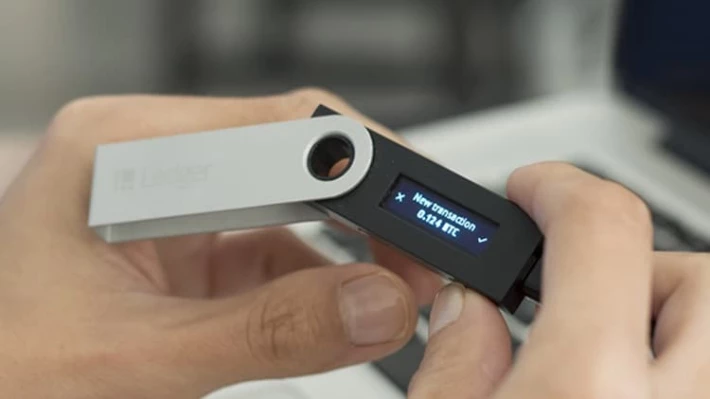
Your computer connected to the internet never receives the private key, and has no opportunity to mess with the encrypted transaction data once its been confirmed on the hardware wallet. So a hardware wallet is kind of like a paper wallet that sign transactions like a computer.
Examples of a hardware wallet include:
— Ledger's Nano X and Nano S
— Trezor hardware wallet
There are two small downsides to hardware wallet in my eyes:
1. You depend somewhat on the active development of bridge software
If Ledger as a company shut down and stopped developing their software which connects to the hardware wallets, you may soon have trouble spending funds as blockchains update and leave the old software behind. Most blockchain technology is open-source, so there's a good chance other services could create their own software with support for your hardware wallet.
For example, the new Shapeshift Beta Platform supports Ledger and Trezor hardware wallets and allows for quick exchanges.
2. Updates to the hardware wallet's firmware are a weak point in security
Your Ledger Live software will tell you when an update is available. If a hacker somehow managed to infect your computer and replace the Ledger Live software with something of their own, this update pushed to your hardware wallet could give them access to your funds or make every transaction signed send to their address.
Mitigate this risk by verifying an update has actually been released on the website, checking social channels, and if you're really paranoid, wait a couple weeks before updating and keep a lookout for news of stolen funds..!
What is the best solution?
Unfortunately, a little extra risk is inherent in blockchain systems. Your money is stored across the world on a decentralized database, and the only thing keeping others from taking it is the power of math. The biggest point of weakness is you. How you handle your money, how you protect your devices from malware infections, and whether you have enough basic knowledge to spot when something isn't right.
Personally, I store my investments on a hardware wallet. When I want to have coins on hand to spend, I use software wallets which give you backup phrases so you know you have control of the keys in case of a hard drive crash.
How do you store your cryptocurrency? Tell me in the comments below!






