
I was sitting in a meeting today, and the topic for today's article suddenly hit me like 2x4 in the forehead. We, as people, are collectively allergic to using data. As I listened to the meeting, I literally watched a familiar, repeat script play out in front of me with a presenter clearly struggling to convince people of the validity of well-researched data. Instead, the audience couldn't get past the same key people saying the data was wrong because they never saw what it implied happen in their experience.
Would you make a crypto move based on someone telling you they always saw BTC go up and never saw it drop thousands in a day? Most of you would say "no," but in fact many of us do just that.
Amazingly, with a resource that is all around us, provides amazing insight to what we do everyday, and most people can tap into with very little effort, we still collectively rely on anecdotal statements to make most big decisions. Given the amount of risk involved with that kind of approach to live, business and investment, is it any wonder why we keep seeing the same stories again and again about big mistakes all around us?
The habit of following experience and ignoring data is ingrained into most of culturally. It comes from how we were raised, always respect our elders, don't question those older than us etc. Somewhere around being a teenager we sort of try to kick that bucket, but eventually most of us are folded back into conformity if we want a solid career and future. Think about it; how many times have you been trained by someone more experienced in the workplace? Do you ever question that person the first few days on the job? Of course not. The only generation that started doing that was Millennials, and much of their distraction was having their face glued to a mobile device rather than listening. It had nothing to do with data.
Ironically, data is all around us. Want to know why your A/C and heating bills keep going up? Trend your utility bills. Think your being taxed more than your cousin in another state, put a few income tax filings on a spreadsheet and compare. Maybe you assume your rent is the most expensive thing you pay every month. Track your living expenses for a few months and you might be surprised to learn the biggest cost you have is instead food and gas for the car. And so on. We have tons of data at our fingertips too. Every month and year businesses, government agencies, and the Internet itself produces reams of data on what we do, how we behave, and what's trending. However, a single digit minority tends to be the only folks who regularly pay attention and glean lots of information from it.
Think the NFT market is booming? At an anecdotal glance it sure seems that way. Everyday there seems to be a new project doing a drop and launching. However, if we look at the data on market trends for WAX, we would find instead, the market volume has been declining over the last six months:
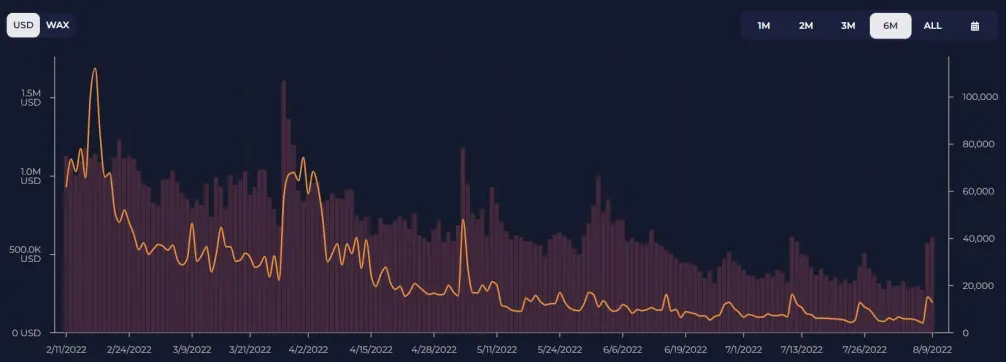
AtomicHub Market Tracking, 8/10/22
Let's look at OpenSea. Lots of big million dollar sales there. Things have got to be booming, right? That's what the media says based on some individual sales of specific individuals. Dapp Radar tracks what's going on with that market on a data-basis up to the last 30 days:
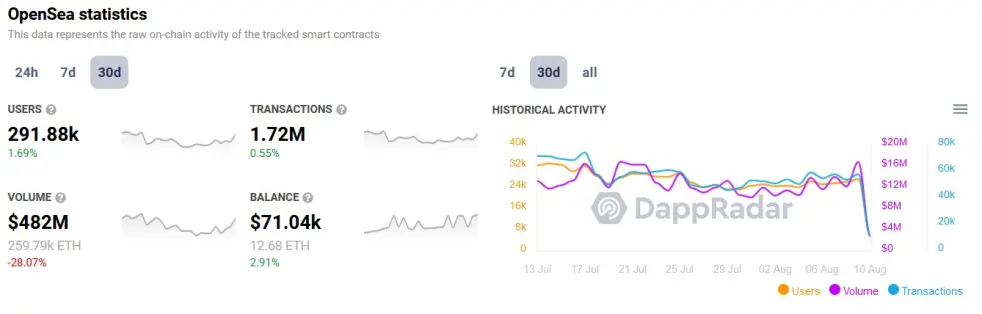
Dapp Radar OpenSea Tracking, 8/10/22
Aside from that tail-end dropoff, which is probably a data cutoff, the NFT market on OpenSea is fairly flat. Some volume is picking up but overall the market is kind of going nowhere. Not necessarily out of the bear woods, are we?
So with all this information available to crunch, analyze, compare and summarize, why do we collectively lean towards experience and, worse, anecdotal experience, as our guide for big decisions? Again, culture is a very ingrained thing and hard to get rid of. Worse, we're lazy.
Let's be honest. Collecting, reading white papers, crunching numbers, and preparing models takes work. It's a lot of boring stuff too. Only someone like Alan Greenspan would get excited about it on a regular basis (honest, he actually admits that in his last biography). Instead, we lean on others we know and trust to make decisions for us. The problem is, they're doing the same damn thing with someone else! Are you starting to feel like you've been part of a house of cards? Then you're starting to see the real concern here.
When one of those experience-opinions tends to go bad, particularly in crypto, there's no red light or siren that goes off. Instead, a bunch of lemmings tend to go off a cliff all at once until someone figures out doing so might be painful and antithesis to their financial survival. HIT THE BRAKES! However, for most of us, it comes too late. And we learn, painfully, we made a mistake.
Celsius was like that for me. I honestly should have run trend analyses on them. If I had, I would have learned that one of their biggest investors was a pension fund. But instead, I just followed someone else's digital opinion that they were a good way to earn money on my idle coins staking with them. Now I'm out $450 and learning a painful lesson. Look at the goddamn data before putting my money on the table again.
The same applies here too. Spend time on Publish0x and similar, and you're going to get a lot of opinions about what makes money, where to stake and where to look for investing digitally. Very few articles, however, provide real data. They are anecdotal opinions or shilling for recruitment. There's nothing wrong with someone doing so and giving an opinion, but as a reader, you need to look for the data to back up the published premise if you don't want your money to disappear quickly. Ignore the FOMO feeling; make your plays on the real numbers actually occurring. Yes, you might miss out on a some early opportunities, but, more often than not, you'll consistently earn rather than lose.
I added a few tools at the end of this to help you get started with free crypto data and how much is available. I have no referral benefit from these tools; they work for me, so I share.






