
U.S. President Donald Trump announced that a comprehensive peace agreement with Iran—specifically focusing on the unblocking and full reopening of the Strait of Hormuz—has been largely negotiated and is poised for an official unveiling in the coming hours.
The headline triggered an immediate relief rally across Bitcoin and the broader cryptocurrency market. The proposed framework is structured as an interim agreement designed to quickly restore maritime transit capacity to baseline levels in the near term, while kicking highly complex structural issues—such as Iran's enriched uranium stockpiles—down the road.
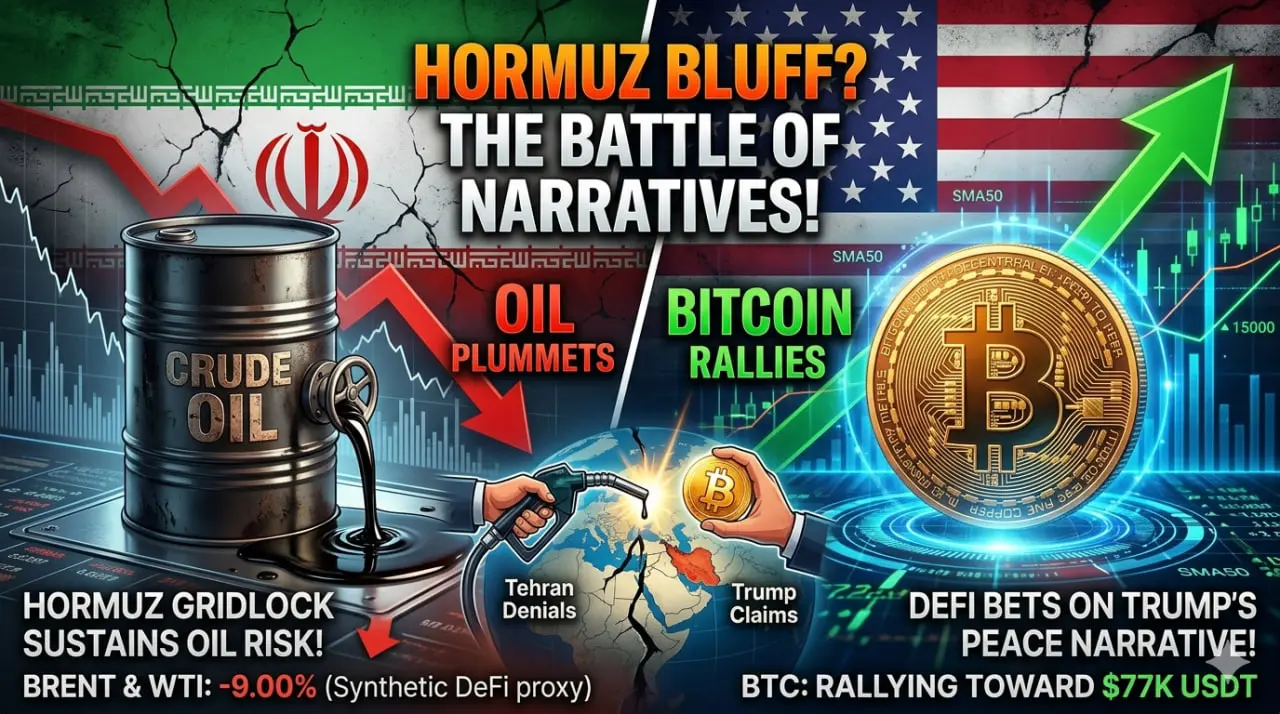
However, Tehran pushed back against the optimistic rhetoric. Iranian state media and the Fars News Agency formally denied that a binding deal has been reached, citing deep structural gridlock over frozen sovereign assets and the Iranian nuclear program. Furthermore, Tehran reasserted its absolute regulatory and military authority over the Strait of Hormuz.
DeFi Markets Side with Washington's Optimism Because this geopolitical friction unfolded over the weekend, traditional financial institutions were sidelined, leaving decentralized prediction and perpetual markets to absorb the initial volatility wave.
Price action across decentralized venues like Hyperliquid delivered a clear verdict: Web3 market participants are tentatively buying into Trump's narrative. Synthetic S&P 500 perpetual futures surged roughly +4.00%, moving in tandem with Bitcoin's upward momentum.
Conversely, decentralized contracts tracking energy benchmarks suffered severe downside, with both Brent and WTI crude proxy contracts collapsing by -9.00%.
The immediate reaction from decentralized operators indicates a strong market consensus that Washington's statements contain a verified baseline of truth. However, the ultimate validation of this macro trend will depend on whether official confirmation emerges from the White House and how institutional TradFi desks reposition when legacy order books reopen.






