
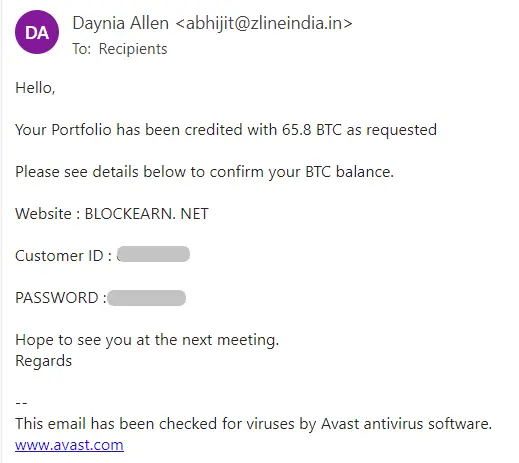
We have received an email stating that we have received a considerable amount of Bitcoin.
At the current BTC price, around 28K USD, this is a life-changing amount of money. We need to act quickly!
Greed, the Path Towards Financial Downfall
Anyone who has received this email must consider the email address as compromised and prone to receive more phishing attacks.
The scammers already have the email address and now they need more information. And they are going to use greed to get it.
The first step is getting you to navigate to the phishing website, using GREED as a hook: Your portfolio has been credited with 65.8BTC
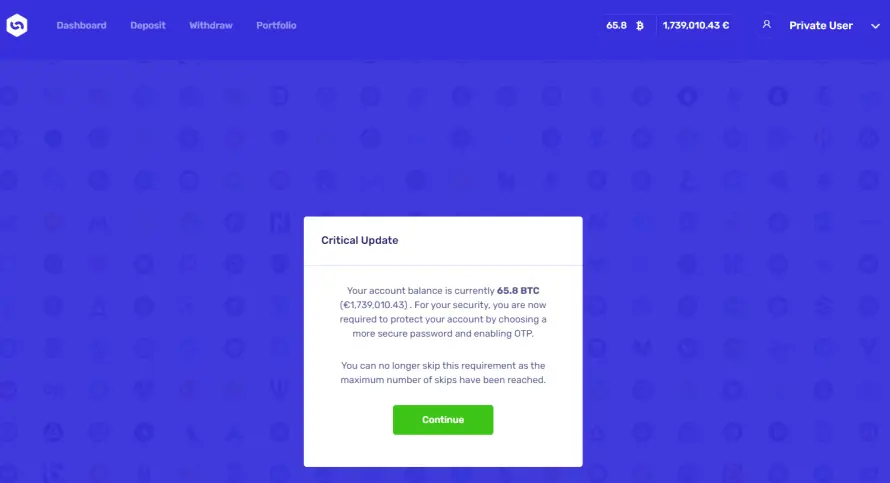
Once we have navigated to the website, they will try to get more valuable information from us.
In this case, they are asking us to change the password.
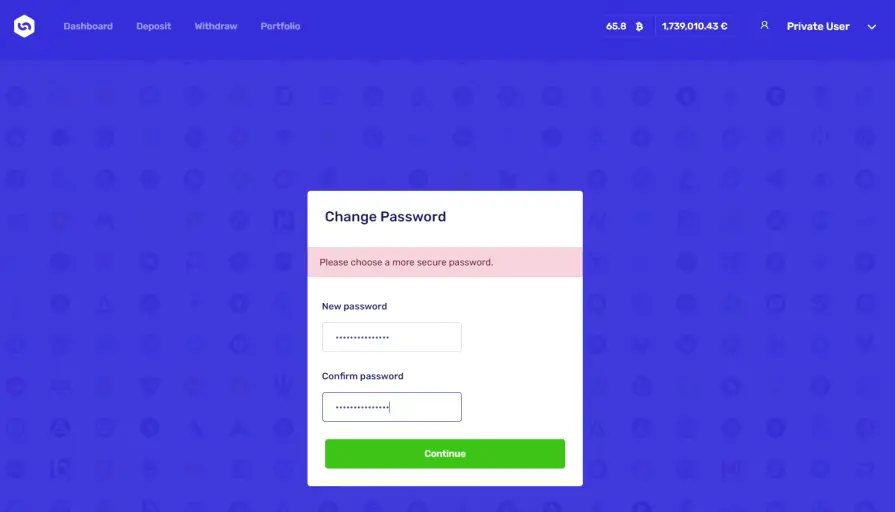
First, we tried to input a simple password '123456789' but they didn't let us use a simple password and prompted us to 'Please a more secure password'.
They are trying to get the password that we use for your other accounts. A password that we may consider secure, and hopefully (for them) a password that we reuse in all our accounts.
To move forward, to be able to show you more about this scam, we proceeded to enter a more complex password '147258369!!!' and that took us to the next step.
Which was to ask for our telephone number.
So, they already have our email address, and a password that we reuse for many accounts, and also now we are going to give away our telephone number.
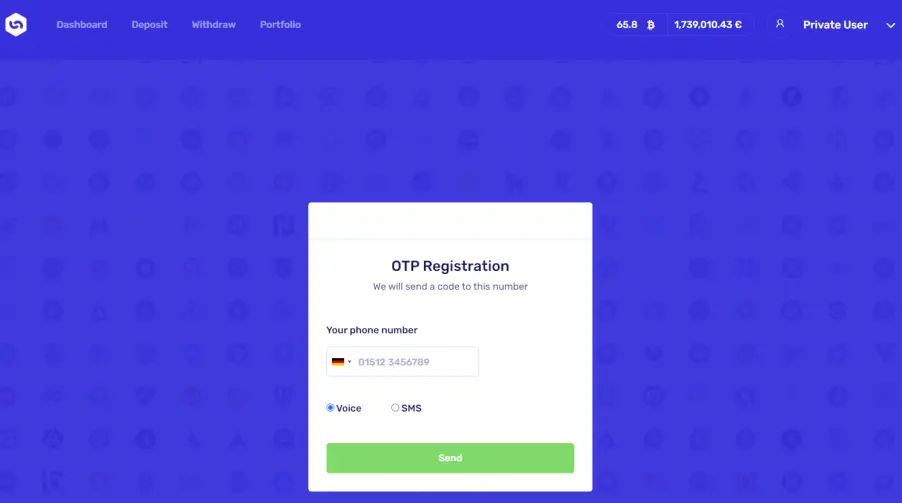
At this stage, we didn't progress any further, because of course we don't want to give away any of our telephone numbers.
In the hands of professional hackers, all the information that the scammers are asking for can make much harm. For example:
-
Access online accounts: With the email address and password, the hacker could attempt to log into the victim's various online accounts, such as social media, email, or banking accounts. If the victim has used the same password across multiple accounts, the hacker could gain access to all of them.
-
Conduct phishing attacks: The hacker could use the victim's email address and phone number to send phishing emails or text messages, posing as a legitimate company or individual to trick the victim into revealing sensitive information or clicking on malicious links.
-
Sell the information: The hacker could sell the victim's email address, password, and telephone number on the dark web or to other malicious actors for profit.
-
Install malware: The hacker could use the victim's email address to send malware-infected attachments or links, which could allow them to gain further access to the victim's device or steal sensitive information.
-
Impersonate the victim: The hacker could use the victim's email address and phone number to impersonate them and make fraudulent purchases, apply for loans or credit cards, or commit other crimes.
For someone who has no knowledge about phishing, completing all the steps requested by the scammer will lead to a very dangerous situation.
Not everyone is knowledgeable enough to identify the scam, but you are and you can do something about it.
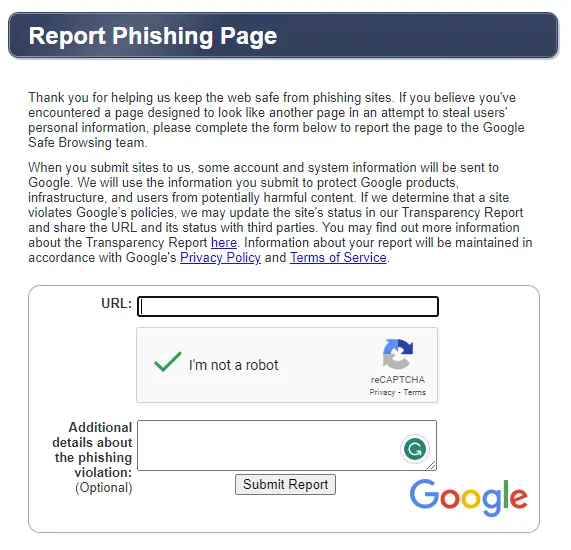
How to Report a Phishing Website
If you come across a phishing website, please take some minutes to report it.
If you are reading this post, there is a good chance that your digital security and safety awareness is high, but not everybody may be as knowledgeable as you.
You may be making a big favor to someone and for that, we are thanking you in advance.
https://safebrowsing.google.com/safebrowsing/report_phish/?hl=en
Social Engineering Techniques
Here are some social engineering techniques that phishing attacks use and everybody should be aware of:
-
Deception: Phishing attacks use deception to trick users into divulging sensitive information, such as login credentials or personal information. This can be done by using fake websites or emails that appear to be from a legitimate source.
-
Urgency: Phishing attacks often create a sense of urgency or emergency to pressure users into acting quickly without thinking things through. Urgent messages may claim that a user's account has been compromised or that they need to update their information immediately to avoid negative consequences.
-
Authority: Phishing attacks may also use a sense of authority to convince users to comply with their requests. They may use the logos or branding of well-known companies or organizations to make their requests seem more legitimate.
-
Personalization: Phishing attacks may also use personalization to make their messages appear more genuine. They may use the user's name or other personal information to create a sense of familiarity.
-
Fear and Intimidation: Phishing attacks may also use fear or intimidation tactics to coerce users into taking action. For example, they may threaten legal action or other negative consequences if the user does not comply with their requests.
-
Greed: Phishing attacks may appeal to users' greed by promising financial rewards or other incentives in exchange for their personal information or cooperation.
-
Familiarity: Phishing attacks may also create a sense of familiarity by imitating the language, tone, or style of communication used by legitimate companies or individuals that the user interacts with regularly.
Always Use Unique and Stong Passwords, and Two-Factor Authentication
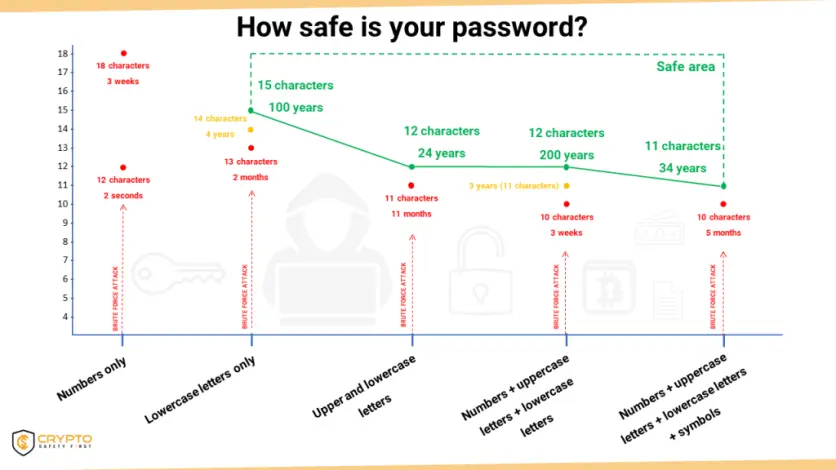
Using strong passwords will protect your account from brute force attacks, but only unique passwords will protect your accounts from a compromised passwords.
Even the best drivers need to wear a safety belt because accidents happen. Consider that this is the same situation with passwords, because even the most digital security-savvy people can have a password compromised at some point or another.
https://cryptosafetyfirst.com/unique-strong-passwords/
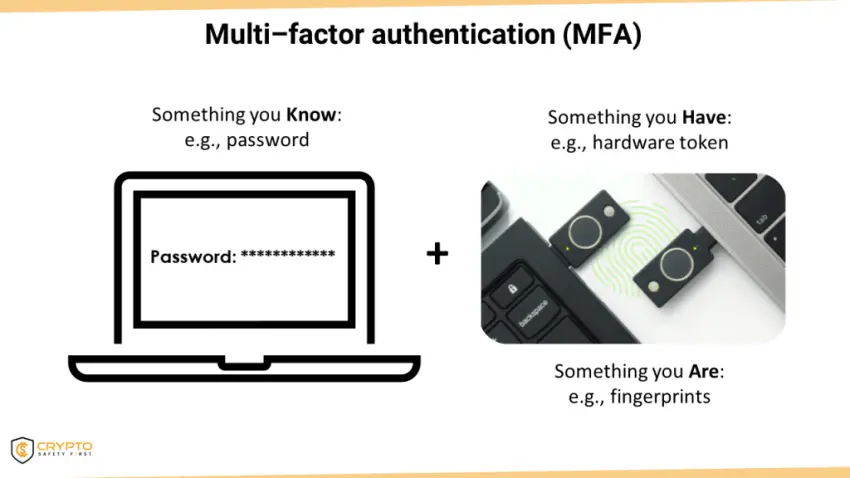
And consider using 2FA or MFA as an additional security measure that will protect your accounts from hacks.
- Something you know plus
- Something you have and/or
- Something you are
https://cryptosafetyfirst.com/two-factor-authentication/
We hope that you have learned something new that has boosted your digital security awareness.
Thanks for your time and Stay Safe.




