Current Summary:
It's the peak of the Fed's rhetoric, and in the last 36 hours, there have been a half-dozen speeches by the Fed's FOMC Committee, and the general consensus is that the Fed's main job is to fight inflation, which is too high, and is poised to bring it down below 2%, a relatively long process. The US economy, while seemingly in recession, is not that bad. Especially before the stronger jobs numbers, the Fed believes there is no recession risk and that there is no guarantee of a soft landing. Although inflation has been relatively contained to some extent, there has been no clear sign that inflation has peaked, so cutting interest rates is not on the table in the near future. For the September rate hike, the base of 50 basis points was mostly confirmed, but 75 points were not ruled out. That is because even the Fed has no firm information on what July's CPI reading will be, and since the June rate hike hit Powell in the face, the Fed has been much more cautious about its forward guidance, given that it is the authoritative department, and has always been discredited. So four working days later, on August 10th, it's basically the short-term game focus. After all, US equities are trading on the assumption that expected inflation will peak.
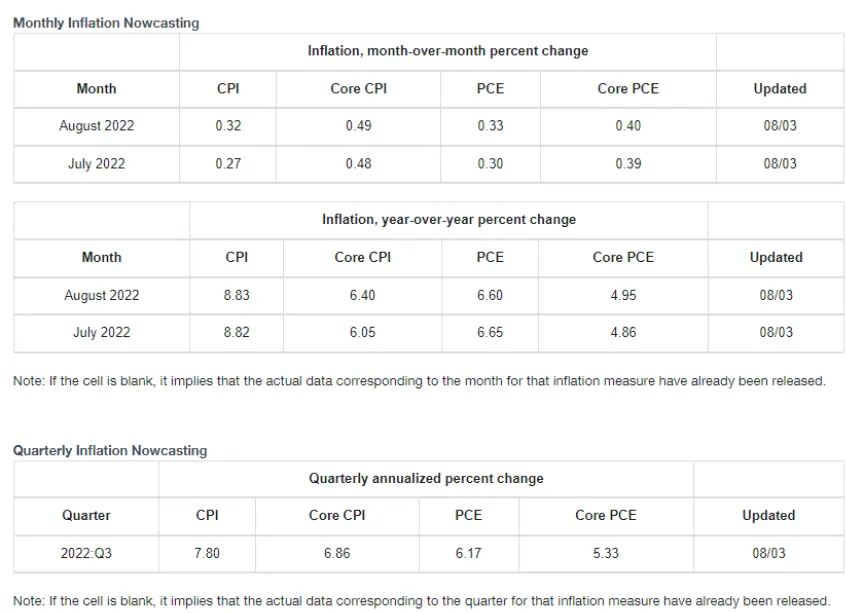
And as long as the data on August 10 is the same year-on-year or month-on-month data less than the previous month, the concept of inflation peaking will be saved to the core PCE data at least until late August. If the CPI can indeed fall, there will be room for speculation on U.S. stocks during the interest-rate hike vacuum in August. And the money circles are highly synchronous with the technology stocks in the U.S. stocks. So when the macro situation is positive, the trend of the money circles will not be too bad. In particular, ETH maintained relatively strong purchasing power driven by merger benefits, and even led to a rise in BTC. Even if the U.S. stock market is abnormal, it is not impossible for ETH to break out of a separate market for a short time. And because the current macro situation has not changed further, the result of the July rate hike has not yet been fully reflected in the US gold index. Although recently, US Treasury bonds have encountered a large-scale sell-off, a lot of funds will flow out of the US Treasury market.
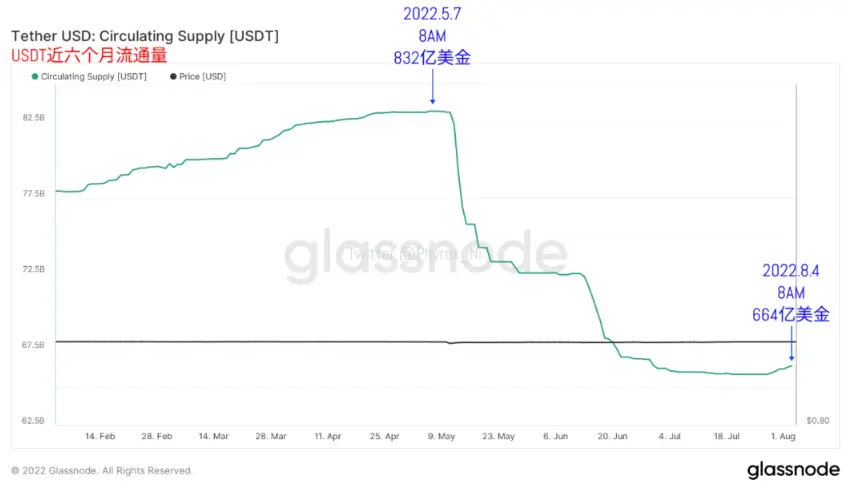
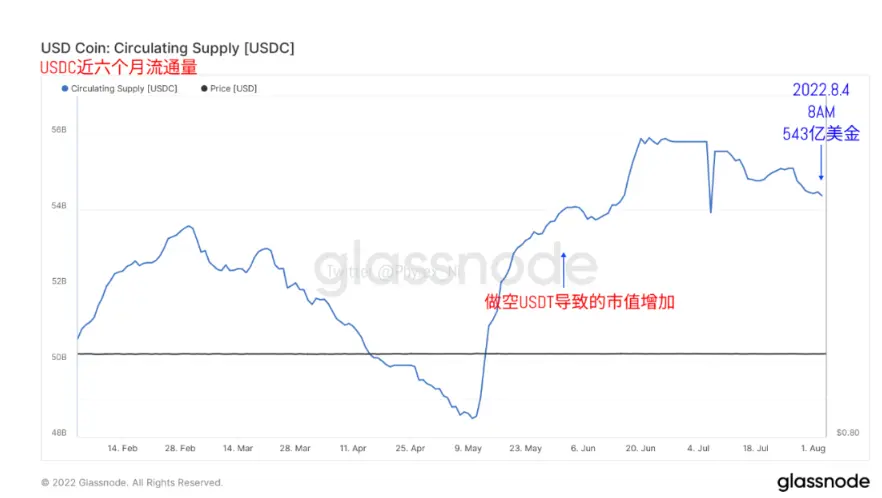
But there is no clear evidence of large inflows of capital from the outside into the money ring, so in the current situation, the shortage of capital remains the main reason for limiting BTC and ETH gains. And, in the absence of new external stimulus, and macro changes, it is almost impossible to get a large price increase, and the ability to sustain volatility is already eating into user expectations.
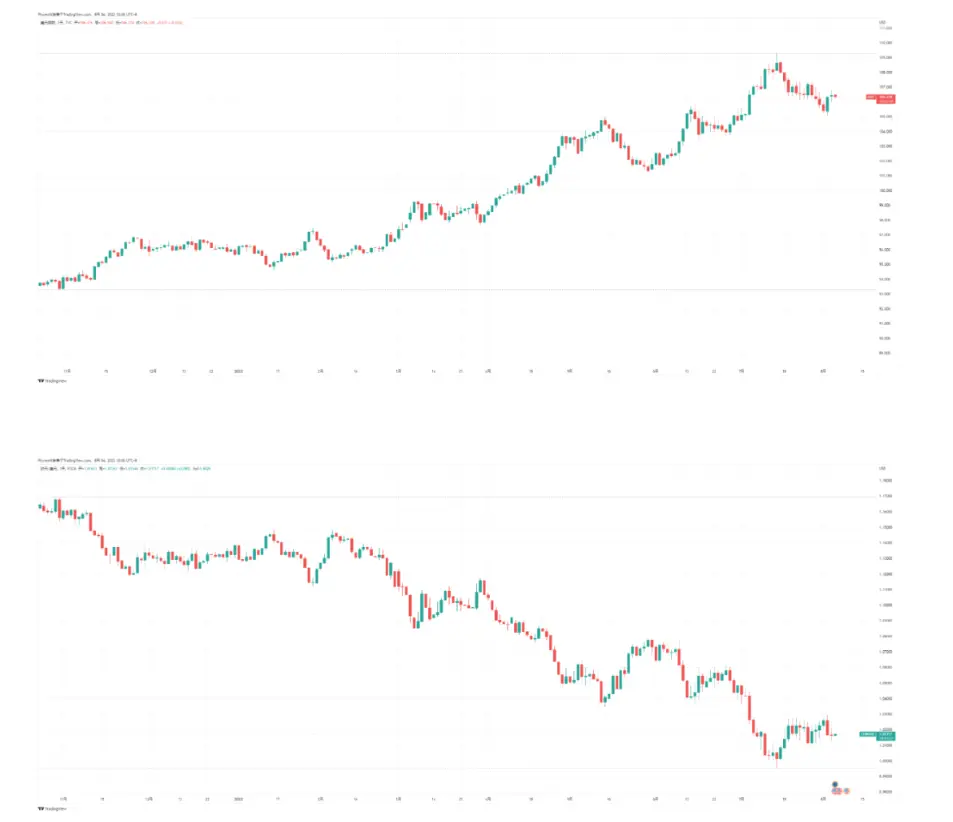
In addition to reducing the "value of the dollar," the increase in money also limits investors' ability to invest in risky assets in the face of the U.S. recession panic. In the dollar value system, the dollar index continues to mirror the euro-dollar rate, and the July rate hike has begun to be gradually reflected in the DXY index, which does not rule out further upward breakthroughs.
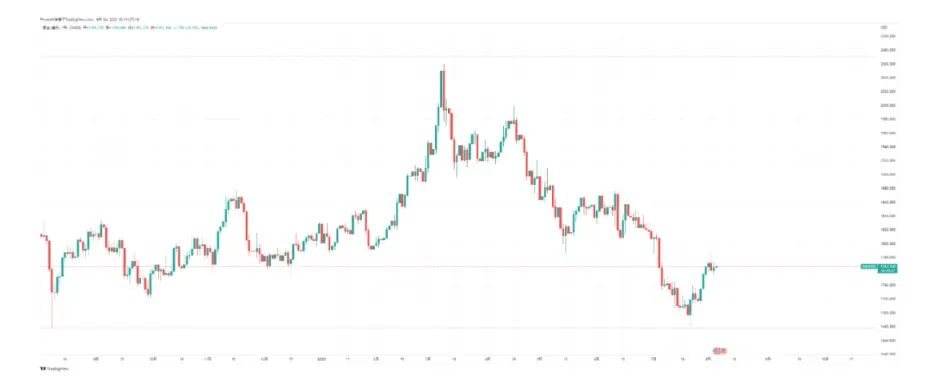
Even the suggestion that the U.S. gold index did not peak has recently been heard, and the rise in the U.S. gold index represents a greater willingness to hold U.S. gold in cash or U.S. Treasury bonds to avoid losses. However, with fears of a U.S. recession and the recent wave of U.S. Treasury bond sales intensifying, there is now an indication that gold may have an opportunity as money flows out of the U.S. Treasury.
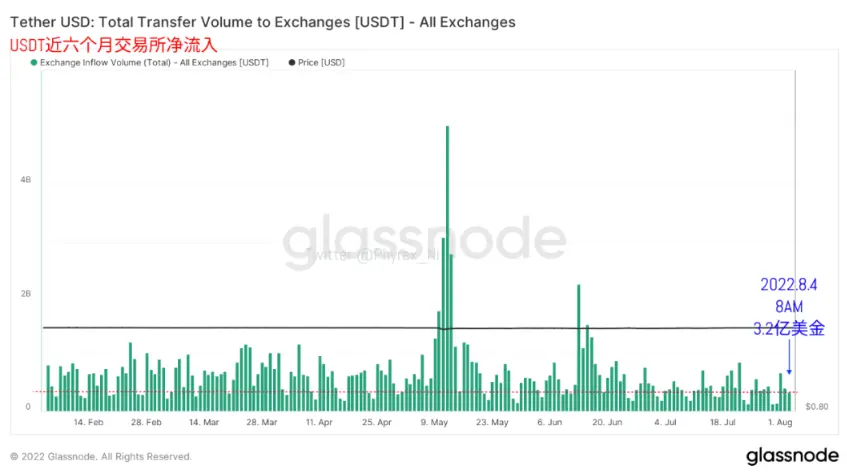
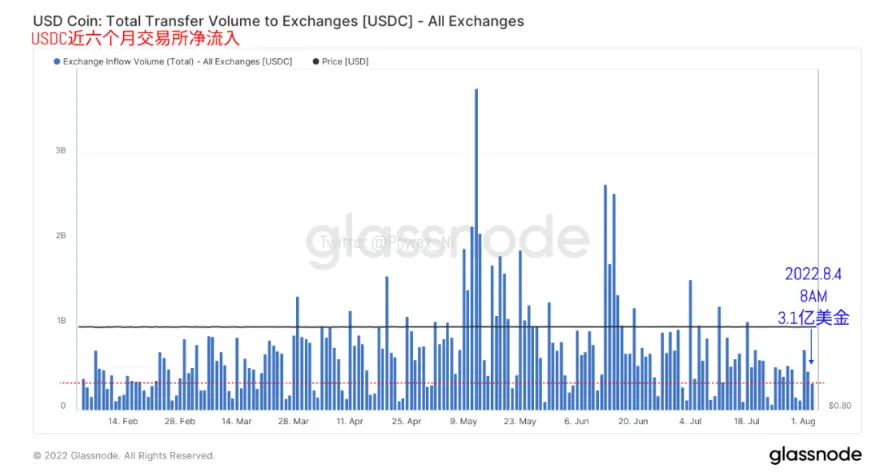
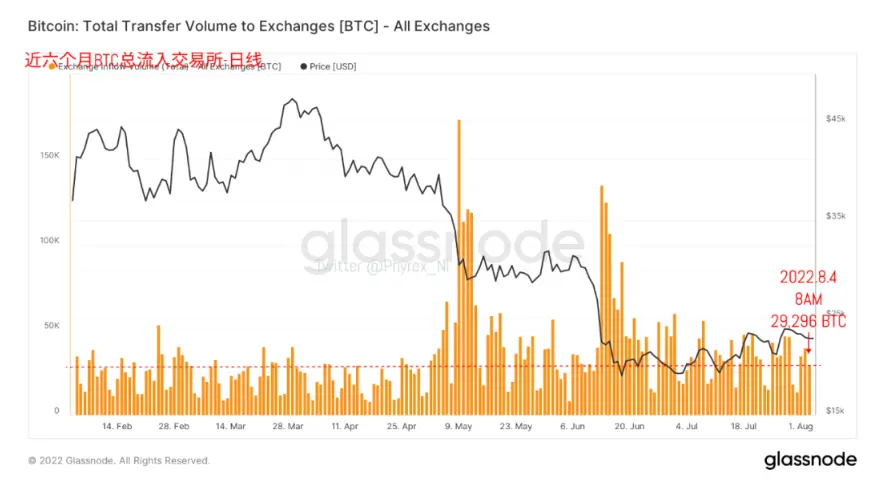
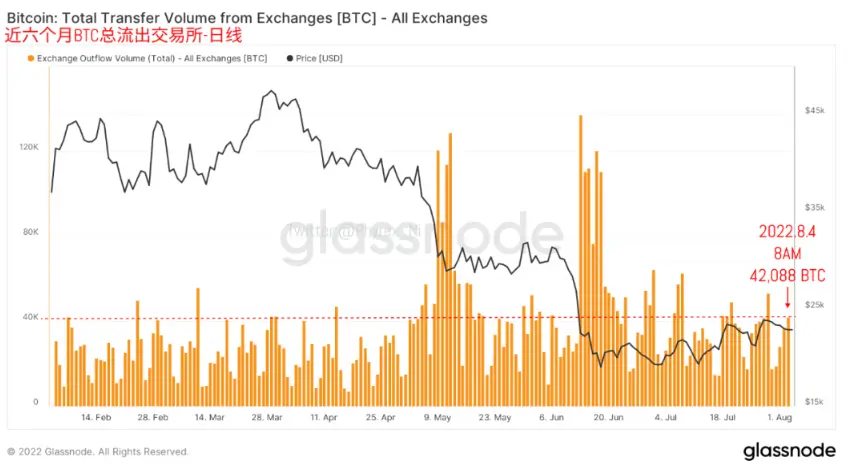
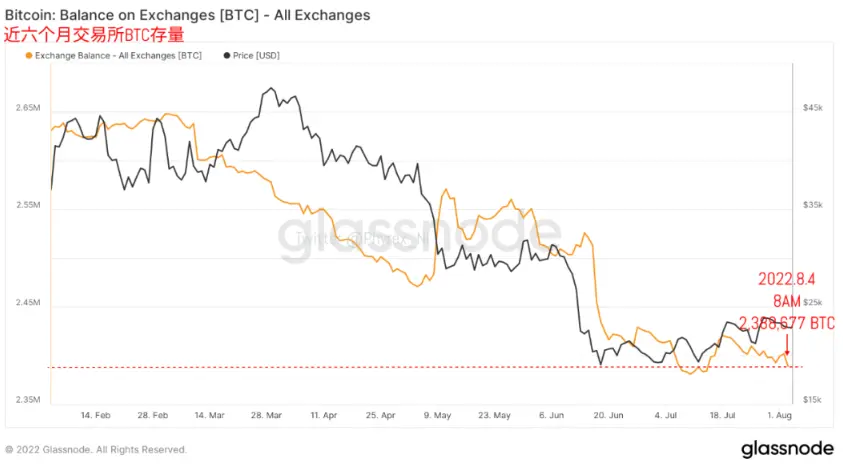
Therefore, the current BTC selling pressure is still based on the current dispute price, and from the current data, the overall transfer into the exchange also shows a downward trend, which shows that the short-term users in the hands of the chips are gradually reducing, but also shows that the retail participation desire is gradually reducing. And yet the figures that exchanges are shifting out of cash are showing a fairly large upward trend, especially now that there is a risk of a turnround. BTC stocks in the exchange can be found, with the recent large-scale withdrawals, the stock of BTC in the near three-year minimum inventory is only a fine line. It also confirms the accuracy of the BTC position cycle data released earlier this month, which show more chips moving towards longer-term holdings. Less money, less selling pressure and lower stocks are all short-term retail exits.
The main selling pressure of BTC in the recent period is concentrated after the opening of the market in the United States, especially from 12:00 a.m. to 4:00 a.m., which is the hardest hit area for the selling. From the data turned over, the large amount of withdrawals at 18:00 p.m. last night is the main reason for the soaring volume of withdrawals. At present, it is difficult to judge whether this is the behavior of users or the arrangement of purses by the exchange. But, given that the data for the total amount of funds available on the lowest working day are refreshed, users are least likely to make new purchases, and the continued decline in purchasing power is unlikely to support a much larger exit pool. So the most serious situation right now is money in the currency market, or the purchasing power actually generated. Instead of improving as prices rise, they are contracting. So if you want to keep the upward trend in prices... Or they can kidnap users' emotions through expected benefits, and let them slow down selling pressure and increase purchases. Either there is a big change in the macro situation, and only if the "bottom-fishing" expectation in the overall risk market is clear will more spillover funds enter the currency market to increase purchasing power. The latter is whether serious inflation is about to peak, and the former's only conceivable outcome in 2022 is an ETH merger.
ETH's data, the main driver of current prices, are much more stable than BTC's. It is a relatively stable game in terms of both incoming selling pressure and withdrawal of exchange-rate data, with no unilateral and relatively strong behavior yet. This makes it difficult for prices to rise and fall sharply when ETH's buying power and selling pressure are balanced. A small lead in purchasing power also ensures that prices do not tie up more new investors. Compared with the stable BTC, although ETH has the favorable support of merger, although the price of ETH has been doubled compared with the bottom price, but the risk of high stock is the main resistance to the ETH's continuing upward. Through the BTC's stock exchange has been seen, more chips are withdrawn from the exchange, reducing the possibility of one-time selling pressure, also highlights the expectation of users. However, ETH is unstable because of the rapid increase in short-term price, and more and more ETH profit-seekers have shifted their chips to the exchange early due to the uncertainty of the continuous increase. That is, they are prepared to leave the market as soon as the price shows signs of collapse. As the stock of ETH increases, the risk of selling pressure will be multiplied when the price trends. That is why the ETH's decline is so far ahead of the BTC's decline, despite the slightest sign of a recent decline. And from the details of the data can also be found that the main force of ETH selling pressure is also after the opening of US stocks, and especially in the US and Asian time cross selling pressure is the largest, and buying trend is also after the opening of US stocks, the volume of the transfer is larger, and with the main trading time moving toward the Asian time zone reduced.
Based on the BTC Perpetual Contracts data, the current rate of capital has ended the one-way bullish trend and started to be more bearish. This is also in line with the sentiment of the short-term retail investors we have analyzed who are gradually leaving the market. More short-term investors believe that the current period has reached the stage of sluggish growth, and are therefore bearish on cash positions. But because the macro picture has not changed significantly, the economic-inflationary game is still playing out. It is still possible that the BTC and ETH will remain volatile until the release of the July CPI data on August 10. After all, judging from what the Fed is saying now, it is more likely than not that the expected CPI reading will be lower than last month's inflation, which hit 9.1%. Based on the comparison of the overall selling pressure of BTC and ETH in the past 48 hours and the purchasing power of USDT, USDC and BUSD transferred to the Exchange, from 3:00 a.m. this morning, although the selling pressure showed a downward trend, the decrease in the amount of capital is more obvious. The current level of money has become a strangler of digital currencies, choking them with a little effort. And emotion is the only weapon that can control this beast.
On the macro front, strikes in the United States have not eased in the face of rising inflation. Following the wave of strikes at docks and railroads, Reuters reporters in the United States have gone on strike for pay in a situation not seen in decades, a sign that high prices have reached the middle class and that, as far as the data are concerned, while the service sector has eased, pressure to rent homes remains high. Behind the sell-off was a general inversion of the colonial interest rate on short and medium-term Treasuries and the yield on ten-year Treasuries, particularly with a two-year inversion gap of 36 basis points which was extremely unfavorable to United States economic expectations. And Opec's minimum production increase is seen as preserving the US president's limited face, and prices have trended downward in anticipation of a downturn in the economy. It still has some effect on the next CPI mitigation.





