
Jupiter's atmosphere is mainly hydrogen gas. Because of this hydrogen gas, there are lots of storms on the surface of Jupiter. The storm is called the Great Red Spot. The Great Red Spot has been observed since 1665. This spot has been rotating for centuries. Both of these spots are larger than Earth's continents and may be two thousand miles wide. When a spot like this is rotated it appears red because it is so cold. The Great Red Spot may actually look different depending on how it is observed from Earth because it is moving at different speeds. However, there are some astronomers who think that if you were right next to Jupiter, you would see the Great Red Spot rotating in a wide circle in a few hours.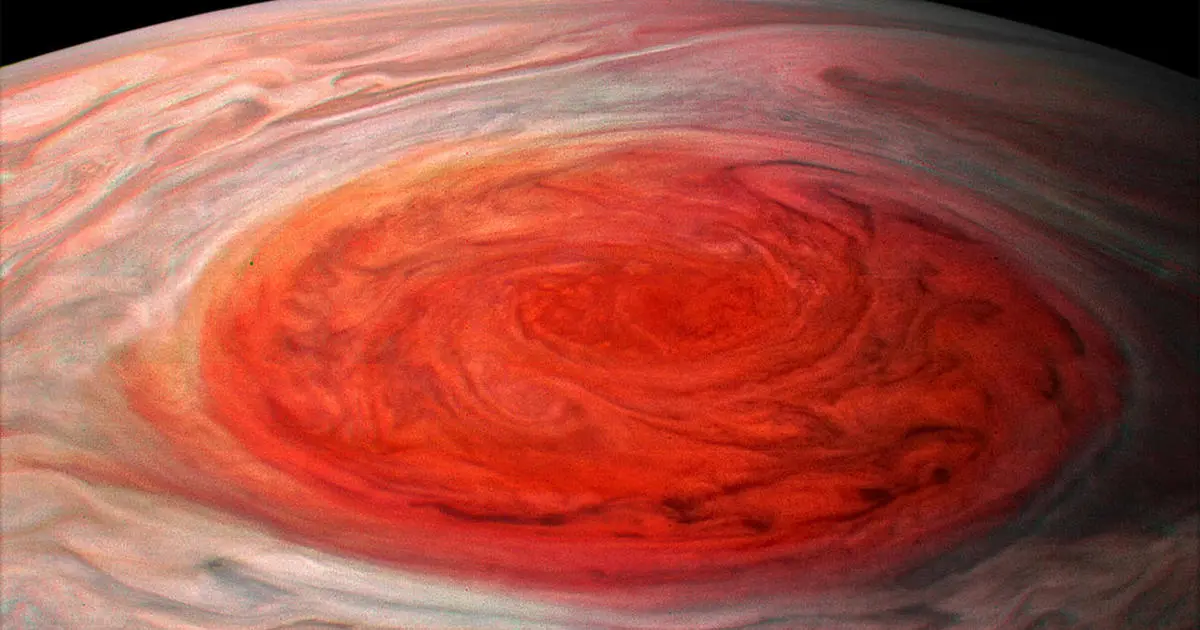
The Red Spot appears as a reddish cloud of hydrogen gas, moving in a counterclockwise direction and taking several years to complete one rotation. The Red Spot has been observed to be moving in the opposite direction over a period of years. This could be because the Red Spot is really two spots and moving in opposite directions at the same time. The spots might also be rotating in different directions. If the smaller spot and the Great Red Spot rotate in opposite directions, this means that Jupiter's core is tilted in such a way that there are two layers of gas, with the inner layer having its spin axis pointing toward the Earth and the outer layer facing the other way.






