
Tired of Yape or Plin failing at night? In this real story, I will show how to use a crypto card in Peru so you can rescue your group in a dinner when banking apps go down.
This is not a story about crypto traders or whales moving millions. It is a real story from Piura, a small and modest city in Peru, where a group of friends gets together to eat a traditional pollo a la brasa and ends up in a very awkward moment at the checkout because the digital wallet we use in Peru went down.
In Peru we call it Yape or Plin.
In Mexico they use CoDi.
In Argentina people pay with Mercado Pago QR.
In India they use UPI to pay for Chicken Tikka Masala.
The names change, but the problem is the same: when your way to pay depends on a single local system and that system goes down for “maintenance”, you are literally left with no way to pay even if you have money in your account.
Stick around to see how I used my crypto card in Peru to save the night how YOU can avoid these embarrassing moments too.
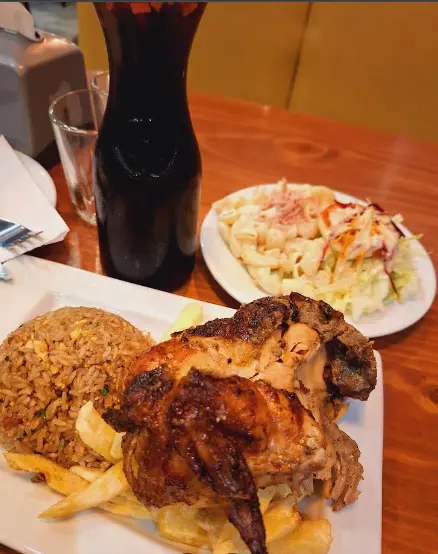
Stablecoins Card in Peru, used right, is your second rail or backup
Last night we went on a ride with about 20 fellow cyclists. The route took us outside the city and it was truly exhausting, but we are pretty used to it by now.
While we were pedaling, it was impossible not to think about food. Every block smelled like roasted chicken or grilled meat, an open invitation to stop at the nearest restaurant. So when we finished the route two hours later, a few very hungry friends and I decided to satisfy the craving.
True to our culture, we agreed there was nothing better than a good pollo a la brasa to kill the hunger, and most importantly, a place that serves until midnight.

A dish that brings people together: the delicious pollo a la brasa
If you know Peruvian cuisine, you have probably heard how popular pollo a la brasa is. It is a wood-roasted chicken with golden, crispy skin, served with French fries and salad. More and more, people are pairing it with arroz chaufa too.
It is a combination that brings families and friends together to celebrate birthdays or special dates. You can find it literally in every corner of the country, from the coast to the Andes to the jungle.
Driven mostly by hunger, we rode together and quickly reached a chicken spot called “Don Carlos.” As soon as we arrived, we hurried to order three whole chickens and two large sodas. There was no time to lose because it was already very late.
We sat down, started chatting about details from the ride, cracked a few jokes, and in less than ten minutes they brought the pollo a la brasa, the veggie salad, a big platter of fries, and the drinks.
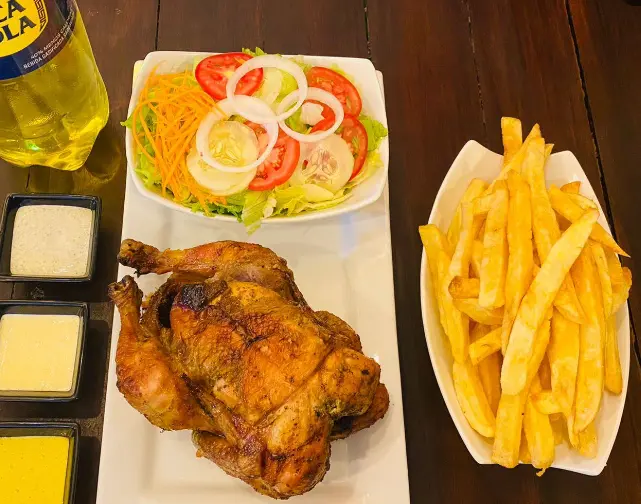
This is Pollo a la Brasa. If you are a remote worker and want to try this, you gotta know that you can pay for it using your crypto card in Peru
Quick fact check: confirm the restaurant’s payment methods
I got a bit distracted and forgot to ask the waiter if they accepted Visa, so I walked to the counter to confirm. The cashier was very kind and said yes, so I knew I could pay with either my Lemon Cash crypto card or my TONCard.
They also accepted cash, plus Yape and Plin. So my friends could pay however they preferred.
You might be wondering what Plin and Yape are. Here is the short version:
Plin and Yape are the everyday wallets we use in Peru to move money between friends instantly, without cash or a physical card. According to Peru’s central bank, there are more than 14 million e-wallet users, and many people use more than one.
Let’s start with Yape. It was created by BCP and is the most popular in Peru, with millions of users in Bolivia too. Besides sending money to friends, people use it to pay bills, take small microloans, and even exchange dollars from their phone. A full toolbox in your pocket.
Plin is the other giant. It works similarly but it is not tied to a single bank. BBVA, Interbank, and Scotiabank offer it, and it connects to other institutions like municipal savings banks, so you can send money across different banks using just a phone number.
The ugly side of these apps is that there have been scams reported, like fake QR stickers placed over real ones or fake “refund” messages that are phishing. There are also outages near midnight.
If they fail, you literally cannot pay even if you have money.
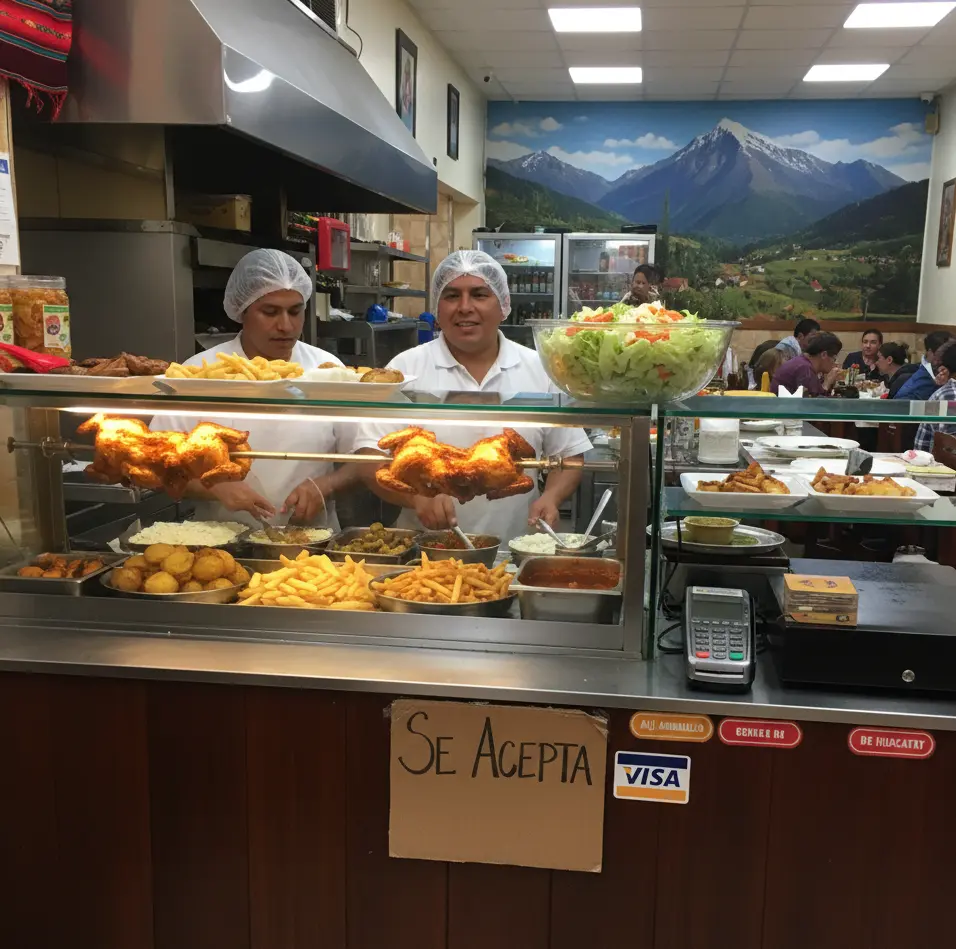
Crypto bro, do not rush....before sitting ask if the restaurant accept VISA. If the answer is yes, ok...go ahead. You can pay using your crypto card in Peru
Getting paid in USDT and paying with a crypto card in Peru...is really possible?
In my group of friends, I am the only one who works as freelancer. Therefore I earn basically in USDT or USDC. That's the main reason why learning how to use a crypto card in Peru is not an option, is MANDATORY.
I am the only one using crypto cards.
I have a physical Lemon Cash card where I keep crypto like USDT or BTC and fiat like Peruvian soles.
I also have a virtual crypto card on my phone, TONCard, which I use anywhere that accepts Visa. I only keep dollars there and the currency conversion happens internally.
I work as a freelancer and most of my clients are in Europe and Asia, therefore, my income comes in stablecoins (USDT), paid directly to my USDT-TRC20 wallet on Binance.
Because of that, it used to be tedious to sell USDT for soles on Binance, then send those soles to my Scotiabank account, and only then be able to spend using PLIN...very tedious, right?
Unless it is an amount above 1,000 dollars, I do not bother hunting for the absolute cheapest FX method to convert dollars to soles. These are day-to-day expenses, and I spend at most 50 USDT a week.
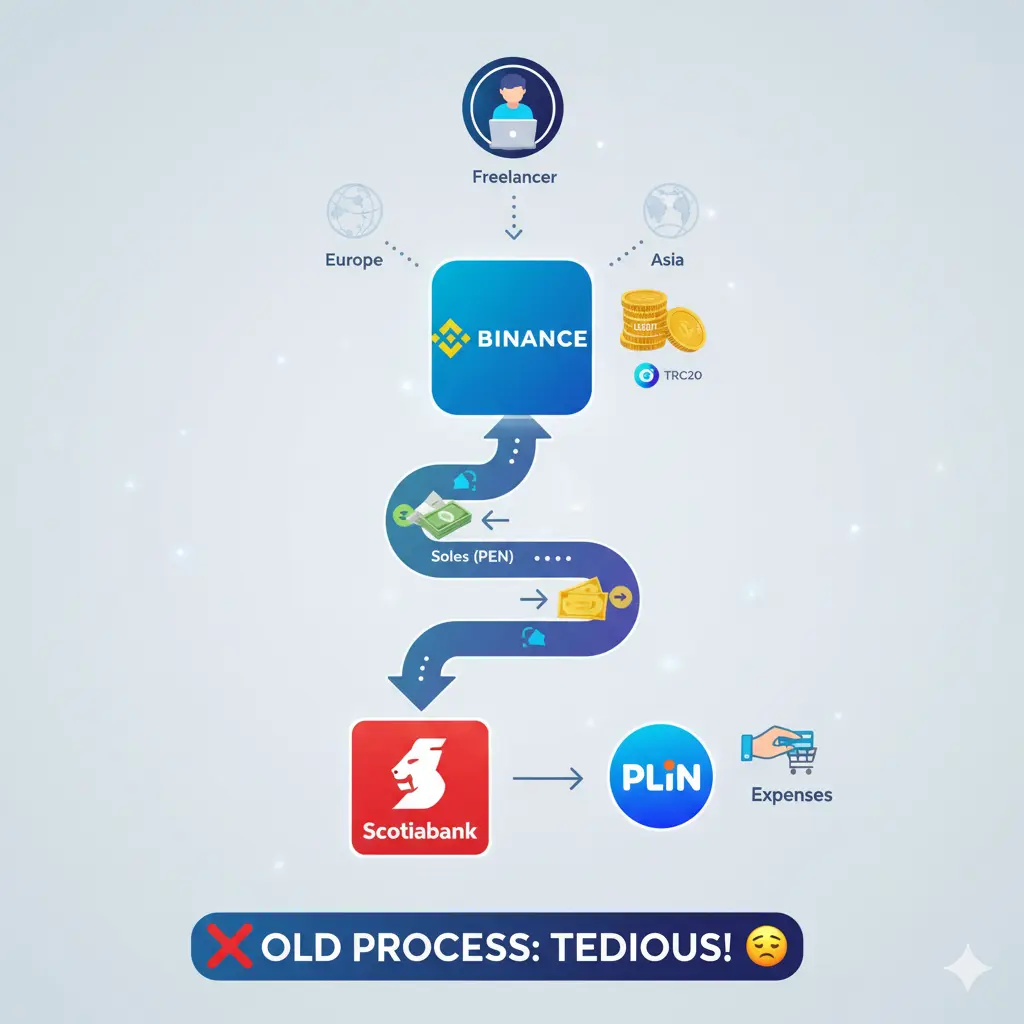
This is the normal process for any freelancer who lives in Peru. Earning in USDT or USDC but paying the bills and daily expenses in SOLES.
Quick primer: what is a crypto card?
It is a card, physical or virtual, connected to my crypto. I keep Bitcoin, USDT, or soles in the account. When I pay at any store that accepts Visa, the card automatically converts my USDT to the exact local amount the POS requests. The business receives soles. I spend crypto. All of this happens in seconds.
In another article I will tell you how I also put my USDT to work for passive yields of up to 14 percent per year.
My friends, on the other hand, work for companies or government institutions in Peru, so they get paid in soles into local banks. It would be unnecessary for them to use a crypto card to pay in soles. They would literally lose money on the exchange spread.
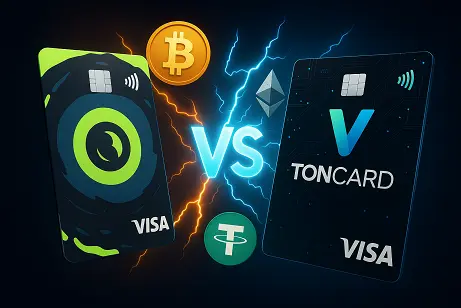
If you want to use a crypto card in Peru you have many options. I am using these two: LEMON CASH AND TONCARD.
Dinner and payment that do not disappoint: pollo a la brasa + crypto card for peruvians
We finished the food in about fifteen minutes. It was delicious. After lots of talk about a friend’s flat tire and that night when a woman asked us for help far from the city and then disappeared into the dark, we were left both amazed and a little spooked.
Close to midnight, the check arrived and we decided to split it. The total was PEN 144.00.
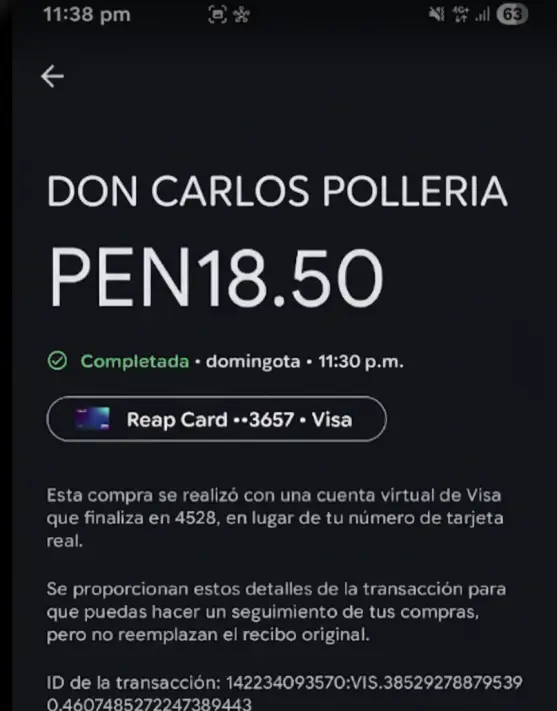
I asked for the POS to pay with my phone. I opened my wallet app, selected my TONCard, and tapped to pay. PEN 18 was deducted.
Then it was my friends’ turn, and I could see the discomfort on their faces.
-“What happened?” I asked while getting my things ready.
-“We have to wait because Plin is failing,” one friend said, resigned.
-“Right, Plin often fails close to midnight, doesn’t it?” I said as I sat back down. It looked like the wait would take a while.
-“I can cover it, I have cash,” another friend offered, and hurried to pay.
What we did not expect was that three of our friends only had Plin and the app would not work for them, so we just had to wait while we finished the last of the Coca-Cola from the second bottle.
Keep in mind almost nobody carries cash anymore, and when we go out we usually do not take a wallet for safety. That is why we go on night rides with only the essentials. Everyone trusts digital wallets.
And that is part of the problem. We think a QR is enough until these “maintenance” issues show up.
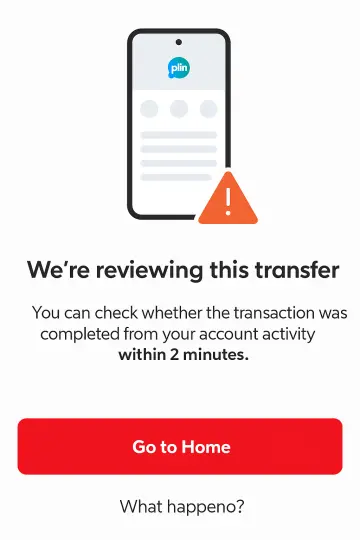
This is why more people prefer to use other payment applications than the classics. Could be this the main reason everybody will use a crypto card in Peru?
The same old problem with Plin and Yape: late-night maintenance
This is not exaggerated or made up. There are official posts from the companies apologizing to users for recurring issues that wreck the experience: maintenance downtime, duplicate charges, money that never arrives.
Many people have no alternative. Plin and Yape dominate the Peruvian market. Out of ten friends, all ten use one of them.
Maybe that is why the systems get overloaded. I do not know the exact cause. It is still wild that this happens in 2025.
Back to the story. Ten minutes went by and nothing was fixed. It was 12:21 am and we could not leave our friends at the table. So I lent them my TONCard crypto card.
I called the waiter, said I would pay by card, and he brought the POS. I took out my phone and paid PEN 54.00.
My friends, embarrassed, thanked me and promised to send the money first thing once the system came back. I explained how to send it to my Lemon Cash account.
It had happened to me before and it felt bad. When you are alone it is one thing. With friends it is different.
There is a detail most people ignore. It is not only about the money. It is the social embarrassment. You are with friends, you already ate, it is midnight, the waiter is waiting, and your app throws an error. No one wants to look like the person who cannot pay.
Full belly, happy heart...Or not?
With the check covered, we got ready to head home. It would have been a perfect night if it were not for those failures that left us feeling embarrassed, frustrated, and a little angry.
Thankfully I had a backup that does not depend on Peruvian banks: My crypto card TONcard.
I once waited half an hour for the system to come back at midnight. The big question is who is awake at that hour to bail you out.
The lesson is simple. Always carry a plan B: some cash or a debit card linked to Google Pay.
Why do people in Peru rarely use credit cards in this restaurant?
Because the place adds a surcharge for credit cards, either 5 percent or a minimum of 5 soles. It is illegal, yet it happens all the time in Peru, and no one wants to argue about 5 percent at midnight in front of friends. In the end the whole system nudges you to depend on a single local payment app.
Peru’s financial context is complex and often unfair. With the right tools you can still make your purchases faster, with no extra cost, and without the headaches we faced that night.
If you are a freelancer who gets paid in dollars or stablecoins and works with clients abroad, here is the truth:
Your problem is not getting paid. Your problem is using that money without losing it in fees or getting stuck when local apps fail.
If you also get paid in dollars, USDT, or euros and want a clear and human walkthrough on how to spend that money in your country without burning it on fees, send me a message. This is exactly the real life I am documenting in Crypto On the Streets.
Frequently Asked Questions about Crypto Cards in Latin America and more especially, in Peru.
1. What happens when local payment apps fail at midnight in Peru?
It is a common pain point. Late at night there are lots of errors sending money, apps that will not open due to “maintenance”, and delayed payments. Between Yape and Plin, the one that reports more issues, according to user stats, is Plin. I use Plin more, and yes, I avoid it at night to prevent awkward moments.
2. In Peru, how can a crypto card save a group dinner when Plin stops working?
If I did not have a crypto card, we would have had to pay by credit card with a 5 percent surcharge. Ten people could not pay due to the app failure, the pending amount was PEN 187.50, and the surcharge would have been 10 soles. Total: PEN 197.50.
Since my crypto card is not tied to Peruvian banks, it did not suffer that outage. Having it as a backup was close to a miracle.
3. How can freelancers paid in USDT spend locally without banking headaches?
If you live in Latin America, you can live normally without routing everything through a local bank. Open a crypto card and top it up with stablecoins to use it. I receive payments on Binance, then load my crypto cards like Lemon and TONCard.
4. Should I keep a crypto card as a backup when QR payments like Plin and Yape go down?
Definitely. Do your own research and pick a friendly, serious option. If you are in Peru, Colombia, Argentina, or Mexico, I recommend Lemon Cash. If you do not want to share personal data, you can use a pseudonymous crypto card that does not ask for KYC, which reduces some attack surfaces.
5. What can CMOs learn from real payment failures in Latin America?
The most used wallets fail when you need them most, and support is often a bot that repeats answers. If you offer a crypto card that works 24/7 with effective human support, you have an edge. Add merchant partnerships, for example Starbucks, KFC, Pizza Hut, and it is a winning play.
6. Why is relying on a single local payment app a UX risk in emerging markets?
Because a single rail creates fragility. You should always have an alternative method like cash or another card. In our case some had cash, others only had a phone. In developing markets, where connectivity can be a challenge, choose payment options that do not depend directly on local banks, like crypto cards.
7. How can I turn my USDT income into real life payments using a crypto card in Peru and all countries in LATAM?
If you are a visitor or a Peruvian freelancer, remember that stores only accept Peruvian soles. You will not pay directly in USDT at the cashier. If you pay with Visa, the merchant charges in dollars and converts at the card FX rate. I paid with TONCard in dollars and it settled in soles at 3.32. That likely includes fees and hidden costs. Not the best rate, but at midnight, with the place closing and the waiter waiting, it solved the problem.
8. How do you design payment products for Latin America where one app dominates the market?
In many countries one or two apps dominate. If that app goes down, half the country cannot pay. In Peru, I estimate fewer than 5 percent get paid in stablecoins, but in Brazil and Argentina stablecoins account for at least 60 percent of crypto activity according to Chainalysis.
9. As a tourist, how to Use a Crypto Card in Peru While Just Visiting Machu Picchu or the Amazon?
Using your crypto card as a tourist in Peru is seamless and straightforward. The crucial factor is that your card is powered by VISA or Mastercard. Since Peru has wide acceptance for these international networks, you can use your crypto card for almost everything, from paying for souvenirs in Cusco to dinner in Lima. Merchants receive Peruvian Soles (PEN), so there is no extra effort required on their end.
10. How to win if you offer a crypto card to Latin Americans:
-
Focus on the existing niche: freelancers and remote workers paid in USDT who lack an easy way to spend locally. For them your card is the primary rail, not a backup.
-
Make conversion simple: move stablecoins onto a Visa card in a few taps, no banks, no waiting for transfers.
-
Measure and communicate value: how many local payments are completed thanks to your card during wallet outages, and how many freelancers convert their stablecoin income into daily spend through your product.
In short, you are not “just another card”. You are the network that keeps people paying when the main rail fails. That matters to a CMO and a CEO.
✍️ Written by El Salvador CopyBiker — Crypto Content Specialist.
Helping your audience actually understand your Web3 product (no PhD required).





