Everyone is obsessed with Bitcoin’s next move.
Price predictions, ETF inflows, halving cycles, the same narratives keep rotating through the market.
But something far more important than another Bitcoin cycle is starting to happen underneath all of that noise.
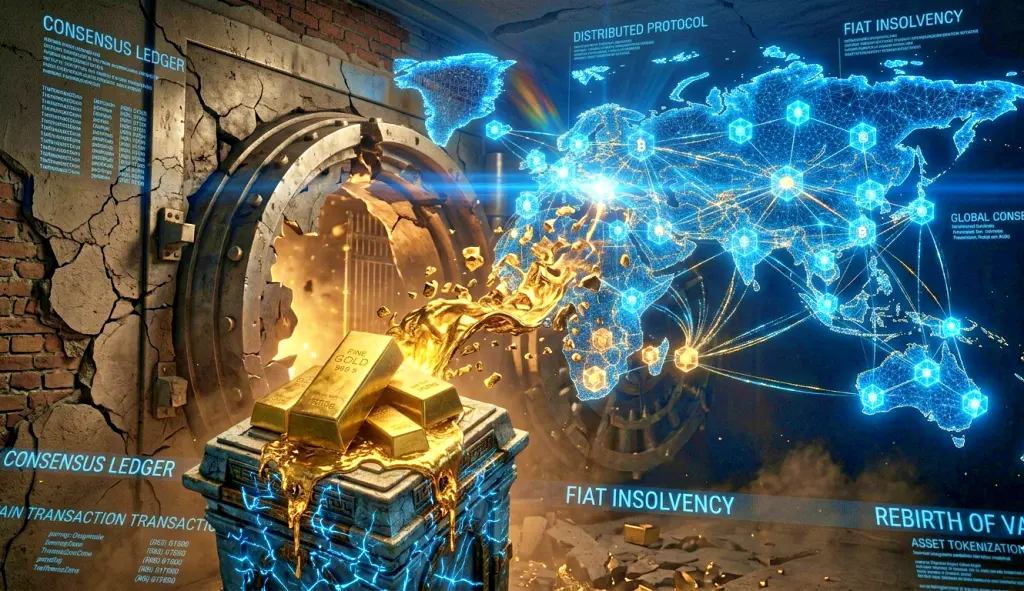
Gold, the most established store of value in financial history is being rebuilt for the blockchain era.
Not replaced. Rebuilt.
And that distinction matters more than it sounds.
Because it means the asset that governments, central banks and investors have trusted for centuries is starting to change how it moves, how it settles and how it interacts with the financial system.
For the first time, ownership of physical gold can exist as a digital token moving instantly across blockchain networks!
Each token is still backed by real gold sitting in vaults.
But the key shift is not representation.
It is functionality.
Gold is no longer locked in one place, one market or one settlement system.
It can move globally in seconds.
It can settle without traditional intermediaries.
And it can be used inside decentralized finance as collateral.
That last point changes the entire game.
Because gold stops behaving like a passive asset and starts behaving like programmable liquidity.
And once that happens, the role of gold in finance quietly shifts from storage to utility.
This is the part most people are missing.
Tokenized gold is not just a digital version of an old asset.
It is the beginning of real world assets being absorbed into blockchain based financial systems.
And gold is only the most visible entry point.
Bonds, treasuries, credit markets even private equity are already moving in the same direction.
A parallel financial system is being built, piece by piece, outside of traditional banking rails.
The market for tokenized gold is still small compared to physical gold.
But growth is not the interesting metric anymore.
Integration is.
Because once an asset becomes usable as collateral in decentralized liquidity systems, it stops being just an investment and starts becoming infrastructure.
That is a completely different category.
And history is very clear about moments like this.
The most important financial shifts never look important at the beginning.
Online banking looked unnecessary.
Exchange traded funds looked like a niche product.
Digital payments looked optional.
All of them quietly became default infrastructure.
Tokenized gold is sitting in that same early phase.
Not obvious. Not mainstream. But increasingly functional in ways traditional markets were never designed for.
And this leads to a much bigger question!
If the most trusted physical asset in history is becoming digital infrastructure, what exactly is next?