
Someone opens a wallet to send USDT and discovers they need another token to cover the network fee. The balance looked sufficient, but the payment now requires a purchase and an explanation of why it is necessary.
Bringing exchange and transfer tools into one app can spare users some of that preparation. The real test comes when someone tries to complete a payment: how much work has the product taken off their hands, and are the remaining decisions clear?
What Crypto Super Apps Offer
Crypto super apps bring related financial services into one product. Businesses can integrate the components they need instead of arranging separate providers for each task.
The value of a crypto super app lies in how much coordination it handles for the user. In her TOKEN2049 Singapore keynote on October 7, Pauline Shangett explained why simplifying that work should preserve users’ control over their funds:
This does not mean creating a new gatekeeper. And it does not mean taking control away from people. It means giving them control without forcing them to manage every part of the system.
— Pauline Shangett, Chief Strategy Officer at ChangeNOW

Martin Masser, Director of Strategic Partnerships at ChangeNOW, describes the customer needs behind that product approach in his interview with Decrypt about ChangeNOW’s crypto super-app roadmap.
We’ve actually listened to what people are wanting from the custody, from the crypto payments…
— Martin Masser, Director of Strategic Partnerships at ChangeNOW
A business accepting crypto still has work to do after receiving a payment. It may need to manage or exchange the funds. Those tasks belong to the same operation, even when separate providers have traditionally handled them. Partners can choose the components they need; the interview discusses existing capabilities alongside planned development.
The same coordination problem shaped our message at TOKEN2049. In our update from the conference, we put it this way: crypto built the pieces of a new financial system, then left users to put them together. The super-app idea is to turn a collection of features into a connected experience that lets users choose the outcome and leaves the product to work out the route.
Smaller conveniences matter in everyday transfers too. Our guide to mobile crypto app features includes saved addresses for repeat transfers, sparing users from entering the same details each time. The receiving instructions still need to remain current.
Having the address ready is only part of the preparation. Then comes the obstacle Martin also raises: the user has enough of the asset they want to send, but still needs a separate gas token to cover the network fee. A routine payment has become a lesson in how the network works.
How Gasless Transactions Work
Gasless transactions let a service cover the network fee or arrange payment in a supported token. Users do not necessarily need the chain’s native asset, although they may still pay a fee.
Our gasless transactions guide explains how a relayer or paymaster handles that step. KG, founder of Internet Money, describes the explanatory burden during ChangeNOW’s X Space on self-custody:
…trying to explain to someone, hey, you’ve got to have coin A and coin B, it’s a thing, maybe it becomes just a whole other layer to the onion.
— KG, founder of Internet Money
Someone who came to send money now has another asset to understand and obtain. NOW Wallet’s GasFree USDT addresses that detour for TRON transfers, allowing users to send TRC20 USDT without first holding TRX.
The fee has not necessarily disappeared. A service may absorb it or deduct the cost in an asset the user already owns. The confirmation screen needs to make that arrangement legible: paying in USDT removes the separate TRX purchase, but does not automatically make the transfer cheaper.
On a small payment, the remaining fee can determine whether the transfer is worth making.
Why Crypto Transaction Costs Vary
Layer 2 networks can reduce costs by sharing settlement expenses across batches of transactions. Network demand and the operation being performed still affect the final fee.
Jane S’s analysis of Layer 2 costs and ChangeNOW activity connects those mechanics with platform data. Between May and September 2026, Ethereum’s share of ChangeNOW swaps fell from 21.06% to 19.5%, and Base entered our ten most-used networks.
Activity across other networks followed different patterns: Solana swap count fell by 18.11%, while TRON transaction count rose by 9.91%. These figures describe activity on ChangeNOW rather than the whole market, and do not show what a user would pay for a particular transfer.
The more immediate question is what the chosen route costs when the user is ready to send. Our Robinhood Chain gas-fee breakdown reports a roughly 25-fold rise in gas price during early September’s congestion, followed by a decline of about 97% by late September.
The spike made some small swaps uneconomical. The article cites Bitquery data showing 15,112 swaps on September 3 where gas cost more than the trade itself.
A current quote for the intended operation is therefore worth more than a general promise of low fees. An affordable route is only useful if the receiving service accepts funds on that network.
What to Check Before Sending Crypto
Before sending crypto, users need to confirm that the receiving service supports the selected network and follow its deposit instructions. Some services require a memo or destination tag.
Our review of crypto mistakes handled by support shows why a familiar-looking address can offer false reassurance. Ethereum and several other EVM networks share the same address format. An address can be valid without the receiving service accepting deposits on the chosen chain.
Missing memos create a different gap between sending and receiving. Funds may reach a service’s address without being assigned automatically to the intended account. The sender sees an on-chain confirmation; the recipient sees an unchanged balance.
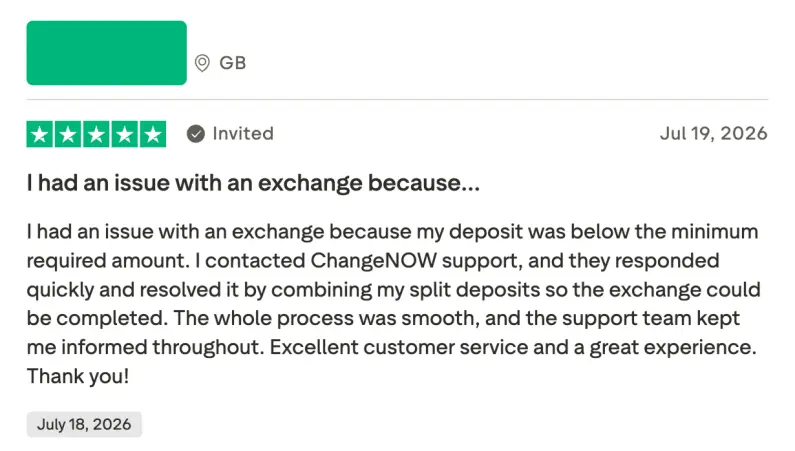
Deposit requirements can interrupt a swap too. In one case from our support review, a user’s split deposits fell below the minimum. Support combined them so the exchange could be completed.
A simpler interface should make these requirements clear before the user sends funds. Removing the need for a gas token helps, but it does not make every wallet interaction safe. Catalin Iordache, Backend Engineer at xPortal, draws that distinction in our gasless transactions guide:
Gas abstraction removes the friction most users never understood in the first place. That’s huge, but it doesn’t solve the backup problem or the phishing problem.
— Catalin Iordache, Backend Engineer at xPortal
Removing the gas-token purchase is a useful improvement. Keeping the total charge and receiving requirements visible helps that improvement carry through to a completed payment.
Thanks for reading this week’s digest! We’ll keep watching how these changes hold up in everyday use—especially when someone simply wants to send a payment and get on with their day.






