Most cat owners know that meows, purrs, and headbutts are ways our feline companions communicate. But one of the clearest windows into your cat’s mood is right behind them — their tail. Cats use their tails as emotional signals, and once you learn the meanings, you’ll never see a simple swish the same way again.
Here are nine common cat tail positions and what they reveal:
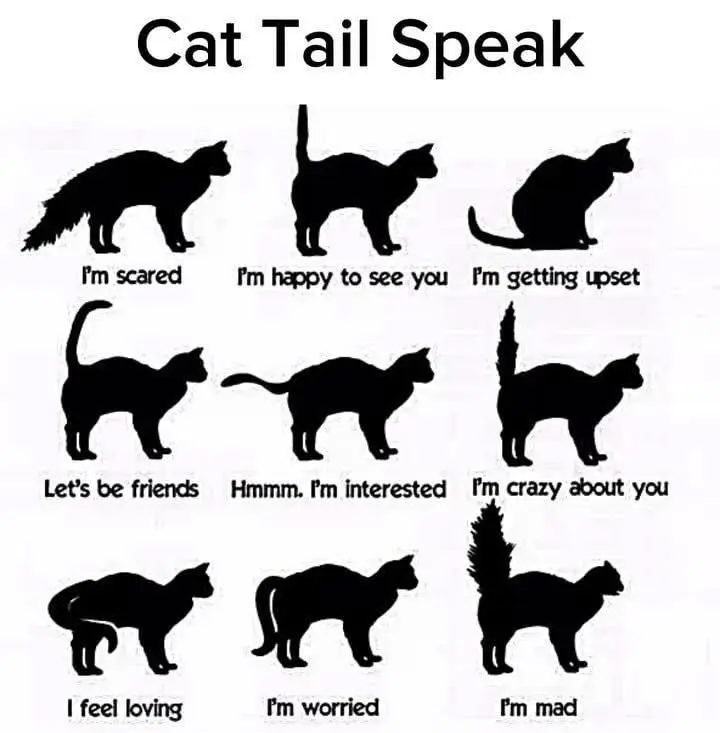
1. Tail Tucked Low – “I’m Scared”
A tail held low or tucked between the legs usually signals fear, insecurity, or stress. Your cat may be feeling threatened or anxious, so offering a calm, safe space can help.
2. Tail Held High – “I’m Happy to See You”
A straight, upright tail is one of the clearest signs of confidence and friendliness. Cats often greet their humans this way when they’re feeling happy and secure.
3. Tail Flicking – “I’m Getting Upset”
Fast, jerky tail movements often indicate irritation or agitation. It’s a polite warning: “I’ve had enough.” Respect this signal before it escalates.
4. Tail Upright with a Curve – “Let’s Be Friends”
This “question mark” shaped tail shows playfulness and friendliness. It’s an open invitation for interaction, whether playtime or affection.
5. Tail Gently Swaying – “Hmm… I’m Interested”
A softly moving tail tip means your cat is curious or focused. You’ll often see this when they’re stalking a toy, bird-watching, or exploring something new.
6. Tail Quivering – “I’m Crazy About You”
A tail that quivers (like a vibrating little shake) is a big compliment. Cats often do this around people they adore — sometimes even when marking territory near them.
7. Tail Wrapped Around – “I Feel Loving”
Cats show affection by curling their tails around your leg, arm, or even another cat. It’s their version of a hug or holding hands.
8. Tail Low & Stiff – “I’m Worried”
A tail held low and rigid can indicate unease or worry. Your cat may be uncertain about its surroundings or an unfamiliar person or pet.
9. Tail Puffed Up – “I’m Mad”
The classic bottlebrush tail! When a cat’s tail puffs up dramatically, it’s usually fear mixed with aggression. They’re trying to appear larger to ward off whatever’s scaring or angering them.
Why Learning “Tail Talk” Matters
Understanding tail language deepens your bond with your cat and helps prevent misunderstandings. Cats rarely act “out of the blue” — they usually give clear warnings with their body language first. By tuning into these signals, you’ll know when your cat wants affection, play, space, or comfort.