
Aada Finance – When DeFi and NFTs Bond Together
At the beginning of February, IOHK released a significant update. It improved the overall blockchain performance by increasing the block size from 72KB to 80KB. What’s more, the foundation increased the Plutus script memory units from 12.5M to 14M per transaction. All these updates are just the stepping stones in Cardano’s 2022 plans for a takeover.
Arguably, the ghostchain moniker is a no-more, as more dApps are launching on the network. One of the honorable mentions is Aada Finance – a decentralized lending protocol introducing an innovative NFT-bond strategy. Here’s how a small team of devs aim to revolutionize the DeFi landscape by utilizing NFTs:
What is Aada Finance?
By design, Aada Finance is a non-custodial decentralized protocol for lending and borrowing crypto assets. At first, the average investor will quickly assume that the platform is just like any other DeFi solution. However, Aada utilizes some of the unique features of the Cardano network that most fail to leverage.
Along with the blockchain’s benefits in terms of security, the team of Lithuanian devs introduces an NFT-bond strategy. The innovative solution allows users to lend and borrow crypto using a pooled lending mechanism. That way, the protocol revolutionizes the use of NFTs. Perhaps, you can learn more about the project by exploring its Aada Finance Gitbook.
How does the NFT-bond strategy work?
As already noted, the NFT-bond strategy is a lending and borrowing mechanism unseen in DeFi. The Cardano ledger design is one of the primary catalysts for the new use case. Unlike Ethereum, it doesn’t have token standards. In turn, all fungible and non-fungible tokens become native assets without the need for smart contracts.
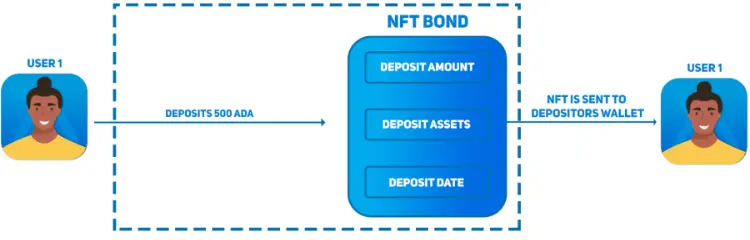
In Aada’s case, the platform is an intermediary between lenders and borrowers. The pooled mechanism implements a smart contract, which automatically utilizes deposits. In turn, it lends them out to borrowers. Whether you’re lending or borrowing, the protocol will issue an NFT-bond for every loan.

In the lender’s case, the non-fungible token represents the deposit you can redeem, transfer, or trade. If you’re looking to borrow, you’ll receive an NFT representing the loan. Bear in mind that you must first provide collateral. In other words, the NFT-bond will also relate to the borrower’s initial deposit. The Aada team has visualized all their NFT-bond features to make things easier.
What are the benefits of lending and borrowing on Cardano?

If you’re a first-timer, you’ll likely need a more detailed explanation of how crypto lending works. Still, it won’t be hard to decipher the UTXO blockchain model, as Cardano solves its trilemma effectively. Here are the most crucial benefits of using lending platforms on IOHK’s network:
Security guarantees
Undoubtedly, the first thing to note about lending and borrowing on Cardano is blockchain security. The Plutus/Haskell code is the norm in many advanced technologies. The PAB provides projects with a more robust structure than Solidity. No wonder it’s the go-to choice for rocket science and fintech.
Also, let’s not forget about the equal security guarantees. Instead of focusing on ADA, all assets on the ledger are native, including NFTs. This feature is crucial to making them safe to use in smart contracts, gaming, and dApps.
Native assets
As already mentioned, one of the perks of taking loans on Cardano is the lack of different token standards. That way, minting NFTs is a lot easier, as the issuance happens directly on the blockchain. In essence, creating lots of non-fungible tokens will be as easy and cheap as a walk in the park. Moreover, the feature will make the integration of NFT-bonds in smart contracts and apps much more accessible.
Lower fees
Undoubtedly, one of the best advantages is the low transaction fees. In the past 12 months, ETH’s native network has plagued small investors with costs in the range of $30 to $65. On the other hand, Cardano’s fees have remained at around 0.19 ADA, or roughly 15 cents. Ultimately, Aada Finance will offer much higher total returns than its Ethereum competitors.
Utilization
Of course, it’s easy to connect the dots when talking about lower fees. Compared to the likes of Ethereum, the UTXO-based blockchain model offers a much higher utilization. In this regard, borrowing funds on Aada will be way more efficient than ETH protocols.
Predictability
The term “cathedral” was first used by Anatoly Yakovenko, the Co-Founder of Solana, to mock Cardano’s peer-review approach. In a live interview in August 2021, he made fun of the blockchain by saying:
“It’s popular to shit on Cardano. The approach they are taking is extremely esoteric. Huge stick up their ass about correctness. They’ll never ship, they’re building a cathedral.”
Apparently, Cardano aims to be much more than a simple blockchain. In this regard, scheduled updates are a must-have feature, especially when building “a cathedral”. Since 2022, IOHK has released multiple code drops, including the “February release”.
According to the roadmap, more will come in June (CIPs) and October. In such cases, it’s safe to say that the growing DeFi landscape needs predictability. Aada Finance will undoubtedly benefit from this rationale, as it will allow the team to work accordingly.
Conclusion
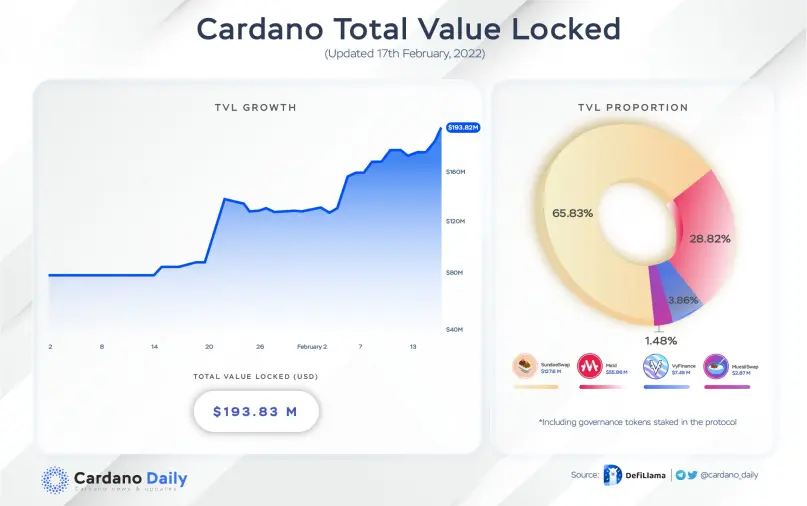
Cardano is already starting to prove its worth as a blockchain. Arguably, it boasts an over 90% increase in TVL from February to March. Arguably, the growing numbers are a sign of success that already debunks the ghostchain myth. Of course, one of the predicaments for the rapid boom are first-movers like Aada Finance.
Indeed, being an innovator has always given projects the upper hand in DeFi. However, more important is how Aada Finance’s NFT-bond strategy will expand. Undeniably, NFTs are already a perfect match for Cardano platforms and are ready to revolutionize the landscape.
Soon, users will safely tokenize their bonds through native assets with the same security guarantees as ADA. In other words, Aada will discover an entirely new crypto fixed income market thanks to NFTs. Perhaps, it’s only a matter of time for the small crypto lending protocol to attract an explosive influx of investors.





