
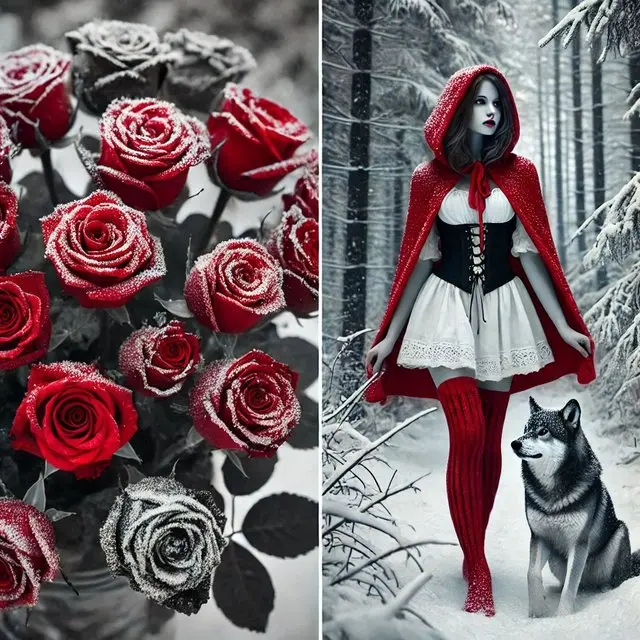
The clip uses selective toning technique in black and white + red.
The combination of Deep House and Tropical House with isochronic tones and binaural beats has resulted in a unique psychedelic sound. It seems that starting with this track, I'm shaping my distinctive and recognizable style, both in sound and visuals.

To stand out: The isochronic tone can be heard in the background, resembling the resonance of a singing bowl. The binaural beat sometimes sounds like organized "white noise" (similar to the sound of snow falling on a microphone, slightly hissing and crackling). However, other frequencies of the binaural beats can be heard as a rhythmic pulsation. After listening to the track without headphones, you’ll be surprised to find that the binaural elements are inaudible on open speakers (which is expected since they form by delivering different frequencies to each ear). The point isn't necessarily for you to clearly hear or distinguish them behind the main melody; the point is that the frequencies they add have a positive effect on the mood and overall perception of the music. I started with an isochronic tone at 3000 Hz, then lowered it slightly, but it's still in the higher frequency range.
Dj Bоgdan Karasiov feat Aurora - Awakening (Experimental House Original Track)
I used my lyrics from my song "Bright Colors" and added new choruses and a bridge.
(translated from Ukrainian)
[Verse 1]
At the rabbit hole
Bright colors fly
Falling down
I’m rising high
[Instrumental break]
[Chorus]
I know the awakening
So joyful to hear
So joyful to know
I’ve reached enlightenment
[Instrumental break]
[Verse 2]
White rabbit and red thread
Lead astray,
Only this moment matters,
The rest are just traces on water
[Instrumental break]
[Chorus]
I know the awakening
So joyful to hear
So joyful to know
I’ve reached enlightenment
[Instrumental break]
[Bridge]
DJ Bogdᛃn
And Aurora
Oleksandria
Aurora, Aurora, Auroraaa
[Instrumental break]
[Outro]
At the rabbit hole
Bright colors fly
Falling down
I’m rising high
[Fade Out]
A frame that couldn't quite be "brought to life" into a full video.
A bit of history
It makes sense to start with my conclusion from researching this topic: it's important to distinguish between selective toning and selective coloring. Despite the similarity in the resulting effect, these are technologically different methods in photography and cinematography.
In Photography
Selective coloring began in the 19th century. Before the advent of color photography, photographers experimented with manually coloring black-and-white images, adding one or several colors for emphasis. Sepia (brown toning) became the most well-known toning technique as early as the 1850s. The first instance of selective toning (where a colored element is retained or added to a black-and-white image) in photography, as we understand it today, emerged with the advent of the digital era of photography in the late 20th century, around the 1990s. Thus, despite the age of the idea, humanity took approximately 140 years to move from sepia to the real technical possibilities of modern selective toning.
In Cinema
The first attempts to add color to black-and-white films occurred in the late 19th and early 20th centuries when images were hand-colored. However, the first use of selective toning, as we understand it today (where one color stands out against a black-and-white background), can be seen in some avant-garde experimental works only from the mid-20th century.
One of the most famous and iconic examples of selective toning in cinema, which can be considered the "starting point" of modern use of the technique, is Steven Spielberg's film Schindler's List (1993). In this black-and-white film, the red coat of a little girl becomes an important emotional and narrative accent. This is perhaps the most recognizable example in cinema where a single color is used against a black-and-white background to enhance the dramatic effect. Another well-known example followed 12 years later with Sin City (2005).
Thus, the technique of selective toning is old as an idea but relatively young in terms of implementation. The limited number of popular films using this technique shows that it is still not widely employed.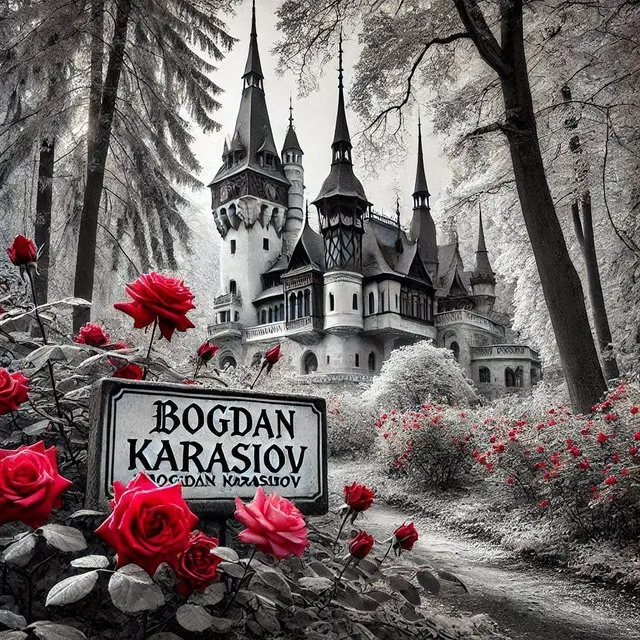

✍ Богдан Карасьов (Bogdan Karasiov), Ukraine.






