
NFTs (Non-Fungible Tokens) are a way to represent the tokenization of ownership in the Digital Age, ranging from collectibles (e.g. art, music, video clips, literature, etc.) to in-game purchases in video games. Gamers can stand to benefit from this innovation.
It has wrongly been thought of as digital content like Beeple’s art work (“First 5,000 Days”) or NBA highlight reels. Those are some examples of NFTs, but there is more to it. An NFT is not the actual content itself, but it is the metadata that verifies information about an asset mainly in the digital domain.
NFTs have become associated with Ponzi schemes and scams in the cryptocurrency market, which gave it a negative connotation. In the gaming world, this creates animosity with die-hard gamers who have viewed NFTs as money grabs for developers.
Gamers also view NFTs as giving advantage to opponents, making it seem like an expensive “cheat code” that affects fair gameplay. While there are legitimate concerns regarding those issues, perhaps it is best to explain the purpose of NFTs and how it can be of value to gamers.
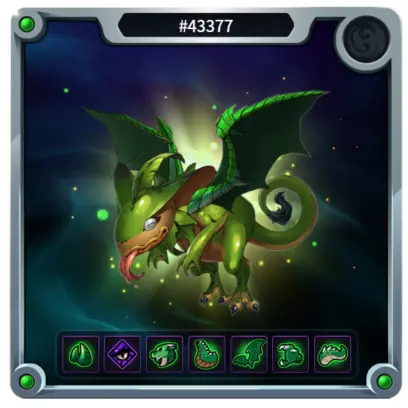
Figure 1. An example of a gaming NFT called DRAGOS (from League Of Kingdoms). An NFT becomes more valuable based on the rarity of its traits and demand for its features. NFTs are non-fungible, which means they are unique and not replaceable. A gamer who owns an NFT has a unique asset that is unlike any other, and their ownership of it is verified so it cannot be tampered or replicated.
The Outrage Over NFTs From Gamers
In the traditional gaming paradigm, your typical gamer plays video games for entertainment and social interaction with others (e.g. multiplayer games). It is primarily about having fun with other gamers. Others would say that it helps to fight boredom, relieve stress or even challenge playing skills. Those are all valid points coming from a gamer’s perspective.
Conflict with gamers arises with the use of NFTs. According to game development company Ubisoft, their attempt to integrate NFTs received pushback from gamers (96% dislike ratio). This is because NFTs can be quite expensive for your average gamer.
It is being viewed as non-essential to playing a game. Games have been around for so long, they never needed an NFT just to be able to play. There seems to be no justification from developers on why they would add NFTs, other than to make more money off the gamers.
Another point of contention is the unfair advantage NFTs can give to gamers. In a competitive gaming world, that means less skill is required with the purchase of NFTs that can allow anyone who owns it to easily win a game.
While that can be true in some cases, this has been happening in the traditional gaming world even before the invention of NFTs. Loot boxes and in-game purchases allowed gamers advantages as well.
NFTs Can Benefit The Gaming Industry
For gamers, it is about being able to track game related activity like the payments of rewards in Play-to-Earn (P2E) games. With an NFT, everything can be recorded and secured by cryptographic techniques using a blockchain.
Without an NFT, gamers would have to put their faith in the gaming platform alone and this can sometimes be a problem. Using verification from a blockchain can make claims easier to redeem.
Gaming platforms can suddenly censor an account or even counter a claim. If the gaming platform goes out of business, all data can be deleted and that includes any unredeemed or pending rewards or purchases. NFTs separate from the platform itself with the use of a blockchain to preserve the data.
For developers, it is about gamification of their titles for earning revenues. This is the process of integrating blockchain technology using an SDK (Software Development Kit) to create NFTs with new or existing games. In this case, developers can earn royalties whenever a game or in-game asset they created is purchased.
It no longer requires licensing agreements to enforce royalty payments. It can be easier to implement with an NFT since it has a standard format, compared to a custom solution that requires more time and effort that also increases costs for development.
Understanding The Value Of NFTs
The most important value of having an NFT in gaming, is that it establishes an ownership of a digital asset. Traditional gaming platforms are for the most part centralized and even analog. All in-game assets and data are not fully owned by the gamers. It belongs to the platform, whether it is stored on a cloud or company server.
Should the platform's server crash or an unexpected event like a system hack take place, gamers could lose all their assets. This is the reality of storing digital data like that from games. If a platform is careless, they can also lose the data and thus the gamer’s assets.
NFTs provide complete control and ownership, regardless of where the data is stored. This is the feature of decentralization provided by using blockchain technology.
The NFTs are also unique and cannot be replicated because it is protected by the blockchain. An NFT is the only one of its kind, and this cannot be replaced or substituted with another asset.
It removes the burden of control from anyone else, but users (i.e. gamers) must now be careful in guarding their assets. The sole responsibility will fall on them, since there are less points of failure along the way.
Web3 platforms utilize NFTs in blockchain-based gaming (e.g. Axie Infinity, The Sandbox). These are novel implementations that are just entering the gaming industry, but has yet to realize its full value for traditional gamers.
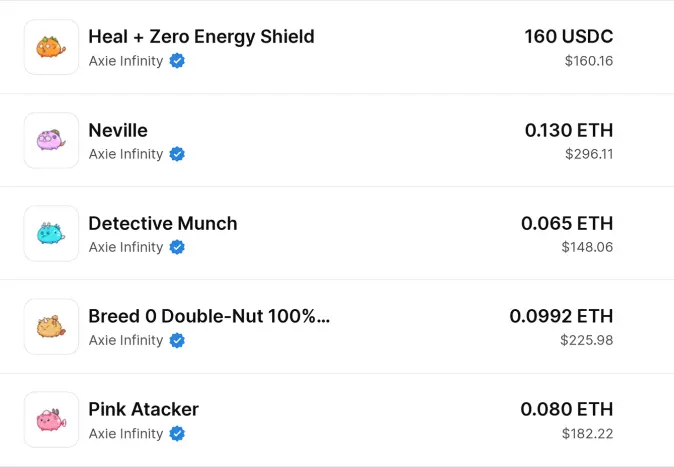
Figure 2. NFTs can tokenize in-game assets like with Axies. These are used for gameplay, and offer features that gamers can take advantage of. These assets can be earned or purchased.
Use Case In Games
With NFTs, a different type of experience is delivered to users. It should not take away the fun from playing games, but adds more to it. It preserves data about assets, making it less prone to tampering.
Gamers can mint profile NFTs that give them access to games without requiring permission from a platform, every time they want to play. It then keeps track of earnings from gameplay for collection of payment rewards. For developers this adds a new revenue stream from the purchases of NFTs created for their game titles.
They can also be used for in-game assets that gamers have earned or purchased. An NFT will establish their claims and ownership, making it less contentious and more secured. This maintains fair gameplay that is less prone to fraud.
NFTs can also be interoperable across multiple gaming metaverses. Blockchain interoperability protocols can interconnect NFTs across different games, and this allows gamers to use their in-game assets in other ecosystems.
Conclusion
The concerns about NFTs as money grabs by developers or unfair advantage in games is not a new problem. The same things also happen in traditional gaming even before NFTs.
It should really be up to the developers of the games regarding the features they create. If it is an obvious money grab or scam, then there will be consequences. It does not do any justice to put the blame exclusively on NFTs for something that also occurs with non-NFT games.
The argument that NFTs are just too expensive is also not entirely correct. Cost is something that adjusts to market demand. NFTs can be expensive due to the rarity of the item.
When it comes to gaming, newly minted NFTs do not have to cost as much since it has only been created. It only earns value over time based on the attributes it has accumulated.
The idea of owning your own data without having to rely on the gaming platform does not often come to mind to the average gamer. With NFTs your data belongs to you, so its value is providing gamers digital custody of something that they truly own.
Photo Banner Credit: EVG Kowalievska






