

Why is it Important?
A method to validate transactions and create new blocks is critical to doing just about anything in Crypto, from transferring money to the increasing the volume of cryptocurrency.
Before Proof of Stake
Before PoS was Proof of Work, a system which required nodes to solve difficult computational problems to create blocks. Such users were called miners and they would earn a profit depending on whether they were the first to solve a computational problem. This system requires a user to have a certain amount of computing power to solve the computational problems. This requirement helps to protect the system as attackers would need a majority of the total computing power to control the system, yet owning such a large amount is unlikely, although some corporations do own quarters or thirds of the total computing power. While PoW is relatively safe, its energy usage is extremely high, making this system highly inefficient, so other methods were sought out.
Proof of Stake (PoS)
Proof of Stake is a system based on the users staking coins in smart contracts, allowing them to act as validators. Validators verify that transactions adhere to the rules of the network, as well as take part in the creation of new blocks. These stakers earn a commission from the transaction fee. This system requires the user to stake a number of coins (which serves as collateral) — Ethereum requires 32 eth to begin staking — which varies from different cryptocurrencies and staking more coins allows for a greater chance in being chosen to propose a new block. PoS is extremely energy efficient as it does not require computing power but users staking coins, Ethereum reduced its energy usage by 99% when it switched from PoW to PoS. Security is maintained in this system by penalizing users who approve fraudulent transactions by taking some of their stake, and as people lose more money than gain by fraudulent means they are trusted to act as proper validators.
How Does Proof of Stake Work?
Lets first discuss how PoS verifies new blocks:
- Validators begin by verifying the block’s header, and check the previous block’s hash, timestamp, etc. and ensure that all of this is in compliance with the network rules
- Next, validators verify that the transactions in the block are proper, ensuring whether the user has adequate funds, the signature is valid, and that it does not break the rules of the smart contract
- Validators then process the transactions checking to see if any conflict or inconsistency ensues from the transaction.
- Then, validators ensure that the block’s gas limit is not exceeded by the gas fees of the total transactions in the block, which is very critical to maintaining stability of the network
- Lastly, the validator provides their digital signature, whereon other validators ensure that this block has a valid validator signature and that the block follows the consensus rules. If not, the validator is penalized based on amount of collateral they staked.
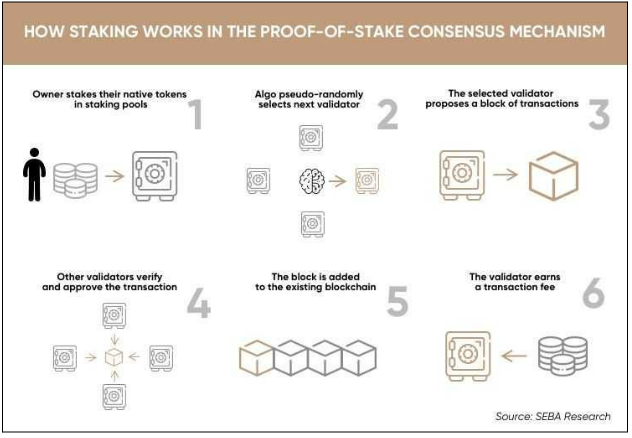 Proof-of-Stake Validators Collect Network Fees as Their Reward. Image via Capital.com
Being chosen as a validator for validating a block is proportional to the amount staked. Once chosen and having added the block to the blockchain, the validator then earns a small commission based on the transaction fee. Additionally, the staker collects their stake and rewards after a certain amount of time, depending on the smart contract, which ensures that the system has time to penalize any fraudulent transaction approved by the validator.
How to Become a Validator?
To become a validator requires a few things:
- Validators need to stake a certain amount of crypto as collateral. For example, Ethereum staking requires a stake of 32 eth, which is ~$50,000. This collateral must be deposited in a smart contract, which shows their participation in consensus
- Validators must also set up a node requiring them to download software to run the node, based on the cryptocurrency. The node participates in a variety of tasks in the network: transaction verification, consensus participation, and block validation
- Validators need to ensure that their node is constantly online and stable, where they need a stable network connection, ensure their node is operational, and must maintain the proper hardware to run the node.
This process described is for users who desire to become a validator on their own. However, other methods exist that allow users to bypass the crypto requirement, or the need to maintain a node.
- Pooled Staking: Pooled Staking allows the user to stake whatever amount of crypto they desire, with a higher stake giving them a greater percentage of the rewards. This form of staking involves trusting third-parties to hold the stake and relies on other stakers to stake their crypto as well, to reach the minimum requirement to stake. Additionally, the third-party also maintains the node alleviating the responsibility from the stakers. Pooled Staking also has different reward systems, where rewards are sometimes immediate and other times operate like normal staking. Popular pooled staking platforms include: Allnodes, Kraken, InfStones, Binance, etc.

- Liquid Staking: Liquid Staking is quite similar to Pooled Staking, as it allows users to stake whatever amount of crypto they want, with higher amounts giving them a greater percentage of rewards. However, Liquid Staking introduces a new aspect, staked tokens, which are given to the staker showing their proof of ownership and provides them withdrawal rights. These tokens allow Liquid staking to become a more flexible option, yet this staking method is very volatile and risky compared to the other methods. The tokens value is subject to the market position and if you lose the token then the stake is completely lost.
Pros and Cons of PoS

Pros:
- Energy-Efficient (Ethereum reduced its energy usage by 99% when it switched to PoS)
- Less expensive compared to PoW
- Good Scalability
- Fast transaction speed
Cons:
- More risky compared to PoW
- Rich get Richer
- Rewards for staking are generally less
References:





