
1) The Merge - basically how Ethereum switched from being a Proof-of-Work(PoW) blockchain to a Proof-of-Stake(PoS).
- Proof-of-Stake is how transactions are processed through staking where Ethereum holders can “stake” a share of their Ethereum to validate transactions earning them a portion of the transaction fees.
- Proof-of-Work is basically a mining system where a miner runs complex mathematical calculations to create a hash and add more blocks to the blockchain.
- Pros:
- Opened up the network by allowing more users to participate in it
- While this does open up the network, only users with 32 Ethereum ~~ $50000 are allowed to stake their Ethereum.
- However, certain services allow customers to stake Ethereum even if they hold less than the minimum (i.e. Coinbase or Lido Finance)
- Cut down the networks energy consumption radically
- Previously, the network was slow and expensive through its high consumption of energy in the PoW system, but now through PoS the energy consumption dropped by a whopping 99.95%.
- Opened up the network by allowing more users to participate in it
- Cons:
- Threat to Decentralization
- The central aspect to cryptocurrency is its decentralized nature, but with the Merge it allows Ethereum holders with more Ethereum to validate more transactions and earn more money compared to others with less Ethereum.
Through this, more Ethereum is concentrated in the hands of the rich and so is most of the Ethereum earned.
- The central aspect to cryptocurrency is its decentralized nature, but with the Merge it allows Ethereum holders with more Ethereum to validate more transactions and earn more money compared to others with less Ethereum.
- Miners to Staking
- After the Merge, miners who made around a 40% return on the mined Ethereum can only make up to 15% with the staking system, since Ethereum can no longer be mined.
- Threat to Decentralization
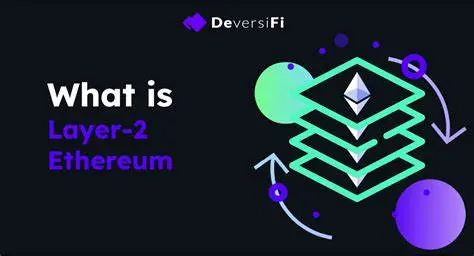
2) Layer 2’s
- Ethereum had many issues including: scalability, transaction time/fees, etc. and with the increasing number of transactions the whole network was just too slow to process everything. However, with the introduction of layer 2’s which are scaling solutions, where another blockchain is used to take on some of the transactions that run through Layer 1 (Ethereum itself), yet still offering the same security and decentralized nature, Ethereum is able to reduce transaction times and LOWER TRANSACTION FEES. Before Layer 2’s transaction fees were exceedingly high peaking at nearly 71$ back in May. But what exactly are these Layer 2’s? Some Layer 2’s include Arbitrum, Polygon, Metis, Optimism, etc.
- There are different types of layer 2’s and the most commonly used ones are rollups (process hundreds of transactions into one transaction on Layer 1). There are 2 kinds of rollups:
- Optimistic rollups: Transactions are presumed to be valid and they can be checked if necessary and if a transaction is suspected to be invalid then a fault proof is run
- Zero-Knowledge rollups: Uses validity proofs to check transactions that are computed off-chain.
The main difference between the two is that Optimistic is basically innocent until proven guilty and Zero-Knowledge is guilty until proven innocent.
- There are different types of layer 2’s and the most commonly used ones are rollups (process hundreds of transactions into one transaction on Layer 1). There are 2 kinds of rollups:

3) Number of Hacks
- While the Ethereum system itself has never technically been hacked, the bridges and storages with an intermediary have been.
- In February of last year about $326 million dollars were stolen from the Solana Wormhole Bridge, which allowed people to trade their assets from Solana and Ethereum.
- In March of last year about $625 million dollars were stolen from the Ronin network (an Ethereum sidechain) built for blockchain games.
- Lastly, the one everyone knows about: $8 billion dollars were stolen in user funds by the Sam Bankman-Fried in the FTX exchange fraud. This was due to the fact that people entrusted their money with an intermediary.






