
Abstract
Across many African economies, financial exclusion and currency instability hinder growth. This article explores how Bitcoin acts as an open, permissionless payment layer to strengthen circular economies systems where value circulates locally, fostering resilience against global financial friction.
Key Takeaways:
- Beyond Speculation: In Africa, Bitcoin is transitioning from a speculative asset to a functional payment rail.
- Local Resilience: Circular economies use Bitcoin to keep wealth within the community, bypassing failing national currencies.
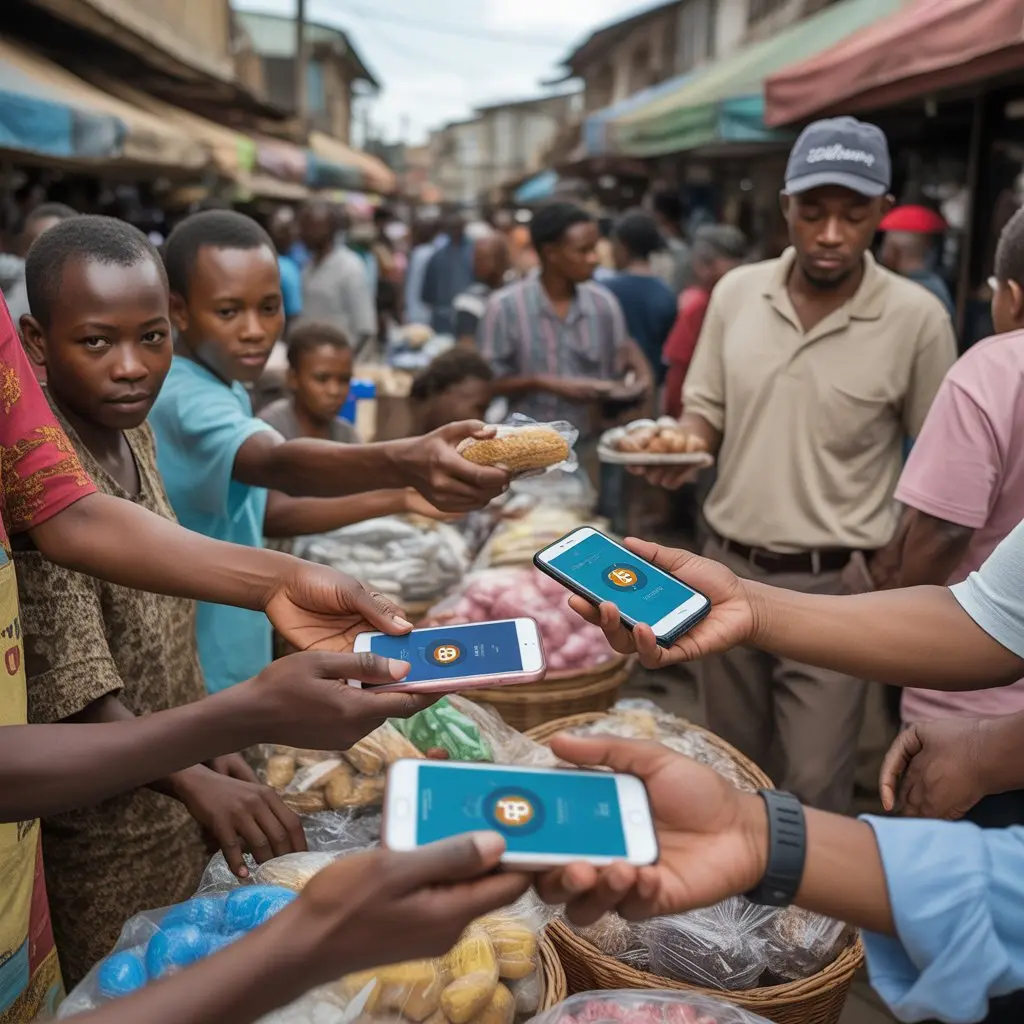
- The Lightning Solution: Layer 2 technology makes micro-transactions possible for everyday goods like bread or coffee.
Introduction
Africa is the frontier of global financial innovation. From the bustling markets of Lagos to the tech hubs of Nairobi, economic activity often thrives outside traditional banking. However, reliance on weakening fiat currencies creates a leaky economy.
Bitcoin offers a radical alternative. It is not just digital gold for the wealthy; it is becoming a neutral payment layer that empowers the unbanked to trade, save, and grow without asking for permission.
Understanding Circular Economies in the African Context
A circular economy focuses on keeping value within a community. In Africa, this is seen in informal savings groups (like Chamas or Stokvels). However, when the local currency loses 20% of its value in a month, the community’s hard-earned wealth leaks out.
Bitcoin plugs these leaks by providing a stable accounting unit and a borderless way to move value.
Bitcoin as a Neutral Payment Layer
1. Permissionless Access: No credit checks or ID hurdles for those in rural areas.
2. The Lightning Network: This is the game-changer. It allows for nearly free, instant micro-payments, making it feasible to buy a loaf of bread using Bitcoin.
3. Inflation Hedge: In countries like Zimbabwe or Nigeria, Bitcoin is a tool for preserving the purchasing power of a local business.
Real World Proof: Grassroots Initiatives
We are already seeing this in action:
- Bitcoin Ekasi (South Africa): A township economy where local shops accept Bitcoin, creating a closed-loop system.
- Machankura: A revolutionary service allowing Africans to send/receive Bitcoin via the Lightning Network without an internet connection, using basic feature phones.
- Cross-Border Trade: Small traders use Bitcoin to settle payments across borders in minutes, rather than waiting days for bank transfers.
Challenges: The Road Ahead
It is not all smooth sailing. Challenges remain:
- Digital Literacy: Understanding self-custody is a steep learning curve.
- Infrastructure: While mobile penetration is high, reliable internet in rural zones is still a hurdle.
- Volatility: Using a volatile asset for daily pricing requires innovative "stable-sats" solutions.
Conclusion
Bitcoin’s greatest contribution to Africa is not as a get rich quick scheme, but as the plumbing for a new financial system. It empowers circular economies to remain self-sustaining and connected. Bitcoin isn't just changing how Africa trades; it’s changing who is allowed to participate in the global economy.
References:
- Chainalysis. 2024 Geography of Cryptocurrency Report.
- Nakamoto, S. (2008). Bitcoin Whitepaper.
- Machankura Project Documentation.
- World Bank. Financial Inclusion Data.






