
Yesterday, during a heated and very engaging debate, I was answering a question from an individual I met at a wedding I was attending. The question was the following: “What percentage of people in Mozambique do you think have some type of cryptocurrency that you know of?”
This is a rather shallow question, because having an exact number depends on several factors and on extensive market research, which is not always easy to carry out.
What I was able to answer is that we have a number that is not very large, but active in the international cryptocurrency market. This means that although there is not much local demand, today people use cryptocurrencies to make life easier at an international level.
This happens a lot nowadays because people have realized that it is possible to use cryptocurrencies to transact abroad and pay for products or services without having to rely on banks. There is a group of Forex traders who know how to use this asset for personal or even corporate purposes, thus ensuring that their lives do not face setbacks when they actually need to use cryptocurrencies.
How Cryptocurrencies Are Used in Mozambique
There is a restricted market in which people can trade cryptocurrencies and make payments using local currency through mobile payment services. These “groups” have limited participation, are based on trust, and are closely monitored to avoid any type of scam. When these groups first emerged, everything was peer-to-peer, where people sent money to strangers, and in return received cryptocurrencies and proof of payment posted in the group.
However, it did not take long for scammers to become part of these groups, and when they received the amount—whether in cryptocurrencies or through mobile payment services—they disappeared, leaving many people without their capital. This forced trading group policies to change, and identity documents (the famous KYC) began to be required to participate. From then on, security increased considerably.
Based on these and other data, it is possible to understand that some Mozambicans do have cryptocurrencies, but it is impossible to say with absolute certainty how many there are or which types of cryptocurrencies they hold.
Bitcoin Cash in Everyday Transactions
I, for example, have had some people approach me, both in person and online, to buy BCH. They know that I have been connected to this cryptocurrency for years and come to me to obtain it. When I have it and need to sell, I carry out the transaction. However, I prefer to exchange it directly for products and services that I value, such as meeting my Portuguese friend and exchanging some BCH for a load of sand or even a few blocks to continue my construction work.
My Portuguese friend is not the only one using Bitcoin Cash. I also have Scotty, who is a Mozambican like me, and who uses Bitcoin Cash to purchase products in China in a fast, cheap way, with instant confirmation and the delivery of purchase receipts.
Here I do not count people who pay with other types of cryptocurrencies such as USDT, ETH, TRX, and others in my business, which I then immediately convert into Bitcoin Cash to ensure a practical financial reserve. Therefore, it is safe to say that within the 6.8% of people worldwide who hold some type of cryptocurrency, there are also Mozambicans. However, here it is not one in twelve people who have crypto—perhaps a much smaller number due to various factors.
Barriers and the Future of Crypto Adoption
The country still does not have massive internet coverage across the entire national territory; people are still afraid of the unknown and quickly associate it with scams; there is difficulty in recognizing that cryptocurrencies are digital assets that cannot be touched or physically held; there is a lack of constant and effective education to help people understand, and much more.
It is necessary for more people to dedicate time and resources to onboarding others into the cryptocurrency ecosystem. Teaching people about Bitcoin Cash is not easy because everyone has a different background. While some quickly grasp the information, others struggle even to understand what a simple cryptocurrency is.
There is a lot of work ahead, but as I told the man at the wedding, “I will continue to do my part, teaching, educating, and taking the wonderful world of crypto—and especially Bitcoin Cash—to more places, both local and distant communities. Only those who do not believe in their struggle give up; those who believe go all the way.”
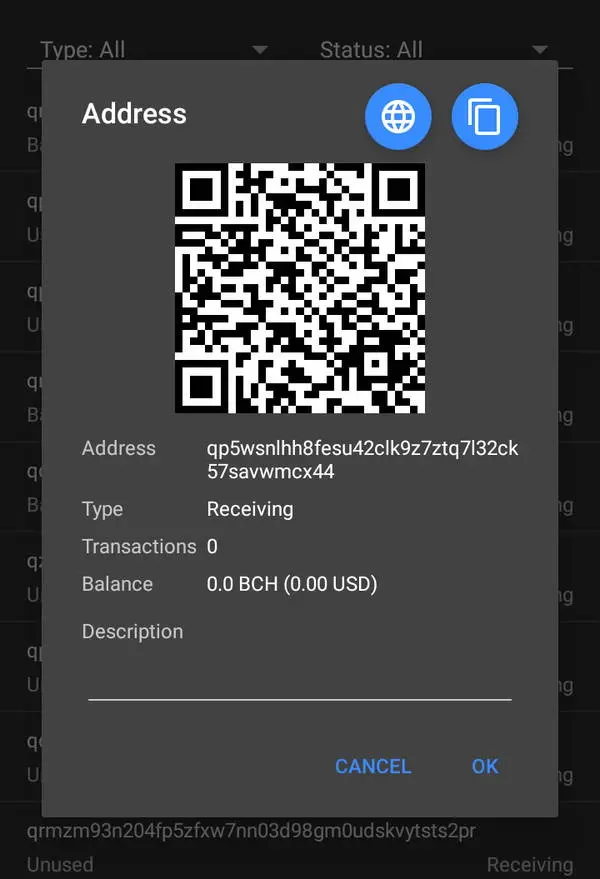
I would like to remind my dear and kind readers and supporters that our first Meetup (CHAPA BCH Meetup) will take place on December 20. I continue to accept support either in BCH or in materials for the event. This Meetup is the seed for spreading BCH and the CHAPA project in Mozambique. I count on you.
Here is the BCH address as well as the QR code to channel the support.
qp5wsnlhh8fesu42clk9z7ztq7l32ck57savwmcx44
I count on each and every one of you spread around the world.
A strong hug coming from Africa.





