

The future of farming looks bright thanks to the innovative approach of vertical farming. In this ever-changing world, where food and environmental challenges sometimes seem overwhelming, vertical farming shines like a ray of sunshine full of optimism and promise.
Imagine thriving cities where skyscrapers are not only business hubs, but also oases of greenery and food growth. Where once only concrete and glass could be seen, building facades are now covered in lush gardens and thriving crops. Vertical farming transforms urban spaces into vibrant food ecosystems, producing a variety of fresh vegetables, aromatic herbs and even exotic fruits, all within walking distance of consumers.
It is not just a utopian vision, but a tangible reality that is unfolding around the world. Vertical farms are growing like buds, rising proudly to meet the challenge of feeding a growing population while preserving our planet. They do not seek to replace traditional farms, but to complement them. Together, they create a diverse and resilient agricultural landscape that resonates with the current and future needs of our society.
Walking through these vertical gardens, we discover a harmony between technology and nature. Sophisticated environmental control systems ensure that each plant receives the exact amount of light, water and nutrients it needs to thrive. Scientists and engineers, hand in hand with passionate farmers, harness the power of innovation to create resilient and sustainable agricultural ecosystems.
And it's not just about technology. Vertical farming creates connections within communities. Vertical gardens in schools, community centers and even apartment buildings encourage participation and education. Children grow up understanding where their food comes from and how it grows. Neighbors connect by sharing gardening tips and bountiful harvests.
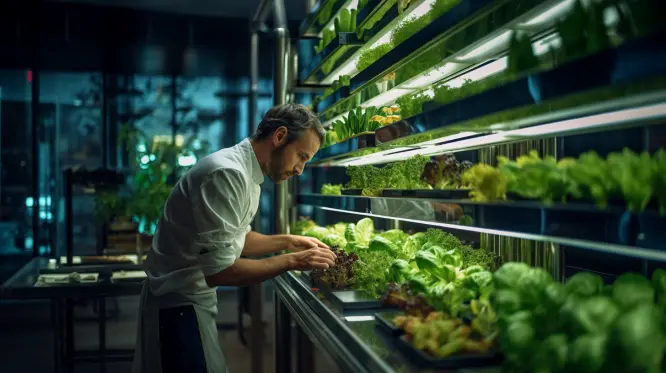
This agricultural revolution also inspires a taste revolution. Vertically grown produce is unrivaled in freshness, as it rarely travels long distances before landing on our plates. Star chefs incorporate these unique ingredients into their culinary creations, adding a touch of creativity and fresh flavors to every dish.
Vertical farming is more than just a technical solution. It is a story of growth, innovation and cooperation between humanity and nature. It is an optimistic response to the complex challenges we face, and a beacon of hope for a future where abundant and sustainable food knows no spatial boundaries. As these high gardens rise, they remind us that human creativity and determination can sprout powerful solutions, even when space seems limited.
The Fundamentals of Vertical Farming.
Let's dive into the fascinating world of vertical farming, where nature and technology dance in harmony to cultivate dreams of abundant and sustainable food. Imagine floors of greenery rising like totems to the sky, a world where the fields are actually skyscrapers of fertility.
The very essence of vertical farming is its ability to reinvent the way we grow our food. It is a symphony of innovations, a ballet between man and nature. Crops, instead of spreading horizontally across vast land, rise proudly in precisely designed vertical structures. Whether towers, futuristic greenhouses or specially designed buildings, these spaces become ecosystems of optimal growth.
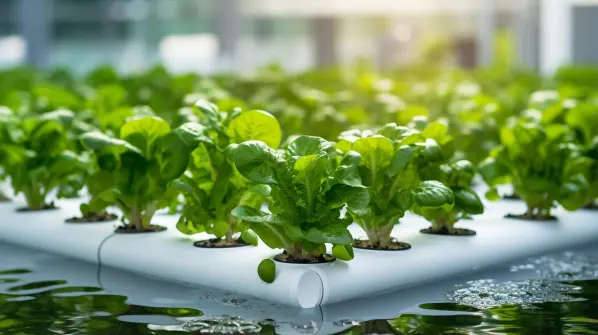
But that's not all. Vertical farming doesn't just redefine growing spaces. It adopts state-of-the-art techniques to maximize yields. Where the land has traditionally been the cradle of growth, vertical farming is nodding to the future with hydroponic, aeroponic and even aquaponic methods. The roots of the plants bathe in balanced nutrient solutions, freed from dependence on the soil. And in some systems, the fish swim under the crops, creating a complete ecosystem where fish waste fertilizes the plants and vice versa.
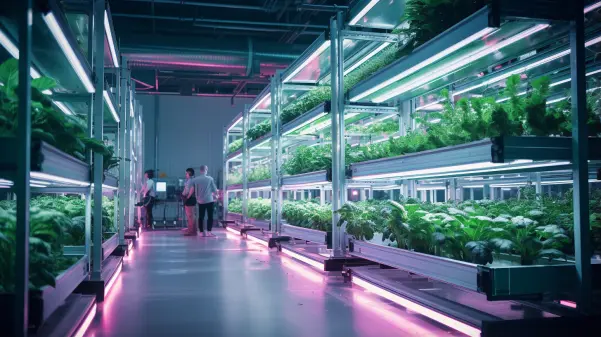
Light is the main artist of this show. Adjustable LED lights mimic the gentle kiss of the sun at different stages of the day, providing plants with a perfectly orchestrated environment for their growth. Temperature and humidity, carefully monitored and adjusted, set the pace for this technology-mastered dance of nature.
Imagine a crop tower in a bustling metropolis, producing a variety of green and colorful vegetables all year round. Rows of plants stretch skyward, each level welcoming a new stage of growth. City dwellers stroll through this vertical garden, feeling connected to their food in ways they never imagined.
And beyond food production, vertical farming has the potential to reshape our relationship with nature and our approach to sustainability. She reminds us that even in densely populated urban spaces, we can become cultivators of abundance. It inspires us to rethink our farming methods, embrace innovation and celebrate our ability to turn constraints into opportunities.
As buildings rise to accommodate vegetable forests, as greenhouses become growing ecosystems, vertical farming tells a story full of optimism and creativity. She invites us to look up to the sky with a smile, knowing that even when resources seem limited, our ingenuity can create solutions that nourish us and illuminate our future.
Benefits of Vertical Farming
Let's discover together the wonderful benefits of vertical farming, a symphony of possibilities that resonates with optimistic harmony for the future of our food and our planet.
- Constant Agricultural Production: Imagine a world where the seasons no longer have a hold on food production. Thanks to vertical farming, this is a reality. Regardless of the weather outside, the crops grow in a controlled environment, providing stable production throughout the year. Torrential rain or a heat wave are no longer obstacles to feeding our communities.
- Optimal Use of Space: Vertical trusses are masters of space efficiency. Multi-storey buildings are transformed into green oases, freeing up previously neglected vertical surfaces. Every corner becomes a place of growth, and every floor a chance to produce. This marriage between nature and human ingenuity means that we can produce several times more crops on a limited area, thus revolutionizing our relationship to space.
- Reduced Water Consumption: Water, this vital resource, is cherished in vertical farming. Hydroponic and aeroponic systems minimize waste by delivering precisely the amount of water needed by each plant. Water can be reused, and irrigation needs are greatly reduced. Every drop counts, and vertical farming reminds us that sustainability can also deliver great flavor.
- Reduced Transport Costs: Roads between fields and towns are shortened thanks to vertical farms. Crops grow where they are eaten, reducing the distances our food travels. Not only does this reduce transportation costs, but it also lowers our carbon footprint, bringing us one step closer to environmentally friendly eating.
- Reduced Dependence on Fertile Soil: Vertical farming transcends soil constraints. Roots sink into nutrient solutions, freeing crops from geographical limitations. Where soil is scarce or degraded, vertical farms provide a fertile solution, allowing nature to express itself even in the most unlikely places.
- Pesticide and Disease Minimization: Controlled environments limit the spread of disease and reduce the need for pesticides, contributing to healthier and more sustainable production.
Challenges and Disadvantages of Vertical Farming
Let's take a closer look at the challenges and drawbacks of vertical farming, because even clouds have silver edges and every challenge can be a call for innovation.
- High Upfront Costs: Like any great adventure, vertical farming requires a significant upfront investment. Building special infrastructure and acquiring sophisticated equipment may initially seem expensive. However, every seed sown in this investment soil becomes a harvest of knowledge, consistent yields and opportunities for long-term sustainability.
- High Operational Costs: Bright lights and environmental control systems in vertical farms require energy to maintain the spectacle of growth. However, this disadvantage can be transformed into a chance to choose renewable energy sources. Rooftop solar panels and nearby wind turbines make the turbines dance while powering our gardens high up, showing that every shadow hides a source of light.
- Crop Limitation: Yes, there are some plants that, even with all the technology in the world, would not feel comfortable growing in vertical gardens. Huge trees and deep-rooted crops may not be pruned for this vertical dance. However, this challenge stimulates the exploration of new varieties and encourages innovation to maximize space.
Every cloud has a silver edge, and these challenges are no exception. The high upfront costs reflect an opportunity to invest in a sustainable and innovative food future. High operational costs can be turned into a quest for cleaner sources of energy, thus feeding our planet while preserving it. Crop limitations are a call to creativity, an invitation to redefine the standards of what can grow in our high gardens.
Vertical farming is a journey where every challenge is a chance to innovate, connect more with our environment, and shape an optimistic food future. Even when the headwinds are blowing, the sails of innovation are swelling, showing that the human spirit can turn inconvenience into opportunity.
Examples of vertical farming around the world
- Jungle in France: The largest vertical farm in France, growing aromatic plants and salads in hydroponics in industrial hangars
- Aerofarms in New Jersey: This company has set up several vertical farms in the state of New Jersey, including one of 6,500 square meters that is expected to produce nearly 2 million tons of plants.
- Nordic Harvest in Denmark: This vertical farm grows lettuce in a huge shed using LEDs and robots.
- Pasona HQ in Tokyo: Pasona is an office building, which serves as the headquarters for the eponymous group. Nature occupies a total of 20,000 m² of the building, with flowers blooming on the exterior walls and fruits and vegetables growing inside.
- Lufa Farms in Canada: a company specializing in urban and vertical agriculture, with the objective of promoting food self-sufficiency by growing fresh, local fruits and vegetables in urban greenhouses.
- Vaxa Technologies in Iceland: is a company specializing in vertical farming technology and microalgae production.
- Le Jardin Vertical in Canada: This company uses aeroponic towers to mainly grow leafy greens like kale, Swiss chard and lettuce. Their goal is to provide fresh, local food to the people of Montreal
Future Perspectives
The future shines with a glow of bright optimism for vertical farming. Imagine a world where every skyscraper becomes a living garden, where the roofs of buildings are carpeted with colorful crops, and where city centers buzz with vertical farms buzzing with activity.
As the pages of the future turn, vertical farming seems destined to play a central role in how we grow and consume our food. Technology is advancing by leaps and bounds, perfecting environmental control systems, reducing energy costs, and paving the way for a wider variety of vertical crops.
As the challenges are overcome, the spread of these vertical farms globally becomes more than a possibility: it becomes an eagerly awaited reality. Cities, whose growth is a constant, will find in vertical farming a solution to their growing food needs. The skyscrapers will house not only offices and homes, but also vegetable gardens in full bloom, offering fresh and bountiful crops to their residents.
The role of vertical farming goes beyond simple food production. It could become an essential component of urban food security, creating local, resilient and sustainable supply chains. The effects of climate change and urbanization cannot weaken the food system if we put our roots up high.
Ultimately, vertical farming symbolizes an optimistic future where innovation and collaboration turn dreams into reality. It embodies our ability to find bold solutions to complex problems. As we face the future with a confident smile, we know that vertical trusses are not just tall structures, but also pillars of hope and sustainability. In the years to come, these growing oases will continue to thrive, pointing the way to a vibrant food future, and revealing that every grain sown in these vertical gardens holds the promise of a healthy, nourished planet, a green smile. that stretches from the ground to the sky.
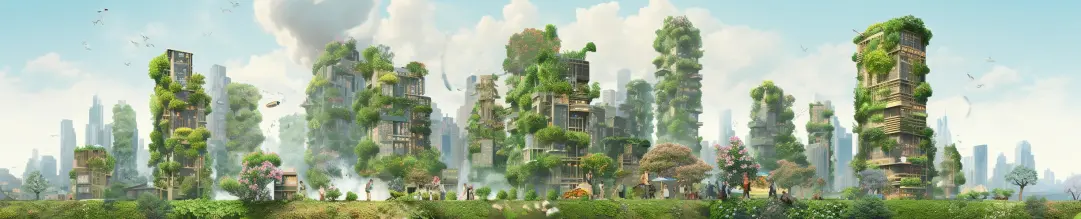
Image Credits: All images featured in this article have been generated by an artificial intelligence art generator named "Midjourney."






