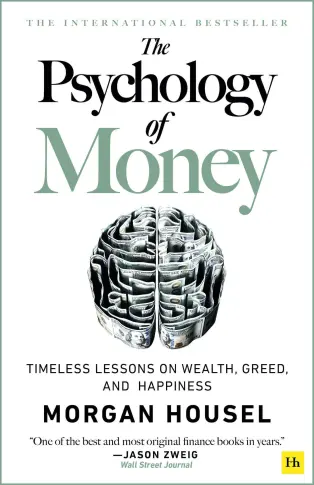
We will cover the concept of “attractive fiction” developed by Morgan Housel, a partner in the Collaborative Fund.

Housel presents an attractive fiction as follows:
- It is something that you want to be true.
- It is based on data and observations or common sense.
- However, these data are superficial in relation to the topic covered, which contains several other layers of complexity.
- The first two premises are enough for a person to believe in something. From this, what most often occurs is the confirmation bias.
The confirmation bias is similar to putting a lens that filters only the facts that we want to see, that is, only the facts that prove our ideas. Everything else (capable of falsifying our beliefs) disappears from view.
Warren Buffett once remarked: "what human beings are better at doing is interpreting all the new information in order to keep their previous conclusions intact".
In other words, on occasions when people are faced with new knowledge, they tend to just confirm what they already knew before, instead of extracting new learnings. Confirmation bias simply uses our intelligence against ourselves.
Biologist Bret Weinstein explains the difference between intelligence and wisdom:
“Intelligence is the mental capacity that allows you to quickly calculate responses to problems, while wisdom is to ponder and gather responses from different problems, which are often disconnected and counterintuitive, in order to bring us closer to understanding how people behave in a complex world ”.
Attractive fictions occur when we activate intelligence, but we sin in wisdom. If an individual is intelligent and, consequently, able to calculate solutions, he will interrupt the search process for understanding the real world as soon as he finds the answers to whatever is true.
Housel brings an interesting example, which illustrates the bad decisions based on attractive fictions.
The example dealt with is the case of New Coke. In the 1980s, Pepsi resorted to a sales strategy (“Pepsi Challenge”) that proved that Pepsi's taste was better than Coca-Cola's. Knowing this, Coca-Cola produced a formula that surpassed both old Coca and Pepsi in terms of flavor, which was confirmed by the American public.
However, New Coke was a failure, as the power of the brands went beyond the quality of the product; it was a matter of behavior and habit. People did not want a tastier Coca, but a traditional and well-known drink. Coca-Cola's sales and marketing team fell into the mental trap of compelling fictions. After all, she conformed to her research data, believing that a better taste would lead to sales success. However, the reality was much more complex.
Charlie Munger has already described why Charles Darwin was a great scientist: “Darwin tried to deconstruct his ideas as soon as he got them. He quickly wrote down in his notebook anything that falsified an idea that he loved ”.
Darwin was a person with an open mind to new ideas, but he went further than that: the naturalist maintained an active and consistent process of deconstructing his ideas, however much he wanted them to be true.
Finally, we can take a valuable lesson from all of these teachings - and transport it to the world of investments. When analyzing companies, it is extremely important that we constantly confront our theses so that we are not deceived by attractive fictions. Thus, when we are not satisfied with just the evidence stimulated by the confirmation bias - and we apply a process of deconstructing bad ideas to replace them with better ones in our investment cases -, we mitigate the risks of permanent loss of capital.