
There's an old adage that goes something to the effect of "if the only tool in your toolbox is a hammer, you will see every problem as a nail". Likewise, in a certain part of England, a hammer is known as a Birmingham Screwdriver, since builders and repairmen from there allegedly favour it for that purpose (particularly when an actual screwdriver would be better suited). Given the popularity and purported preference of artificial intelligence (AI) as the one-size-fits-all "next big thing" tool/technology of software development, I wonder if it's subject to the same problem in terms of how developers (will) think of and use it. Here are my thoughts on that.
Laziness, along with hubris, is one of the virtues of a great developer, according to Larry Wall (creator/inventor of PERL, which gave us PCRE), so it probably is what I asked if it is, but let me at least attempt to put my snark aside for a bit ...
Sure, self-driving cars exist (and are possibly safer than human drivers). However, they're not infallible and without their pitfalls (just like humans).
The thing with self-driving cars is that, if they’re built with the so-called “expert systems” approach (a long list of rules to follow), they will invariably fail. (Google found this out the hard way.) The problem is that there is no set of rules, no matter how exhaustive, that will satisfactorily cover every condition in the real world. It’s not that the rules of the road aren’t finite, but that the majority of drivers and pedestrians are humans and we’re unpredictable. (What is the correct course of action for a vehicle to take when it encounters a girl on a bicycle going the wrong way around a traffic circle in the wrong lane, for instance? Simply throwing an error and ceding control to a human every time it encounters a situation for which it has no rule is hardly satisfactory.) In a board game such as chess, the AI has to figure out the intentions/objectives of a finite number of people (often one), with a limited number of available moves. Out on the road, it has to figure that out for every living thing in the environment.
“But I do believe that with every gain, there’s something lost. For every step in a process we learn to skip by coding a tool to do it for us, we sooner or later forget the skill we used to do it the old way, by hand.”
—Diomedes; comment on "Is AI the Future of Creativity?"
As someone who used to work in software and Web development, I’ll assert that that much is true. Cases in point: I can no longer do basic arithmetic without grabbing a calculator. Nor can I remember phone numbers, since my phone does it for me. I don't even remember all my passwords, because I've got an app for that, too. We put far too much faith/trust in technologies, advanced or otherwise, that we don't understand. That's why so few people have woken up to the Facebook Catastrophe (and those that have have become too reliant to effectively distance themselves from Big Tech, the main users of AI).
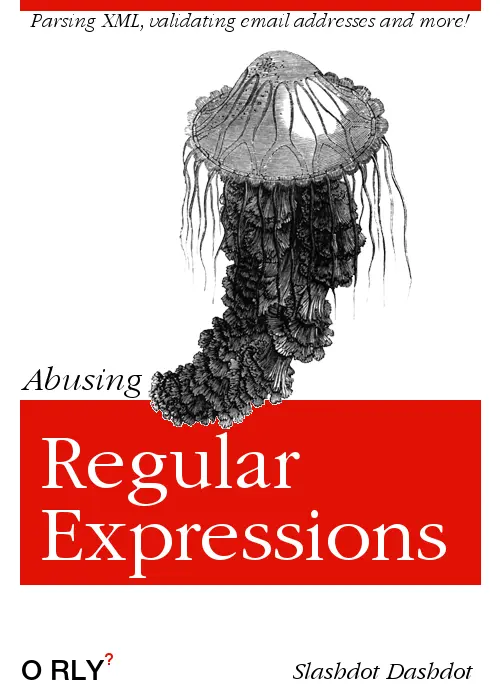
I’m also skeptical about championing/trusting AI as a solution to anything, in much the same way as I see trying to craft a regular expression to match any and every text-based problem (like parsing XML or validating email addresses) is foolhardy. That’s not because I think it’s going to become sentient and create Skynet (although I can’t be sure), but because it's not always the right tool for the job. (Given my general views on humanity, our impact on the environment and pathetic efforts at environmental conservation, perhaps Skynet without nukes is actually the ultimate answer to the greenhouse gasses/global warming problem, but I digress.) There have been cases where developers have been mystified as to why their black box AI doesn’t do what it’s supposed to (a common problem in development, generally, but amplified in self-learning AIs) and modified it to explain its decisions and conclusions, only to find it has been biased by extraneous/misleading data (which the developers disregarded without thinking about it, because that's what human brains do) in the learning phase. (It is not the fault of the AI that it fails, but of the fallible and biased humans that created it.) In short, “we trained him wrong, by accident”.
When it comes to simple tasks like distinguishing a wolf from a Husky or Malamute in photographs, the consequences of failures (probably) aren’t too serious. When it comes to using AI to read and analyse body language and verbal cues to determine if a suspect is guilty of a felony, it definitely is serious (particularly if the developers are white men, particularly with racial biases, which the majority of Sillicon Valley's employed are).
OTOH, if I can learn to write an AI that does my job better than I do, while I still get paid for it (which is the crucial bit to me), then I am happy.
Have you tried turning it off and leaving it off?
Lead/Thumbnail image from Hacker Noon (see resources links below)






