
The cryptocurrency market recently witnessed a sharp rise in Bitcoin, pushing its value to $108,000, a record level that caught many by surprise. This sudden move came as investors who had wagered on a decline—by taking short positions—were forced to quickly buy back Bitcoin as the price soared, further fueling the rally. The main trigger was a weaker-than-expected U.S. employment report, which indicated a significant slowdown in hiring and heightened concerns over the strength of the U.S. economy. In financial markets, disappointing employment data can often spark expectations of interest rate cuts by the Federal Reserve. When rates are cut, traditional savings and bonds offer lower returns, prompting investors to seek higher yields in riskier or alternative assets like cryptocurrencies.
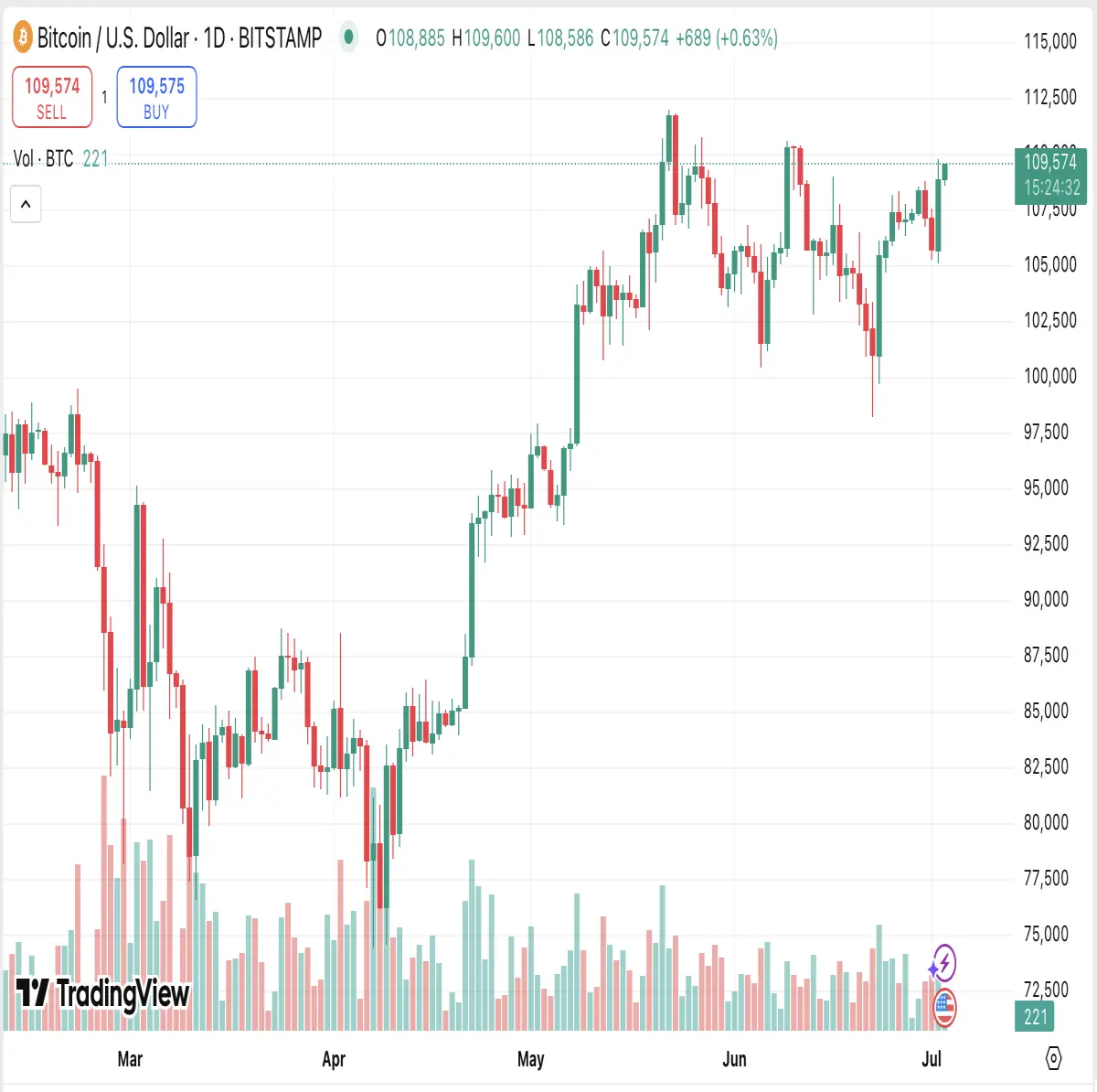
The rapid surge of Bitcoin also underscores its status as a volatile asset, sensitive to both macroeconomic trends and sudden shifts in market sentiment. Liquidity in the cryptocurrency market can be thinner than in traditional markets, making price movements more pronounced. As such, significant news—like a labor market report or central bank commentary—can lead to sharp and amplified swings. The recent rise is a reminder that Bitcoin acts as both a speculative investment and a hedge against macroeconomic uncertainty, drawing in participants ranging from individual traders to large institutional investors, all looking to capitalize on volatility or diversify portfolios.
THE LINK BETWEEN THE U.S. JOB MARKET AND BITCOIN
The relationship between the U.S. labor market and Bitcoin’s price is increasingly important in today’s financial environment. In June, the U.S. reported a 4% drop in private sector jobs—the largest since March 2023—despite expectations of job growth. This gap between forecasts and reality triggered unease about the health of the U.S. economy. When employment data deteriorates, it suggests to investors that the Federal Reserve may have to lower interest rates sooner than planned to support growth. Such a move typically makes traditional investments like bonds and savings accounts less attractive due to reduced yields.
As a result, capital tends to flow into alternative assets, with Bitcoin often seen as a beneficiary. The cryptocurrency is not directly tied to central bank policies, making it appealing when conventional markets face uncertainty. A looser monetary policy also increases liquidity in the financial system, some of which can end up in more speculative markets like crypto.
Bitcoin’s reputation as “digital gold” further enhances its allure during periods of economic stress, as investors look for assets that can serve as a store of value or hedge against currency devaluation. Moreover, the growing role of institutional investors means that global economic news can trigger large inflows or outflows in the crypto market, amplifying Bitcoin’s movements. This interplay makes macroeconomic indicators, such as employment reports, increasingly influential for digital assets.
SHORT SQUEEZE AND ITS IMPACT ON BITCOIN
A short squeeze occurs when investors betting on a price drop—known as short sellers—are forced to buy back the asset rapidly due to an unexpected price increase. In the case of Bitcoin, the sudden surge to $108,000 led to the liquidation of many short positions, causing a domino effect that pushed prices even higher. This phenomenon is often intensified by the use of leverage in crypto markets, where traders can borrow funds to increase their bets. When the market moves sharply against them, automated liquidations accelerate the price movement.
Short squeezes are common in volatile and less regulated markets like cryptocurrencies, where liquidity can be thin and large moves can trigger chain reactions. Key technical levels, such as the $107,000 threshold, act as psychological barriers: once breached, they set off waves of automatic buybacks as stop-loss orders are triggered.
In the broader context, short squeezes reveal the risks of excessive speculation and the influence of market mechanics on price direction. While these events can result in dramatic gains for some, they can also lead to severe losses for over-leveraged traders. The interplay between technical analysis, automated trading, and emotional responses from market participants often results in pronounced swings, highlighting the speculative nature of the crypto market. Understanding these mechanisms is crucial for anyone engaging with digital assets like Bitcoin.
KEY RESISTANCE LEVELS FOR BITCOIN
The $108,000 level has become a crucial resistance point for Bitcoin. Resistance levels are prices where selling pressure tends to outweigh buying, often causing the asset to struggle to move higher. Many traders and algorithms monitor these levels, and a clean break above can trigger further buying, potentially setting new all-time highs. Until Bitcoin clearly surpasses this resistance, its price is likely to fluctuate near these record values, reflecting uncertainty and a lack of strong direction.
Such resistance points often become battlegrounds for bulls (buyers) and bears (sellers). If buying momentum proves strong enough to break through convincingly, it can lead to rapid gains as short sellers are forced to cover their positions and momentum traders pile in. Conversely, repeated failures to break resistance can result in sharp pullbacks, as confidence in the rally fades.
Current market dynamics are shaped by macroeconomic factors, technical indicators, and liquidity conditions. Institutional investors, high-frequency traders, and retail participants all contribute to the complexity at key price levels. Additionally, upcoming economic data, Federal Reserve decisions, and potential regulatory developments are closely watched, as any surprise could quickly shift the balance and test these resistance zones. In short, $108,000 is both a psychological and technical barrier whose breach could define the next phase for Bitcoin.
OUTLOOK FOR BITCOIN IN THE CURRENT ECONOMIC CLIMATE
Bitcoin’s prospects remain closely linked to macroeconomic conditions and evolving market sentiment. The current environment—marked by a fragile labor market, expectations of lower interest rates, and high global uncertainty—supports the potential for continued volatility in Bitcoin’s price. If central banks move towards easier monetary policy, liquidity is likely to remain ample, benefiting speculative assets like Bitcoin.
However, this volatility cuts both ways. While lower rates can drive inflows into crypto, negative surprises—such as poor economic data, regulatory crackdowns, or geopolitical tensions—can also prompt swift corrections. The influence of institutional investors has increased, meaning that Bitcoin now reacts more directly to macro news, risk appetite, and liquidity flows seen across global markets.
Other factors to watch include the development of crypto regulation, shifts in investor sentiment, and technological advances (such as network upgrades or adoption by large companies). As digital assets mature, the market is likely to experience periods of both rapid growth and sharp declines.
In summary, Bitcoin remains a high-risk, high-reward asset, sensitive to a mix of economic indicators, policy shifts, and market psychology. Its unpredictability underscores the need for careful analysis and a solid understanding of the forces shaping the broader financial landscape.






