
December brought the first hard frost of the season. One of the things I do for my hives is to wrap them in insulation for the winter. But before I do that, I thought I’d snap a few pictures of the hives with my Seek Thermal camera. I was hoping to see the heat signature of the bee cluster in each hive.
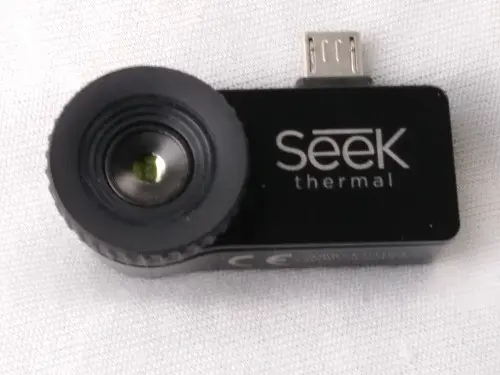
To reduce heat signals from the ground and surrounding plants I chose a cloudy morning after a cold night. The overnight temperature dipped into the mid to low 30’s (degrees F).
The number one thing that I do to winterize my hives is to provide ventilation for the warm air generated by the cluster. If the ventilation is not adequate, the warm air will condense and rain down on the bees. Cold wet bees do not survive for long. To help vent the warm air I’ve placed a 2-inch ventilation frame over the inner cover. Here’s a closeup of the rectangular ventilation notch in the inner cover and above it, the round hole in the ventilation frame.

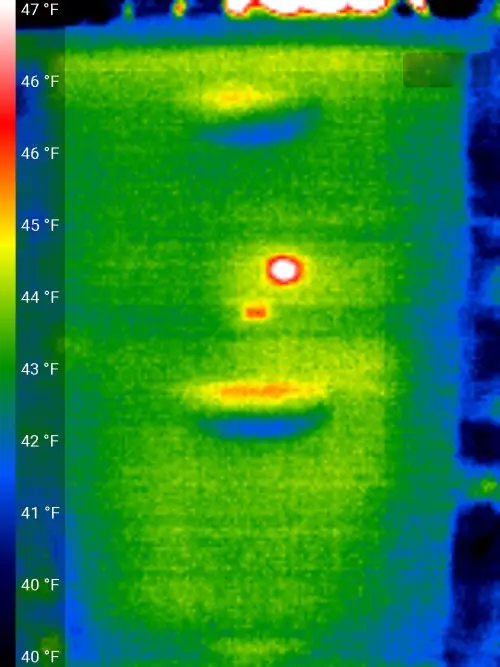
The "White" hive in normal light and infrared. Hear you can see the warmer temperatures at the vent holes. Also, I've insulated the outer cover with 1 inch thick foam board.
Now let me find the bees.
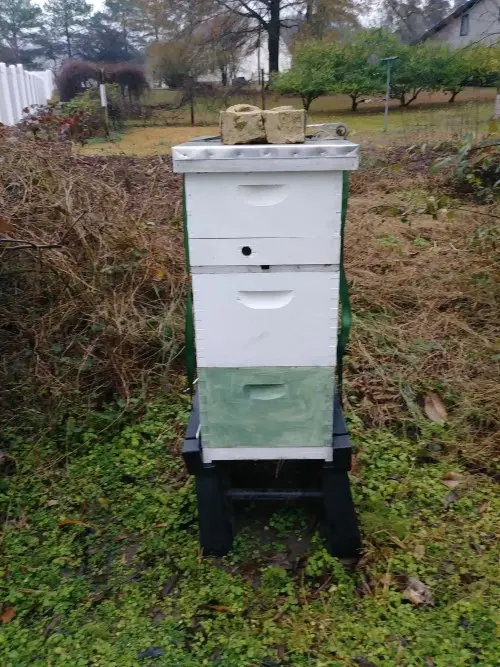
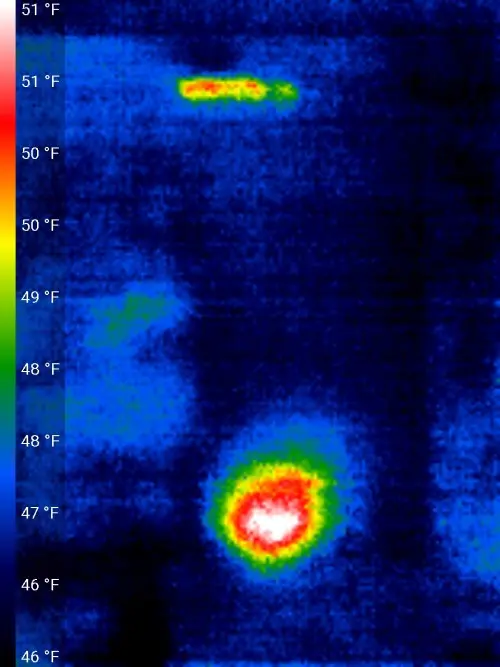
On the bottom is the Green Hive with the bees clustered in the bottom deep. (The orange/yellow streak at the top of the picture is the brick.) I'm still learning how to use the thermal camera. I believe that the vent holes are not showing in this image due to the fact that I'm aiming specifically at the cluster.
And here is the "White" hive from the front:
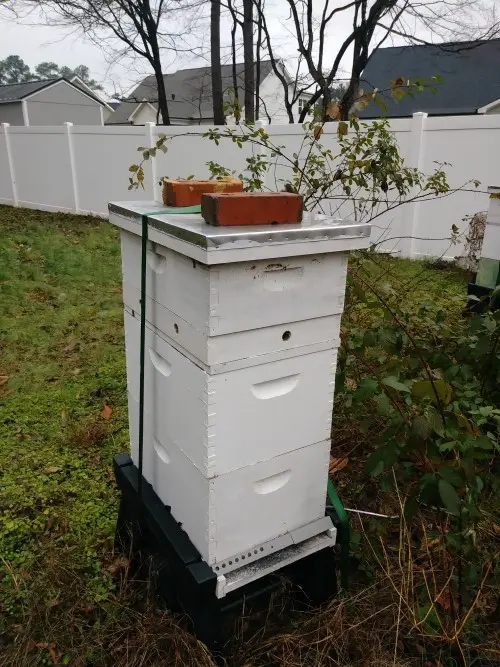
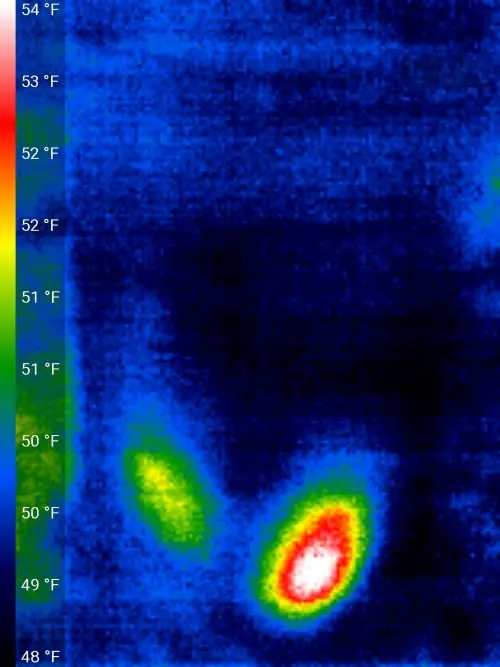
The green smudge on the left of the infrared picture is the hive stand warming up.
So the bees are clustering in the bottom boxes going into the winter. I’ll wrap both hives with insulation and pick a cold cloudy day to take more infrared pictures. Let’s see how well the insulation works!






