
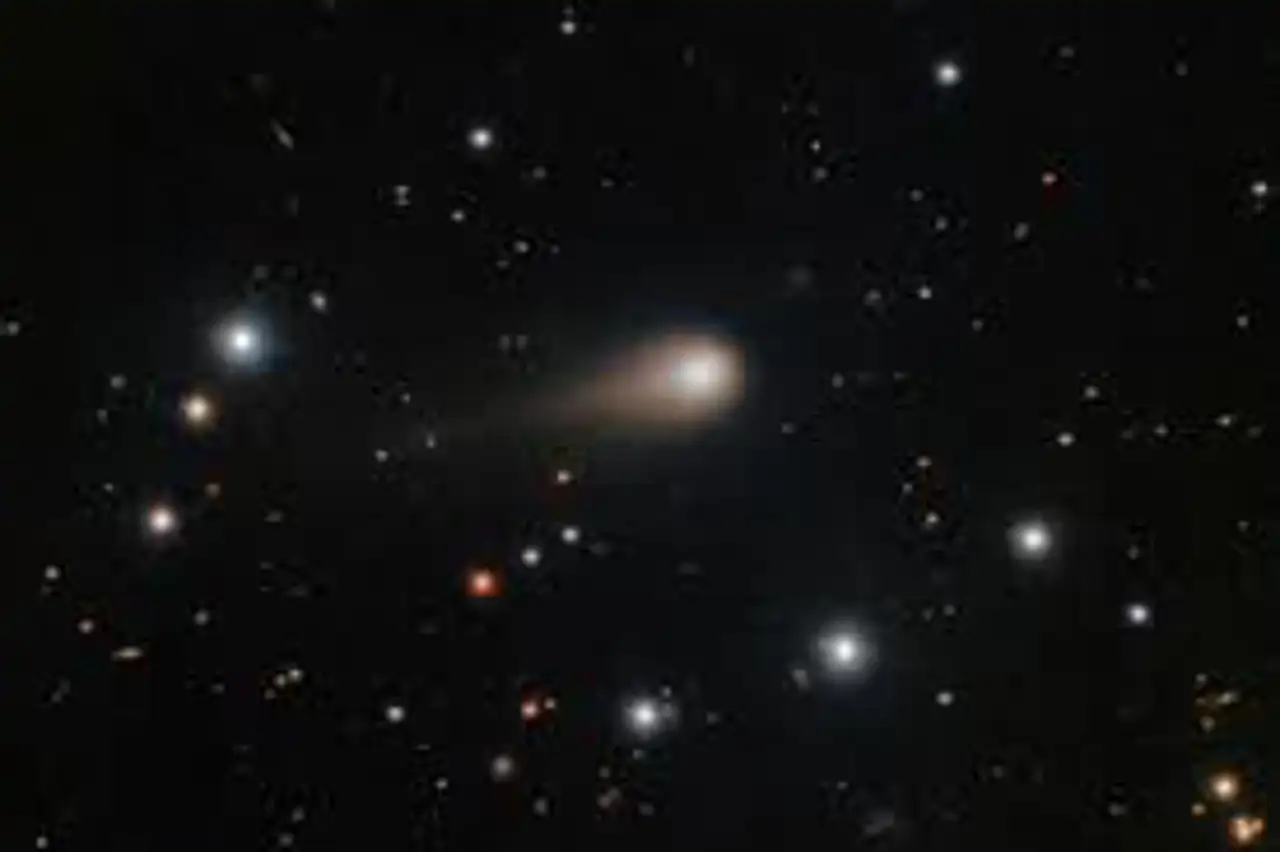
A Quiet Visitor from the Stars: Comet 3I/ATLAS Returns
Every so often, the Universe reminds us just how small — and yet how deeply connected — we truly are.
This November, that reminder comes in the form of a faint, icy traveler from deep space: Comet 3I/ATLAS, only the third confirmed interstellar object ever detected, and one of the most enigmatic wanderers to pass through our Solar System.
After months hidden behind the Sun, the comet has slipped back into view.
It’s no dazzling spectacle — more a silent messenger from the stars: rare, fleeting, and profoundly extraordinary.
🌠 A Visitor from Beyond
When astronomers first spotted 3I/ATLAS in early 2025 using Hawaii’s Asteroid Terrestrial-impact Last Alert System (ATLAS), its path immediately raised eyebrows.
The orbit was hyperbolic, meaning it isn’t bound to our Sun — it came from another star system and will never return.
That places 3I/ATLAS in very rare company. Only ʻOumuamua (1I/2017 U1) and 2I/Borisov (2019) share the same status as verified interstellar visitors.
Each carries chemical fingerprints that reveal how distant planetary systems form and evolve.

🔬 Why It Matters
Unlike the bright comets that steal the spotlight, 3I/ATLAS is faint — around magnitude +12, visible only through a mid-sized amateur telescope.
So what’s the big deal?
Early spectral data hint at unusual ices that behave differently from those found in ordinary solar-system comets.
By watching how sunlight sculpts its tail and coma, astronomers can infer what materials existed in the birthplaces of other stars.
It’s like studying a fossil — except this one drifted across interstellar space before landing in our skies.
🔭 How (and When) to Spot It
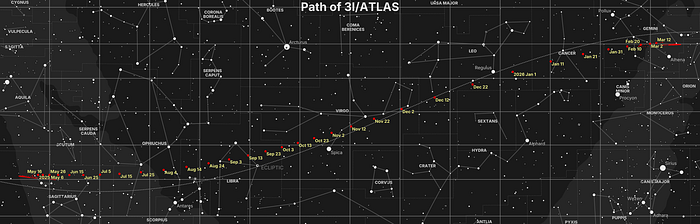
If you own a telescope with at least a 15 cm / 6-inch aperture, aim for the Pegasus constellation before dawn between November 3rd and 10th.
Apps like SkySafari or Heavens-Above will help you locate it precisely.
No telescope? No problem. Many astronomy groups are streaming live views or posting daily images on X (Twitter) and Reddit.
Even watching that faint smudge appear in someone else’s photo connects you to the same cosmic moment.
More Than Just Science
Interstellar comets remind us that the borders of the Solar System are porous. Dust older than our Sun drifts in, carrying whispers from other stars.
In a world rushing toward the next big thing, there’s something grounding about slowing down to watch a piece of cosmic history slide silently across the night sky.
Step outside before dawn this week, breathe the cold air, and remember: that faint speck above you traveled for millions of years through interstellar darkness, only to cross our tiny patch of sky for a few nights.
That’s worth looking up for.
If you enjoy astronomy stories like this, follow me here on Publish0x for more cosmic updates and observation guides — and if you liked this article, feel free to leave a tip; it helps keep the telescope pointed at the stars! 💫






