
Even though these dumplings are better known by their Japanese name, "gyoza" is a Japanese phonetic translation of "jiaozi" from Chinese. The Chinese characters used for both are the same (餃子). Sometimes the Chinese ones are called "potstickers", which is a semantic translation of the other Chinese word for these dumplings, "wor tip" (窩貼). Technically, "jiaozi" refers to all sorts of dumplings while "wor tip" refers specifically to the "pot sticking kind". Never would have guessed, right? I know you're dying for some more dumpling pedantry, but I'm getting hungry...
If you were expecting a recipe for homemade gyoza, I'm sorry to disappoint you. While I do have fond memories of making gyoza at gyoza (and drinking) parties in my 20s, who has time to make real gyoza now that the markets are back in full swing?
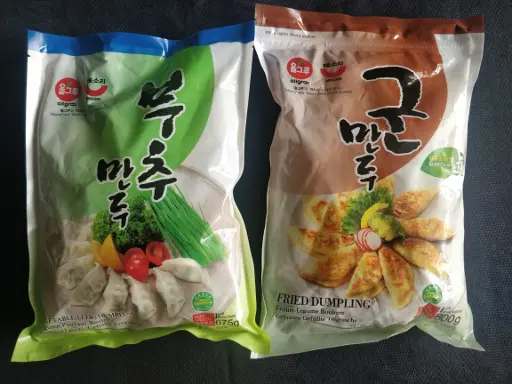
Yes, these are Korean gyoza. Let's not get back into that discussion.
But there is a proper way to make frozen gyoza. And we'll have a great and easy dipping sauce recipe.
By the way, perhaps the proper pluralization of "gyoza" is "gyozas", but "gyoza" just sounds like the kind of word to me where the plural is the same as the singular.</very-important-aside>
Fried
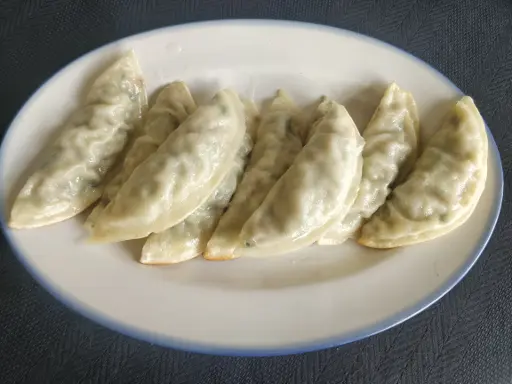
* Important! Never heat a mixture of oil and water.
- Add 2 tbsp of oil and about 0.5 cm of water to a frying pan. (Rules are meant to be broken. Live with it.) I highly recommend using a non-stick pan. And don't use a cheap one, because then you'll never know what you are really eating.
- Place the gyoza (no need to defrost) flat side down, not too tightly packed.
- Turn the heat on high and cover (it will splatter).
- When things get sizzling, you can turn the heat down to medium-high.
- Once all the water has evaporated, you're done! Only takes a few minutes.
Steamed
If you'd prefer not to have oily splatter and you're a stickler for "rules", steaming is another great option.
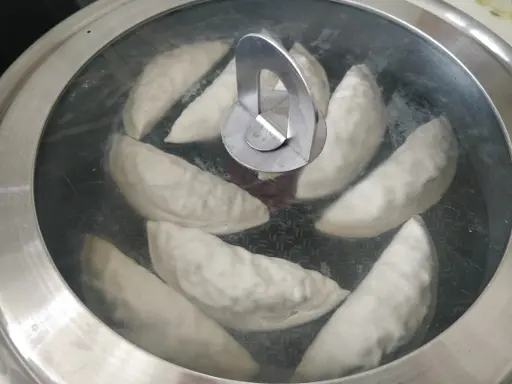
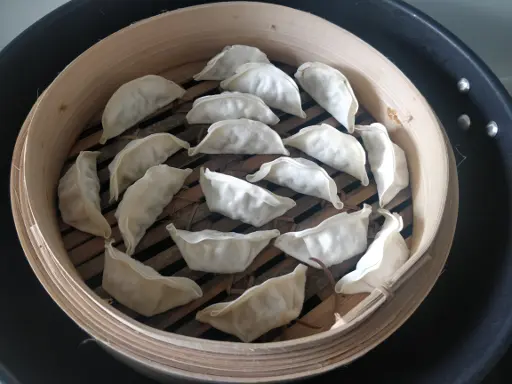
In my setup, I put about 2.5 cm of water in the bottom of a wok and place the gyoza (no need to defrost) in a bamboo steamer on top. Bamboo steamers are great - convenient, make great presentation, and things don't stick as much, especially if you give the steamer a rinse to get it wet first. If you have a stainless steel steamer, that will work too, but you might have to oil the bottom (where the gyoza go, not where the water goes, remember the rule?).
Steaming will take a good 6-8 minutes.
Dipping Sauce
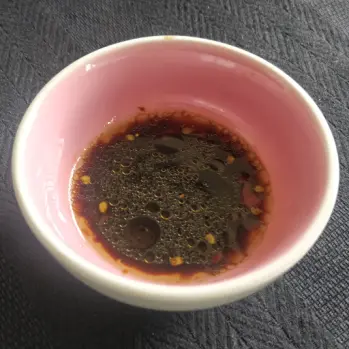
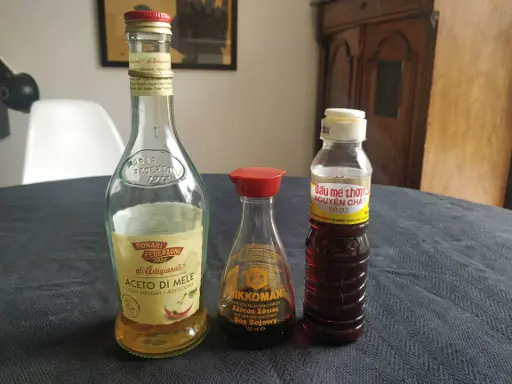
- 4 tbsp soy sauce
- 2 tbsp vinegar - Any vinegar will do, but I would avoid balsamic because the flavour is a bit too strong and might not match, and white vinegar because...ugh that stuff should just be for cleaning a rusty steamer. I've used apple vinegar. Fresh lemon juice is also great.
- 1 tbsp sesame oil
- pinch of cracked black pepper
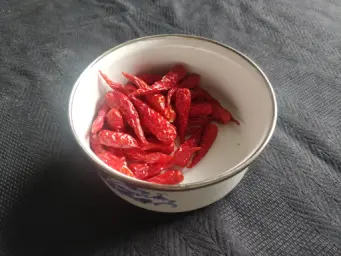
- fresh or crushed dried chili pepper to taste - I used 0.5 dried chili pepper.
* A tip for fresh chili peppers. If you can't use them all in time, you can place them somewhere hot and dry like the top of a radiator. They will dry out nicely and you'll have "fresh" dried chilis. It helps to remove the stems as they sometimes mould.
That's it for today. I'll get back to real recipes next time. I mean next time I blog, not next time the market tanks. Might be the same.






