We've covered basic congee, but a typical congee house will easily feature over 30 different kinds of congee on their menu. Some of my favourites include:
- Dace fish ball with lettuce
- Pidan and salted pork -- I describe pidan below.
- Sampan -- Originally made by fishermen on sampan boats, it is now a tourist attraction to have a much more luxurious seafood dining experience on a sampan boat.
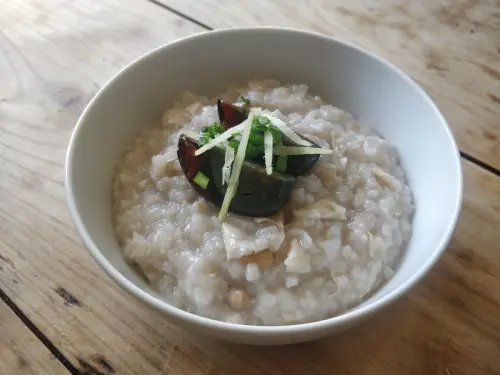
Today we're going to supercharge our basic congee. Start off with the basic congee recipe and add any or all of the ingredients we'll talk about.
Tofu Skin
You know how when warmed milk cools down, a skin forms on the surface? The same thing happens with soymilk. If you take this skin and dry it, you get tofu skins. It's used in many Chinese dishes and either comes in sticks or in sheets. The sticks are used in stews, have a chewy texture and absorb plenty of flavour. The sheets are sometimes used for wrapping other ingredients as in one of my favourite dim sum dishes. Other times, the sheets are added to more liquid dishes for a wonderfully smooth texture, which we will do today.
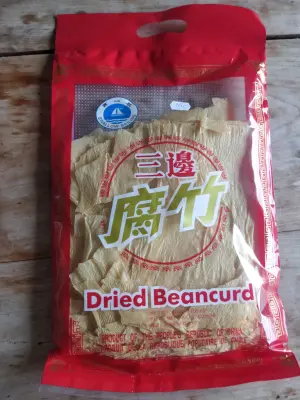
If you don't have a partner who will kindly break up all the tofu skins in her backpack on the way back from the store, you'll have to break up the sheets into smaller pieces first, then add them to the congee at the start. This will give them more time to rehydrate properly and gives the entire congee a creamier texture. It will also make the congee thicker, so you might have to adjust your water ratio. I would add about half a sheet to the basic congee recipe, but you can always add more if you like. Keep in mind they expand, so you'll get more than what it looks like at the beginning.
Red Peanuts
Sampan congee always has red peanuts (amongst many other ingredients -- it's known as being congee "with the works") and as such is one of my favourite ingredients to add.
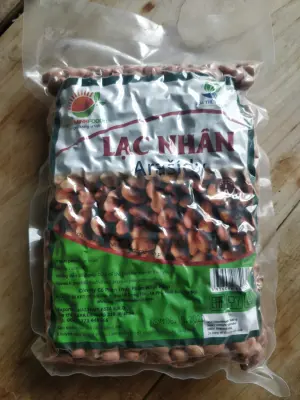
Red peanuts are peanuts with the outer skin still on. Some recipes call for soaking them and washing off some of the skin, but I don't find this necessary. When you leave the skin on, the congee will turn a bit brownish red, which in my opinion is not a big deal. The skin is also very nutritious and it would be a waste to get rid of it.
I would also add these at these to the congee at the start so they soften, but still stay crunchy.
If you want them to be very crunchy, another common option is to fry them in some oil and add them on top at the end.
Pidan
And now for the crown jewel -- pidan, which are preserved duck eggs. They might be somewhat of an acquired taste, but I think they're delicious. They don't need to be cooked before eaten, as they are already cured.
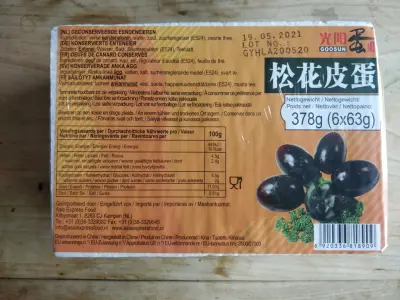
Also known as "thousand year old eggs". Whew, after a thousand years, got them with just a month left before expiry!
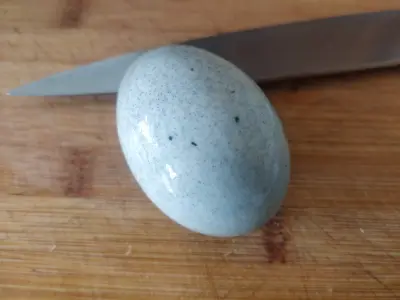
The shell is completely smooth and a bit thicker than a chicken egg.
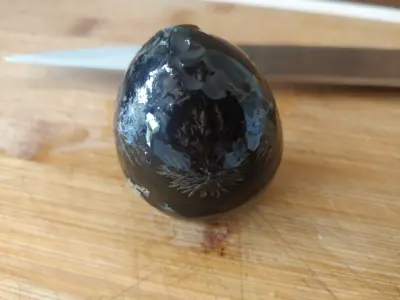
Peeling off the shell reveals the "white" of the egg turned into a dark translucent gem with beautiful crystalline patterns. Crown jewel indeed!
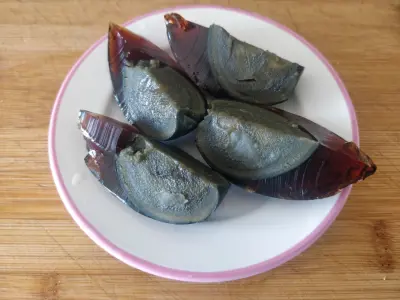
Cutting it open...ok the yolk looks a bit like mud, but it is soft and creamy with intense flavour.
Add the pidan slices at the end after turning off the heat, just to warm them up. Don't stir too much after this, or the yolks will run everywhere and make the congee muddy. Alternatively you can just put them on top. I like to add a few slivers of ginger to them because they go so well together.
These are some of the common additions to congee, but you can be creative and add anything you want.






