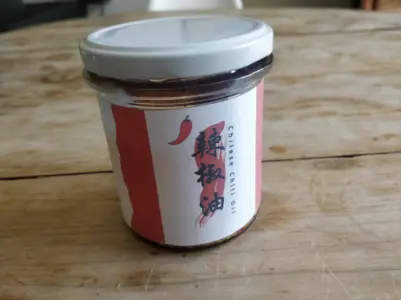
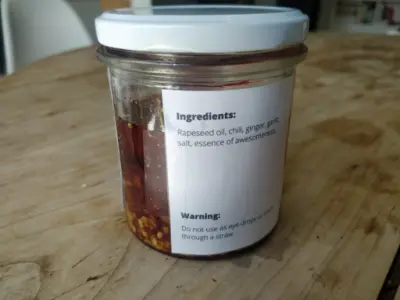
Ketchup, mustard, salt, pepper and white vinegar are what you'll see on the condiment tray in an American diner style restaurant. In a Chinese diner, you'll get soy sauce, white pepper, salt, black or red vinegar, chili sauce and chili oil. Out of these condiments, restaurants usually only make their own chili oil.
Chinese kitchens use a lot of oil. Deep frying and stir frying are of course the major uses. But also duck and chicken are braised with hot oil to give extra crispy skin. And vegetables almost always go through a technique called "jao yao" which is like "blanching" them with oil before even being added to stir fry dishes. This is what gives them their bright colourful lustre and locks in their flavour and moisture. None of this oil is discarded after one use. It is typically strained and reused. And then restrained and reused again.
This "cooked oil" as it's called is one of the things that makes Chinese food so good. It's compound flavour! If there is one philosophy that defines Chinese culture, it is "no waste" -- no wasting oil on the cost front and no wasting all that flavour stored in the oil. This is one of the reasons Chinese restaurants are so good and cheap.
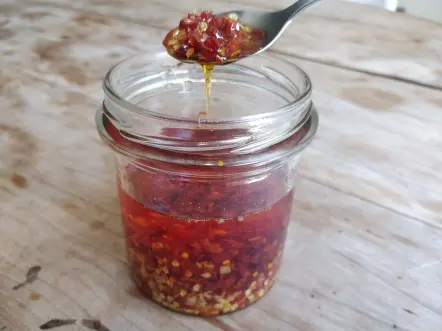
So where does chili oil fit into all of this? Eventually, the oil reserves need to be topped up with fresh (i.e. flavourless) oil, but before doing so, all that oil full of flavour enters its last lifecycle as chili oil. And that's why Chinese diner chili oil is the best chili oil you can get. Some diners have even gotten known for having the best chili oil and started to sell it in jars because of customer demand.
So, are you ready to make your own chili oil with all that "cooked oil" you now know to save? Alright, if you are squeamish about having flavour in your oil, fresh oil will work fine too. This recipe is super simple and very similar to the ginger and green onion sauce recipe I posted before.
Ingredients
- 1.5-2 cups oil -- Just enough to fill the jar you want to store it in. Use a neutrally flavoured oil. Yes: canola oil, sunflower oil, vegetable oil, rapeseed oil, rice oil. No: Olive oil, sesame oil, peanut oil, motor oil.
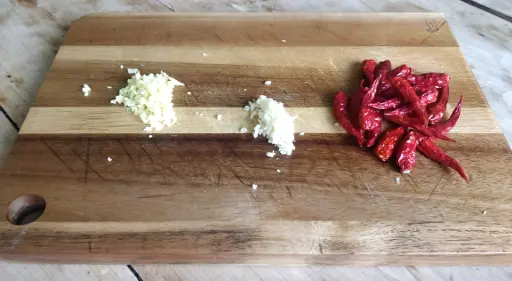
- 1 handful dried chilis -- This recipe is normally done with chili flakes that you can buy at the store and makes things easier, but since I still have some chilis that I've dried, I'm going to use those. You'll need enough chilis to fill 20%-50% of your jar, depending on how much "sediment" you want in your oil.
- 1 tbsp finely chopped ginger
- 1 tbsp finely chopped garlic
- 1 tsp salt
Method
- If you're using store bought chili flakes, just fill the jar with them to 20%-50%.
- If you're a masochist like me, crush the dried chilis into the jar. You can use only the seeds if you like, but I kind of like the added texture and flavour of adding the skin too. If you do this, rip the skin into very small pieces, as they can be chewy. Using scissors can make this faster, but you'll want to do the cutting while holding the chili inside the jar because the seeds tend to fly off when doing it this way. Random chili seed surprises later are no joke. It also helps to hold the skinny end and cut from the fat end.
- BEFORE YOU DO ANYTHING ELSE, WASH YOUR HANDS THOROUGHLY. Unless you want to give somebody a "hot" wet willy first.
- Add ginger, garlic and salt.
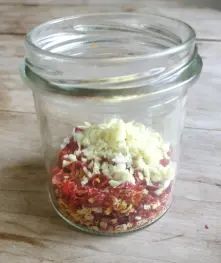
- Heat oil to just before the smoking point. Some ways to know the oil is hot enough -- 1) The Clinical Method: use a thermometer. 2) The "Well It Works" Method: stick your finger in it (not recommended). 3) The Chinese Method: Stick a wooden chopstick in it. If it bubbles like a soda, it's hot enough.
- Pour oil into the jar a bit at a time and mix it so everything cooks evenly. It should sizzle every time you pour some more oil in. Be sure to only touch the rim of the jar while doing this as the glass gets very hot. Also be aware that your eyes might get irritated from the chili vapour in the air.
Once you're done, let the jar cool for at least 10 minutes before handling it.
Unlike the ginger and green onion sauce which will only last days in the fridge, this chili oil can be kept in the fridge for over a month and the colour will get a darker red and the flavours will deepen over time.
Some people like to only use the oil, while others like the "sediment" at the bottom. (I personally think it's the best part.) So you can adjust the recipe to how much you like of each.
If you're not up to creating a bio-hazard in your kitchen, you can always buy a jar at the store, which comes in variants that are oil only to ones that are 100% full of sediment.
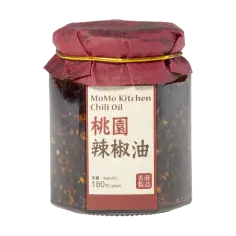
Or you can stick a fancy homemade label on your own, and make it a great present!