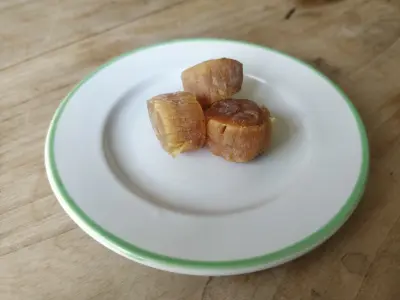
Dried scallops are one of the most prized ingredients in Chinese cooking, second only to abalone. (We're just going to ignore shark's fin.) Even just a few of them adds a ton of umami to a dish and good quality dried scallops can get rather expensive. It's not uncommon for Chinese people to give these as a much appreciated gift, especially to older generations.
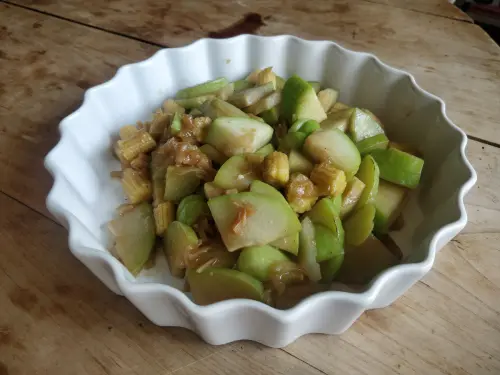
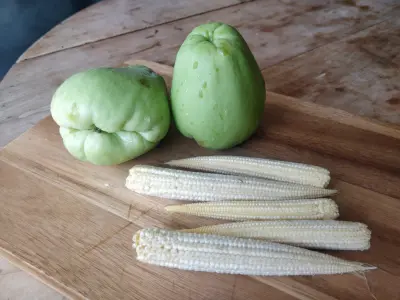
Today we're going to use the dried scallops my mom sent me (can't find those here in Warsaw either) to make some chayote. The Chinese word for chayote is "palms together gourd", which is quite fitting because that's what the "butt" of the vegetable looks like. If I had my way though, I'd name them "grumpy face gourds".
Ingredients
- 2 chayote
- 5 baby corn
- 3 dried scallops
- 0.25 onion, sliced
- 2 slices of ginger
- 3 tbsp soy sauce
- 2 tsp corn starch
- cooking oil
Method
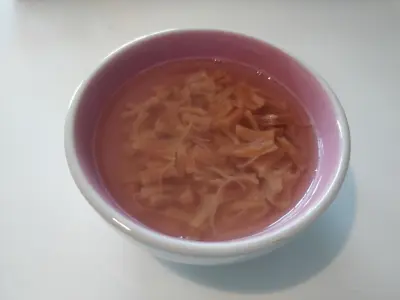
- Soak the dried scallops for 20 minutes, then shred them into small pieces.
- Cut the chayote in half widthwise and pry out the soft seed in the middle.
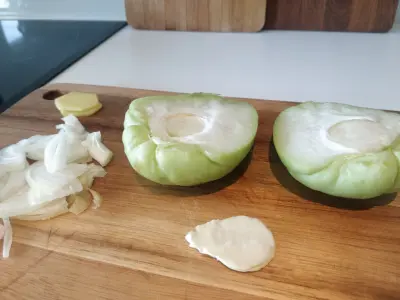
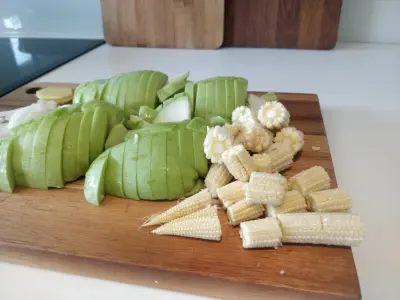
- Cut the chayote in half again lengthwise, then slice into 8 mm slices.
- Cut the baby corn into bite size pieces.
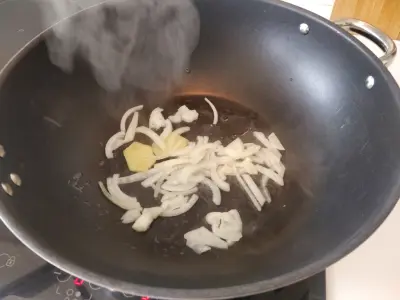
- Heat some oil in a pan on medium-high.
- Fry ginger and onions until the onions are soft.
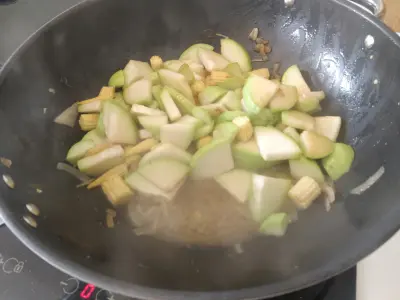
- Add chayote and baby corn and give them a fry until they are all coated with oil.
- Add dried scallops, including the soaking water, and soy sauce.
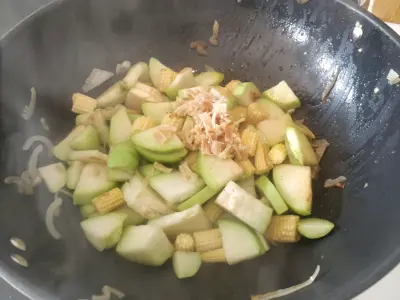
- If you need more liquid to cover the bottom, add some water.
- Turn the heat down to medium and cook covered for 6-8 minutes. We want the chayote soft, but not mushy.
- Dissolve corn starch in some cold water.
- Add dissolved corn starch to the chayote and mix until the sauce is thickened.
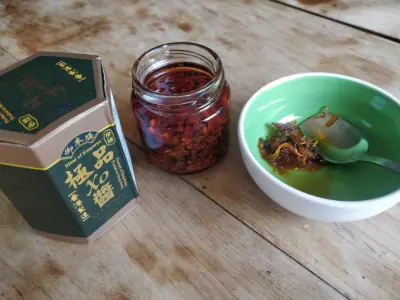
I like to eat this dish with XO sauce. It's a popular Chinese sauce that could be called "King of Sauces". One of its key ingredients is...drum roll...dried scallops! So we've got dried scallops on top of dried scallops! By the way "XO" isn't because it contains brandy. It's just called that because "XO" brandy is "the best" brandy, so analogously, this is "XO" "the best" sauce. It's quite pricey for a sauce -- about $20 for a small bottle -- and usually it's the only sauce restaurants will charge you for.
Sik fan ah! (Everyone knows "bon appétit", but I think we should know the phrase in Chinese too since it's another big culinary culture.)






