
Also known as "fly lice", fried rice is one of the most well known Chinese dishes and is a staple in home cooking and in restaurants. There are hundreds of popular varieties, including Yang Chow fried rice, salted fish with chicken fried rice and Singapore fried rice. But today we're going to start with the basics.
Ingredients
- cooked rice -- As a rule of thumb, fried rice must always be made with leftover rice, preferably left in the fridge overnight. That way the rice is nice and dry. You could conceivably make fried rice with fresh rice, but it won't be as good. And anyways, that's like making croutons or bread crumbs with fresh bread. Like, why?
- 1 small onion, diced
- 0.5 tbsp chopped ginger
- 1 egg, beaten, with a pinch of salt
- 1 handful of chopped coriander and/or green onion
- salt
- pepper
- cooking oil
Method
Wok cooking is all about the heat and movement. You want the heat as high as possible. You know how in movies there are flames coming off the wok? That's what we're going for, although not quite possible at home. Commercial wok stoves put out 30,000 BTU while typical home stoves put out 2,000-10,000 BTU. Without a high enough temperature, the dish tastes flat. When you can taste the heat in the dish, Chinese have a special word for this which roughly translates to "essence of the wok".
To keep things from burning, everything in the wok must be in constant motion. It helps if you can do the "flippy thing" that chefs do with woks and frying pans. Fried rice is a great dish to practice on. If fact, newbie chefs in the Chinese kitchen are relegated to only making fried rice until they can master it. (That is, after they have mastered washing and cutting vegetables and mastered enduring being yelled at constantly.) Ready? I won't yell at you.
- First we have to break up and loosen the clumped up rice. You can do this with the handy ol' rice paddle that comes with your rice cooker or if you want to be thorough, you can stick your hand in a plastic bag and crumble it by hand. If the rice is properly dry, it should be quite "bouncy".
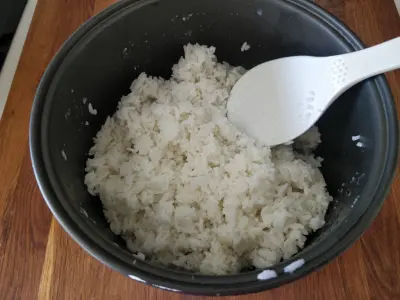
- Put some cooking oil in a wok and turn on high heat. You can throw a small bit of ginger in there so that when it starts sizzling, you'll know the wok is hot enough.
- When the wok is hot enough, fry the onion and ginger together until the onions are soft. Salt and pepper. I tend to salt and pepper at each step. I find it's easier to judge the amount and give a more even flavouring than doing it all at once and the end.
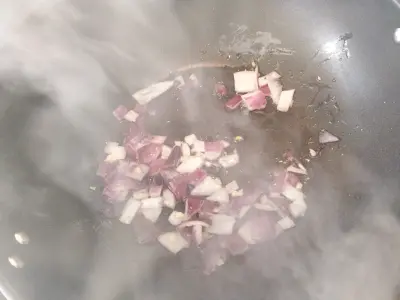
- At this point, you can add whatever other leftovers you have. It could be bits of leftover meat (already cooked or not) or the odds and ends of vegetables left in the fridge. In my case, I had some bean sprouts, so that's what I added. Keep moving that wok on high heat until your extra ingredients are cooked. S+P as needed.
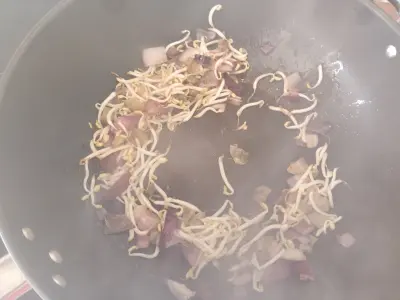
- When it comes to the egg, there are 2 schools of thought:
- School 1 - Add egg before rice. The rice tends to stay drier and be more toasted and you'll have whole bits of egg.
- School 2 - Add egg after rice. The rice will be moister and a bit gooey. It will have a uniform appetizing colour as well.
- I like both methods, but today we're going with school 1. So, make a bit of space in the middle of the wok and scramble the egg until it is 70%-80% done.
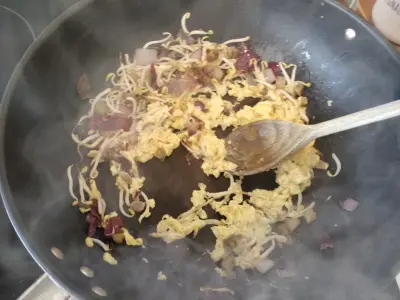
- Before adding the rice, check if you need to add more oil. Some ingredients absorb oil more than others. If at any time the rice starts to stick, you can always just add more oil again.
- Add rice. Break up the rice as best you can with your wok tool of choice. I'm using a mighty wooden spoon because I have a Teflon wok. (Aside: Purists would say the only acceptable wok is a well seasoned and oiled cast iron wok. It's heavy and holds heat well to give that all important "essence of the wok". I would agree, but I like the convenience of Teflon for home cooking. By the way, the tool "real" Chinese chefs use is literally translated as a "wok shovel". Mighty indeed.) If you read that aside, your rice is probably burning, so get back to stirring and frying and flipping!
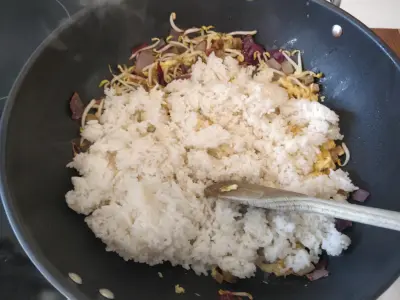
- Keep stir frying the rice until the rice is all loose, dry and nicely toasted. If there are some chunks left it's not a big deal. S+P to taste.
- If you are in school 2, add the egg now. Try to get the rice coated as evenly as possible and keep stir frying until all the egg is cooked.
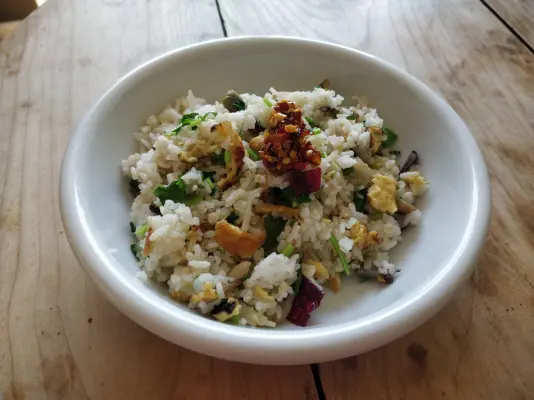
- When it's done, turn off the heat and throw in the coriander and/or green onion. I like to add some fresh greens right at the end for balance. Give a final couple flips to mix everything together and let the residual heat wilt the greens.
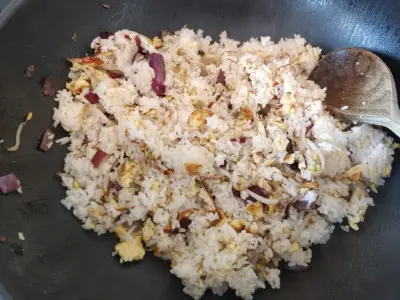
Now that we have the basics of fried rice, we can create any number of variations with the same recipe, and it's great for getting rid of odds and ends in the fridge.
Sometimes I like to eat mine with siracha or the chili oil I wrote about last time.
Sorry, no wok jokes or puns. All those expired in 1986.






