To begin with, I must cite some archaeological examples of a chronology similar to the one studied, for the Catalan area. The Castell de Salses, which is located in the Rosselló region, was of great strategic importance at the time. The Castell de les Salses was commissioned to control access to Catalonia from French lands. This was built after the Castell vell de Salses (or the Castellvell) and also the Castell Reial, the two castles also from Rosselló. In fact, the Castell de les Salses was abandoned to later occupy the Castell vell de Salses, and finally the Castell Reial was inhabited. From the archaeological remains found in the latest archaeological campaigns; it is believed that the castles Castell de Salses and Castell vell de Salses had walls between 4 and 5 meters high.
The reason why the Castell de Salses and the Casell Vell were abandoned is not known with certainty. These castles have a different floor plan (because of their morphology), and at the time they were the manor houses of the town of Salses. the Castell vell de Salses has a rather trapezoid plan, with a single quadrangular tower. The most impressive of the three is the Castell Reial, with a double wall and multiple bastions. This has a quadrangular plan, a wall almost 2 meters thick and a square tower at each angle (these reach up to 3.4 meters). The three castles were built using stone and mortar, and they have in common the presence of a wall and one, or several, stone towers. It is interesting to think about future hypotheses to be developed, such as why each of the castles was abandoned, and why the manor house was changed so quickly during the 11th century.
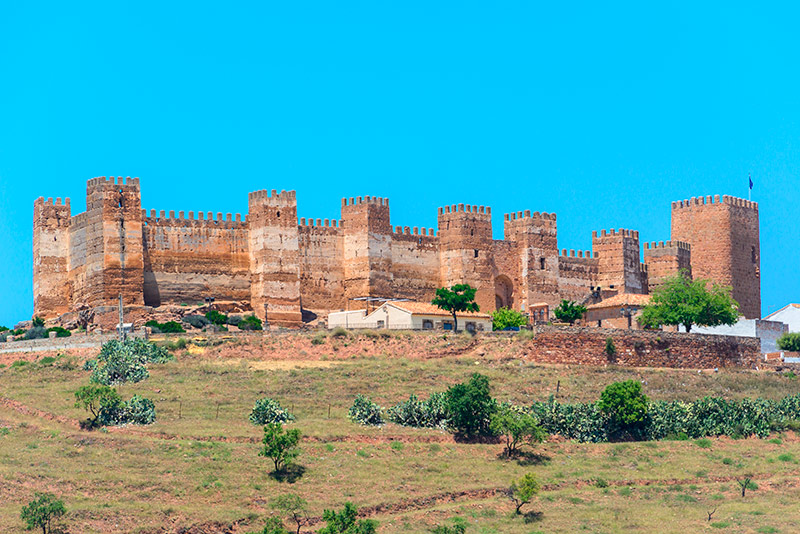
Now I am going to proceed to compare the different archaeological sites of ancient medieval fortifications cited in the manual of J. A, Quirós. There are many old fortifications that are cited in the Manual of J. A. Quirós and that I will not comment on, since it is difficult for me to extract information about them. Or, sometimes, I was not at all clear that the information I was seeing was correct (or properly verified). Starting from the 11th century, castles used to be managed by nobles and knights. They are called “Third Generation Castles”. In fact, there was already a castle that had the characteristics of a Third Generation Castle (with stone towers already walled, and was known as "termenatis", that is, a small territorial area with a castle of modest dimensions). Between the 4th and 9th centuries there were the so-called "First Generation" and "Second Generation", which share many similarities with each other in terms of their construction and functionality. Wood was often used as the most used construction material (along with the reuse of old stone structures). Back then it was the King who controlled the power of the kingdom through his Castle. Sometimes it was the count-king who exercised leadership.
Next, I am going to talk about the Castle of Monte Barro, the Castle of Roc Enclar, and the fortification of the town of Puig Rom. All of these sites have already been excavated, and I have been able to collect some information on their chronology and plant morphology, among other technical aspects of their construction. The earliest fortification could be that of the Puig Rom settlement, which was built during the 4th century and was inhabited until the 10th century. Later it could continue with the Roc Enclar Fortress (Andorra), considered "the best" preserved fortress with a entire castle inside. It dates from the 5th-6th century approximately, and is of great historical importance. And, finally, the Monte Barro Castle in Italy. It was a fortified settlement of 50 hectares where all social classes lived during the first centuries of the Middle Ages (from the 5th century to the 6th century). It was founded in 450 B.C. north of Italy, and came to contain dozens of buildings (among them the Palace, where the King of the Castle probably lived). In the end it was destroyed and abandoned. I could also mention Castle of Doña Urraca, the daughter of Fernando I (who at that time was the Lady of Zamora), and the Castle of Curiel in Peñaferruz (Gijón). The Doña Urraca Castle was built during the 11th century, while the Curiel Castle was built during the 8th century (and is known to have been occupied until the 9th century).
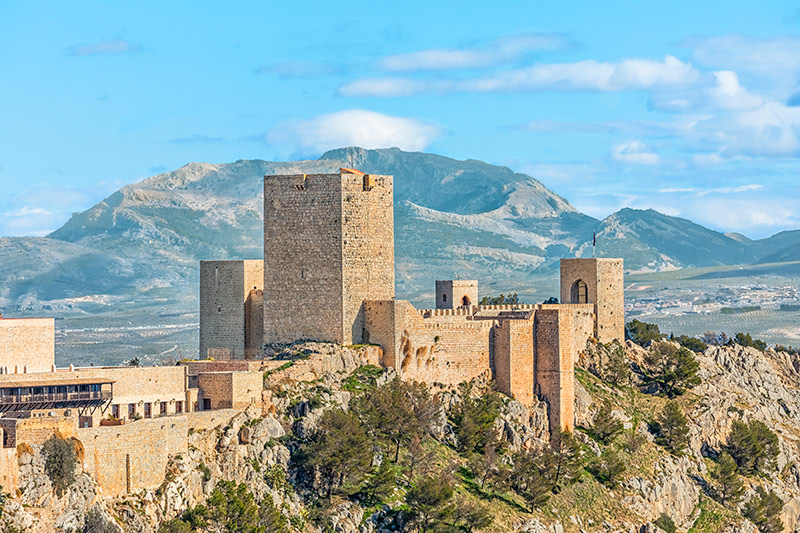
In conclusion, and as a result of the information that I have been able to extract from each ancient fortification mentioned; First Generation castles were very basic and strange in their time. Because of that, they already served a surprisingly effective defensive function against hordes of infantry or cavalry. They instilled respect and fear in potential attackers. These were already located in moderately flattened spaces and in an elevated position (which provided a defensive advantage and to watch as well). The deposits found demonstrate the lack of protection suffered by many medieval fortresses during the 4th century to the 5th century. Later, better construction materials were incorporated, and different materials were used to improve the physical properties of the walls that formed the fortress. The walls could already withstand more waves of enemies, and some were double. Already in the Third Generation of castles, the abysmal technological change took place with respect to its predecessors, and this is reflected in the state of conservation in which old high medieval castles are found. That is because the solidity with which their fortresses were built is much greater than during the V-IX centuries...
- My ambassador link;
https://www.publish0x.com?a=4zbq7nA7ep
- Link to my profile;
https://www.publish0x.com/@Mask69
- Link to the Blog in which I include this publication;
https://www.publish0x.com/archaeology-and-anthropology