
To the modern eye, the digital economy feels completely detached from nature. A smartphone, a data center, or a crypto mining rig seems like a sterile mix of glass, copper, and code. Yet, if we strip away the plastic cases and look at the heart of modern computers, we find a very primitive element: silicon.
If we trace our relationship with silicon back to its very first shaped form, the story does not begin in California’s Silicon Valley. Instead, it leads back 29,000 years to a cold river valley in the Czech Republic. There, buried in the ancient dirt of Dolní Věstonice, sits the world’s oldest known ceramic. It is a small clay figurine of a woman. The line connecting that ancient clay art to a modern Bitcoin transaction is unbroken. It is one continuous story of humans learning to shape the earth to store and send information.
The Venus of Dolní Věstonice was molded from local silt called loess, which was easy to find in the area. At a chemical level, this mud was mostly quartz and clay. These minerals consist mainly of silicon dioxide (SiO2... i don't know how to put the 2 as subscript here in Publish0x, sorry bout it guys). When an Ice Age artist mixed this mud with water and put it into an earth kiln heated to 700°C, they changed the world. They were doing the world's first real materials science. Baking the clay caused a permanent chemical change. It locked the loose silicon atoms into a hard, lasting structure.
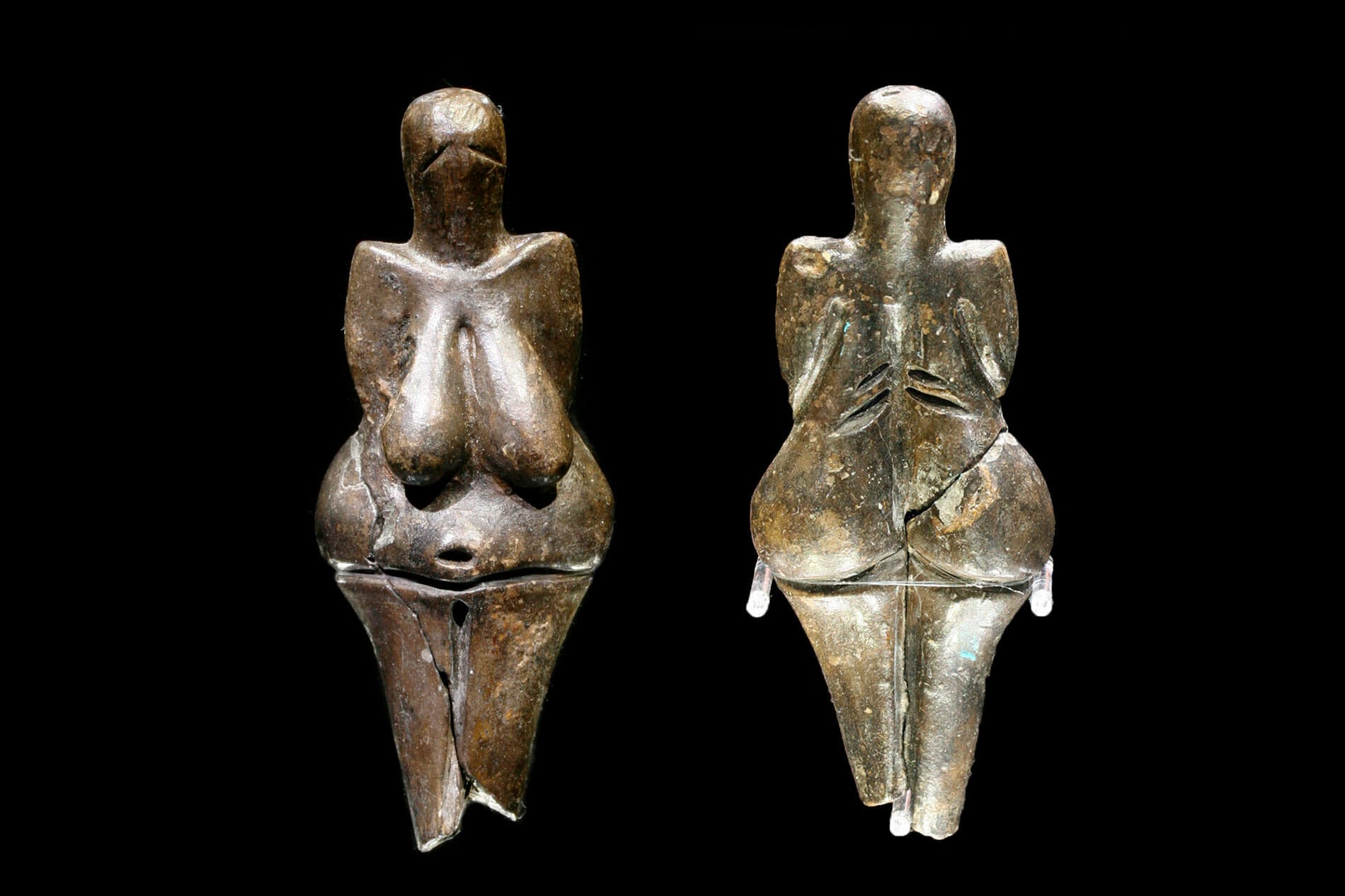
This was a massive leap for human culture. Before ceramics, information did not last long. It was passed down through speech or carved into bone and wood that could rot. By turning mud into ceramic, humans used silicon to make an abstract idea last forever. The Venus became a symbol of community, fertility, or ritual. For the first time, humans engineered a physical material to survive for thousands of years. It became a permanent storage tool for human thought.
Here comes the MICROCHIP!
For thousands of years after that, humans kept using this basic recipe. We baked silicon into bricks to build cities, shaped it into pots for trade, and learned to melt it into glass. However, the true tech revolution happened when we stopped looking at what silicon could hold on the outside. Instead, we began to study how electricity moved through its inside.
Silicon is a semiconductor. In its pure, natural state, it does not carry electricity well. But scientists learned a special process called "doping." By adding tiny amounts of other elements into the silicon crystal, they changed how it worked. This trick lets engineers control exactly when electricity can pass through and when it is blocked. In 1947, this unique trait led to the invention of the transistor. The transistor is the basic building block of all modern tech.
Making a modern microchip reveals a striking twist of history. To create a computer processor, factories extract silicon from common quartz sand. This sand is the exact chemical cousin of the ancient clay mud. The sand is cleaned, melted into a big crystal, sliced into thin wafers, and etched with tiny paths using light. A modern computer chip is, quite literally, a highly advanced piece of structured, electrified sand.
BINARY SILICON
The link between ancient pottery and digital computing grows deeper when we look at how both systems process information. In the Ice Age, a human brain thought of an idea and used physical fire to lock that idea into a shape made of silicon clay. In the digital age, information is processed by pushing electricity through billions of tiny silicon switches on a chip.
For blockchain networks like Bitcoin, this physical reality is vital. The special computers used to secure these decentralized networks are called ASIC miners. They are packed with billions of these silicon switches. By flipping these switches on and off trillions of times per second, the chips solve complex math puzzles. This heavy work confirms transactions and adds them to a shared public ledger.
The ancient kiln required a huge amount of wood and group effort to create a lasting ceramic object. In the same way, the blockchain network requires a huge amount of electricity to forge a permanent financial record. Both systems rely on a physical "proof of work" based on the traits of silicon.
When you send a crypto transaction today, it does not live in a weightless cloud. It travels through fiber-optic cables made of silica glass. It is processed by servers running on silicon chips. Finally, it is saved onto drives that use silicon memory. From the start of the transaction to the final save, the whole system of digital wealth is tied to the same element our ancestors pulled from the mud.
In the end, the link between the Venus of Dolní Věstonice and the blockchain is elemental. Twenty-nine thousand years ago, humans took silicon from the earth, applied energy, and made a hard object to hold a shared cultural value. Today, we take that same silicon, apply energy, and create a shared digital ledger to do the exact same thing. Our tools have grown far more complex, but the basic human drive is the same. We are still shaping the earth to build trust.






