
First this is NOT the Green New Deal "GND" a la US Dems, It's the Crypto Managed NEW GREEN DEAL "NGD"
Meaning: OUT with the old green deal business frameworks favouring a few people, including the vendors and wind farm owners, people renting their property and; IN with a New Green Deal which ensures/outlines all power bill rate payers can earn a share of Big Wind's Upside, the focus of this post. :)
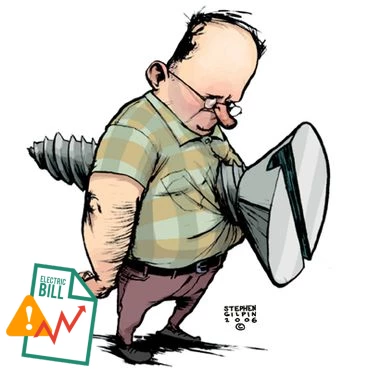
The big problems for local economies BUYING into Renewable Power Generation? Here are the Top 4:
Let's look at BIG Wind as an example in Alberta Canada, a very windy province: (source canwea.org 2017, prepared by Delphi Group), Local economies don't figure into big wind farm deployment as benefactors (meaningful share/distribution of wealth) because:
1- Specialized and proprietary expertise is often needed for servicing and maintaining certain turbine components.
2- Nearly all large and specialized wind turbine equipment and component replacement parts (e.g., blades, nacelle components, etc.) are currently being imported to Alberta from outside of province or internationally.
3- Project owners / operators and Original equipment manufacturers (OEMs) bring in expertise from wherever it exists and/or move people into Alberta to do the work over the longer term as required.
4- A current industry trend is to consolidate remote operations services through automation and digital technology, which may impact on jobs and opportunities for Alberta-based firms.
Ouch.
Worse yet, few, if any private or public companies owning and operating these Big Wind farms engage in profit sharing, because they can barely make a profit themselves, having been sold a "bill of goods" which can't deliver on the vendor promise of projected "Annual Energy Production" AEP. The proof is in the Service Operator actual power generation data (if they let you see it anymore)
How to avoid a BAD Green Deal: Community Advice,
Put the Community PLEBISCITE vote on Blockchain AND, Manage the project on Blockchain with 100% Transparency.
Currently, the only choice is for the community to get some sort of decent green deal, which benefits the community at large is to buy and operate the wind farm themselves. (City of Summerside Electricty- Wind Farm example, some doing it better than others).
Sadly, the long term outcome for most communities, has proved to be an inevitably bigger tax payer burden on the rate payer, being much higher than before the farm was installed. How this typically happens over time looks like this: the rate payer's "mill rate' will rise over time (many times). The mill rate is used by community governments to re-calculate your annual property taxes so, the rate payer pays more to cover those "unforeseen or unplanned for" build and maintenance costs and the rise in interest rates which will be charged (we are at or near all time lows, something/someone has to give, and its usually you the tax payer/rate payer doing all the giving). Effectively the community gets to pay for the capex increase (more repairs , replacements added to the total bill) as 100% additive debt load (especially if the community "owns " the wind farm) and associated with that high debt load a higher interest rate %, likely debt issued by some banker, coming from likely in a far away city or even land. Can you feel the shaft?
TK Shout Out: A little company in Switzerland is working on getting the Vote on the Blockchain - #AGORA which you can read about on an early post here
So who really wins in the Big Wind "Lottery"?

https://www.foamcoreprint.com/blog/top-giant-check-uses/
And the Winner's are:
Big Wind Farm Private Owner/Operators(if they can sell 'the farm' before it gets old) and their contracted Property Owners(sort of) and always, the Vendors
When a big wind farm gets developed, those lucky residents affected (that see their housing price values drop into the toilet) get "well compensated", but only if the turbine tower is located right on their property, providing some sort of basic income, which they alone can usually live off. As for their neighbours, what compensation they get for the collapse in their house price (Wolf Island, ON is a good example why Ontario Wind doesn't work for the rate payer) depends on how well the community negotiate with the private company building and operating the farm. (Not well if their are hidden kickbacks?)
Does the community get a share of the wind farm profits made from the actual power produced as well? Nope. (Unless 100% community owned as in a co-operative)
Why? hmm. Why not? Because it's too hard? Likely. Too much book keeping , whose numbers do you trust etc...
Also, ever notice many of these farms change hands, get bought out? Yup, many initial investors figure out the returns aren't there , sell and park their money in higher return projects. (Or Blackrock or someone like that "swoops in" buys the farm out and strips the costs out (most everyone gets laid and replaced with cheaper and less labor) and likely re-packages a few farms together for sale (before the warranties and unexpected maintenance costs kick in, like blade replacement, transmission failure , etc.., ok I am rambling... ;) )
All this while the rate payers near the farm, 'cheer them on'. not.

Watch those "costs come a creeping in'", Community style...: Community Owned and Operated Wind Farms
Once the community has acquired its own farm, the big rate payer "boogie man", which later emerges, are "built-in" wage inflation & 'unforeseen/unplanned for "operating costs" which results in higher 'mill rate' factors placed on the rate payer by their community governments, factor used to adjust/re-calculate annual property taxes based on 'fair market value' of the rate payer's property.
So the property owner gets to "take it the shorts' two ways big wind style.
First, the wind farm presence de-values their property by at least 25% in most markets, as nobody really want so live beside these huge rotating monsters, (especially birds, unless your into collecting dead bird bodies by the wheel barrel nightly during migrations) , so the current mill rate needs to be raised to maintain or rise property tax revenue owed to the 'community' to pay for built in job cost inflation
Second, because the maintenance costs are wildly under-estimated for Big Wind Power Generation, as are the disposal costs, these additional 'unforseen' costs get paid by the property tax payer a bit later, usually just before the warranty runs out at year 10, and then when the wind farm systems are retired, blades and nacelle and genset taken down and the worn out parts are retired/recycled/burned as waste/maybe even buried.
Get the picture? All so the community can feel good about using renewables? I think not.
Shifting the entire "downstream" burden of Big Wind Power Generation costs entirely on the property owner is hardly fair. Even so, the rate payer power bills also rise, which is also not fair.
TK Observation -Big Wind is a concentration of wealth model, pure and simple, which benefit the shareholders only of the Big Wind Power endeavour.
Blockchain Basics:
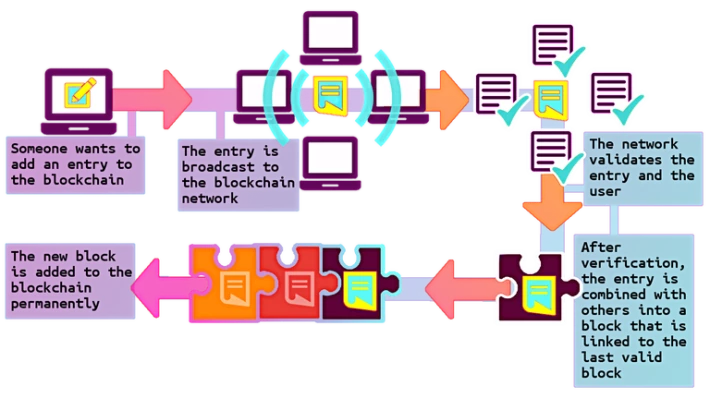
https://www.johnlaurits.com/2017/blockchain-voting-rigged-elections/
Rate Payer Protection, Where Does it Start? Before any Deal is Cut...
Protection of the rate payer occurs before the wind farm is acquired during community meetings. The problem is the same old "deal" framework is trotted out, a few benefit, and the rest of the community really does not, and in fact is punished with ever increasing taxes to cover rising costs and those nasty "unforeseen" or "poorly unaccounted for" costs. (ie- let future generations pay for those costs, cuz I will be outta here in 5 to 10 years anyway, etc..,), First don't do anything unless the vote is a referendum , every rate payer can vote decision, and that means the mayor and the council persons sit on the sidelines, each with one vote only, everyone needs to vote who is arate payer. To ensure 100% transparency and no funny vote rigging, use a blockchain and app designed to handle eVoting.

https://www.bitcointe.com/2019/11/26/combine-hyperledger-cloth-with-the-iota-tangle/
The Crypto "Fix" for Wind Power Profit Sharing: Distributed Public Permission-less Ledgers to the Rescue:
I am going to use IOTA for this example, as they also have strong emerging support for IoT sensors, and a gateway capability into Hyperledger's permissioned private blockchain, which needs to be there for internal accounting purposes. IOTA has a Smart Community blueprint listed here.
First, let me say community or privately owned wind farms contracted to share a piece of the action with their citizens fairly, whether they are property owners or renters is not a common model of distributed wealth. That said, the profit sharing model from Big Wind should be common place and demanded by all community members, and is exactly the opposite of the communist style "Basic Income" model promoted by US 'Democratic' Party Candidate Wong.
New Community Bylaw Anyone?: Big Wind Power Generation Profit Sharing for all Community Members.
First step, get this new model voted into the community by-laws which most always take precedent over state/province and federal law, especially if there is no law from these 'upper, centrally controlled' entities which do not apply, or have no jurisdiction.
A Fair vote can also be put on the blockchain, see this earlier blog here to learn a bit more about #AGORA.

https://blockchain.oodles.io/blog/iota-distributed-ledger-tangle/
Trusting the Power Output Data: IoT "Internet of Things" sensor generated data posts directly to the "Blockchain" 'Machine 2 Machine'
In Alberta, every private power deal is negotiated with power grid operator charged with delivering the power to your door. Private deals are less likely to be placed on the blockchain, especially "Behind the Fence" power deals, unless of of course, the excess power generated is sold to eth public grid in a timely fashion at the best price.
In the public 'arena' of power generation, the "Service Operator" is responsible for the payout to power producers/generators, based on province/state legislated/approved fixed (Feed in Tariff "FIT contract rates like in Ontario) or variable rates like in Alberta, Canada, where all types of energy decided on their own when they turn on, above those with long term base power rate delivery contracts.
FIT and "free market" power models are very different in how they impact the rate payer over time.
FITs (the payout to generators typically measured in MW/hr "Megawatts per hour") are used in various jurisdictions worldwide are 100% born by the tax payer, set by passed legislation at the state (Minnesota) or federal level (Germany).
Free Market Power Generation variable price market frameworks are also set by state/province (Alberta) or federal levels (UK, Australia, New Zealand) , which have all types of power generation competing to sell power to the Service Operator when they see fit above the base load contracts given to very large, Hydro, Coal, NG and Nuclear power generation concerns delivering power to Mega Cities (ie- NYC et al) and Mega Projects (ie- Alberta Tar Sands et al)
Both types of markets essentially shift the future costs and cost of inflation on to the rate payer over time, eroding their disposable income. Not good.
Permission-less Public Ledger Power Generation & Operating Cost Reporting: IOTA style
In principle, by removing the "human accounting" element and automating the flow of sensor data measuring power generated and sending that data to a permissionless distributed public blockchain anyone can see, much needed 'transparency" is injected into the power market, a 'foundation' step in creating fair distribution of wealth between producers and consumers.

https://gcn.com/articles/2018/04/02/west-virginia-mobile-blockchain-voting.aspx?m=1&s=gcntech_030418
Community Voter Participation Early in the New Crypto Green Deal Process: "Cutting the New Green Deal"
This is where the community meeting attendance kicks in before any deal is 'struck'. An approving blockchain vote is critical, in approving a new green deal framework which is smart, which in my books is 100% transparent with fair distribution of profits (after transparently reported costs on the permissionless public blockchain by the power generator) between the producer and the consumer ( all rate payers, property owner or renter, basically anyone of legal voting age, and not just the property owner on which that wind turbine sits)
More importantly "mill rates" need to be disconnected from Power Generation overhead costs and attributed separately to the power agreement afforded the community by the IPP running the wind farm. , This means all the "unforeseen/unaccounted for costs" need to be budgeted and accounted for up front , including out of warranty repair and replacement as well as disposal costs, accumulated as a liability percentage on the blockchain monthly, and adjusted for in plain sight, with adirect impact, positively or negatively on the weekly/bi-weekly or monthly payout to the community stakeholder (registered voter in the community, or greater community affected visually, audibly by the wind turbine activity, and living in the counties where these wind turbines get parked.
The community should also vote, via the blockchain, on whether or not a base rental is paid to the property owner allowing a turbine to be placed on their property, or do they get a higher payout monthly, something the community should collectively decide, referendum style, with the local mayor and council members simply implementing the will of the people.

The payout, per community rate payer?: Direct to your crypto wallet (of choice), or bank account, your choice
A permissionless distributed public ledger like IOTA, equipped with smart Contracts (in IOTA's case #Qubic) will one day soon, likely in 2020, no later than 2021, be able to handle the volume (TPS, transactions per second), peaky and frequent weekly payout transactions owed the power bill rate payer (any property owner or renter) and the power generator (the IPP owner/operator of the Big Wind Farm).
How the power bill rate payer receives their payout from a share in Wind Power Revenues is up to them. In IOTA's case a rate payer will want to select a Multiple crypto_currency wallet which includes support for IOTA, with additional support for a hardware wallet.
Of course not every power bill rate payer is crypto savvy, and some may never be, and this is where oracles become important. Having the rate payer register with the oracle which finds the exchange rate and pays out in the fiat currency the rate payer wishers can easily be handled today with IOTA HyperLedger Bridge, and also allow for accounting to be updated automatically within the Community "books" as a private permissioned Distributed Ledger, where Hyperledger is likely the leading choice for most communities. This type of public to private DL connection also gives the rate payer the option to have his power bill reduced by the payout from the power producer, provided the Community IT department has "their act to together" and can get that option implemented into their existing bill payment system.
Doe we care as a rate payer in this instance if MIOTA's are sent to our crypto wallet of choice directly? Not really, because the payout is measured in local currency at the rate used for that week, in this example. Should you keep your payout in MIOTA? probably not since the crypto markets are volatile, but so could your local currency. best best is to shift some or all of the MIOTA into lower risk "store of value" and that is where Crtypto wallet features become important, to get the low fee liquidity you need to move your earned MIOTA value into the best stores of value which match up to your own risk curve/profile.
IOTA/Hyperledger: A Crypto Managed New Green Deal Solution, Waiting and Ready to go: Rate Payers & Communities Wake up!
So there you have it, A Green New Deal, Crypto-style employing two of the big "Blockchain" market leaders IOTA and Hyperledger in their respective Distributed Ledger "public permissionless" and "private permissioned" market segments, both capable of really large "TPS" transaction per second rates more than able to serve even the largest Smart Communities.
What to do? Awareness and Education at the Community level before any deal is cut
In this day and age, it's up to the crypto savvy (us) to educate their own local community, both officially and unofficially, at these 'pre-deal', Big Wind Farm meetings about the new value distributed ledgers, public and private, permissionless and permissioned can bring to the community by enabling fair distribution of wealth, generated by wind farms with really low costs in a completely trustful and transparent manner.
Using the same old BIG Wind 'deal' frameworks does not cut it anymore when trying to create the New Green Deal at the community level which is fair to both parties, transparent and low cost to manage. Smart Communities employing "blockchain" technologies to vote on and manage their New Green Deals locally have an opportunity to re-boot and re-rejuvenate their local economies with lower power bills, and fair distribution of wealth between the companies investing in the community and their same members, all power bill rate payers.
What you can do? Well start by creating some awareness and commit to doing the education in your own local community and, it's more than likely you and your community power bill rate payers will be rewarded handsomely, where the incoming power developer will get a fair return, and the rate payer will get a lower power bill over time, a nice 50/50 WIN/WIN outcome.
What to look for when cutting the New Green Deal with Big Wind?
At this point, I have only one phrase to share "capacity factor". Make sure your community understands this phrase when evaluating the firms looking to locate a wind farm in your county. Low Capacity factor under 33% means low Annual Energy Production and is neither a good deal, or competitive with other legacy power generation, dirty (oil, gNG, coal, Nuclear) or 'clean' (Hydro).
For a BIG wind farm today with today's legacy tech to be competitive with thermal generation, the capacity factor needs to be above 50%, and that my colleagues only exists in a few really windy places year round (maybe WEICA in PEI, Canada is close using legacy/cutting edge Big Wind from DeWind) , which means you need new BIG Wind tech and energy storage must be part of the overall solution and part of your local communities New Green Deal.
Adding in Energy Storage into your local community New Green Deal, means how much your local community spends on the total power generation and energy storage project and how Big Wind generation is re-sized in that it will be reduced somewhat (maybe by as much as 33% given current wind farm designs. Of course, the size of your energy storage MWHR (Megawatthour) depth become all important, given base and peak demand forecasts for power, meaning energy storage becomes the "prime mover" as Big Wind power generation evolves in to it's new long-term, better suited role as intermittent JUMBO charger of large format container batteries (likely equipped with ZincAir tech).
Most importantly, communities authoring their local New Green Deal with Big Wind must look for a share of the upside earned by the power producer (Community run or private) beyond what they pay for power monthly, especially when cutting a deal which allows the project to sell power to other wholesale power markets. :)
TK over and out.





