
Today, a range of "reciprocal" tariffs will be levied against every country in the world. The market is set to sell off ... but then what? Let's assess what might happen and then how to position yourself. It's always possible to make money in a bear market -- you just need the right tools.
Interested in watching this article as a Youtube short? Watch here
1 How Bad Will It Get?
Bloomberg Economics "found that a maximalist approach could ... [result] in a hit of 4% to US GDP and [lift] prices by close to 2.5% over a two- to three-year period. ... For comparison, this would be nearly as bad as the impact of the global financial crisis — which left the economy roughly 6% smaller after 3 years than its pre-crisis trend." So, from black bear bad to, potentially, grizzly bear bad. The key point: The direction is not constructive.
Reminder: Here is the link to the FREE Case Study. Discover how we crushed Bitcoin's performance by 457% by using on-chain data.

2 The Short Game
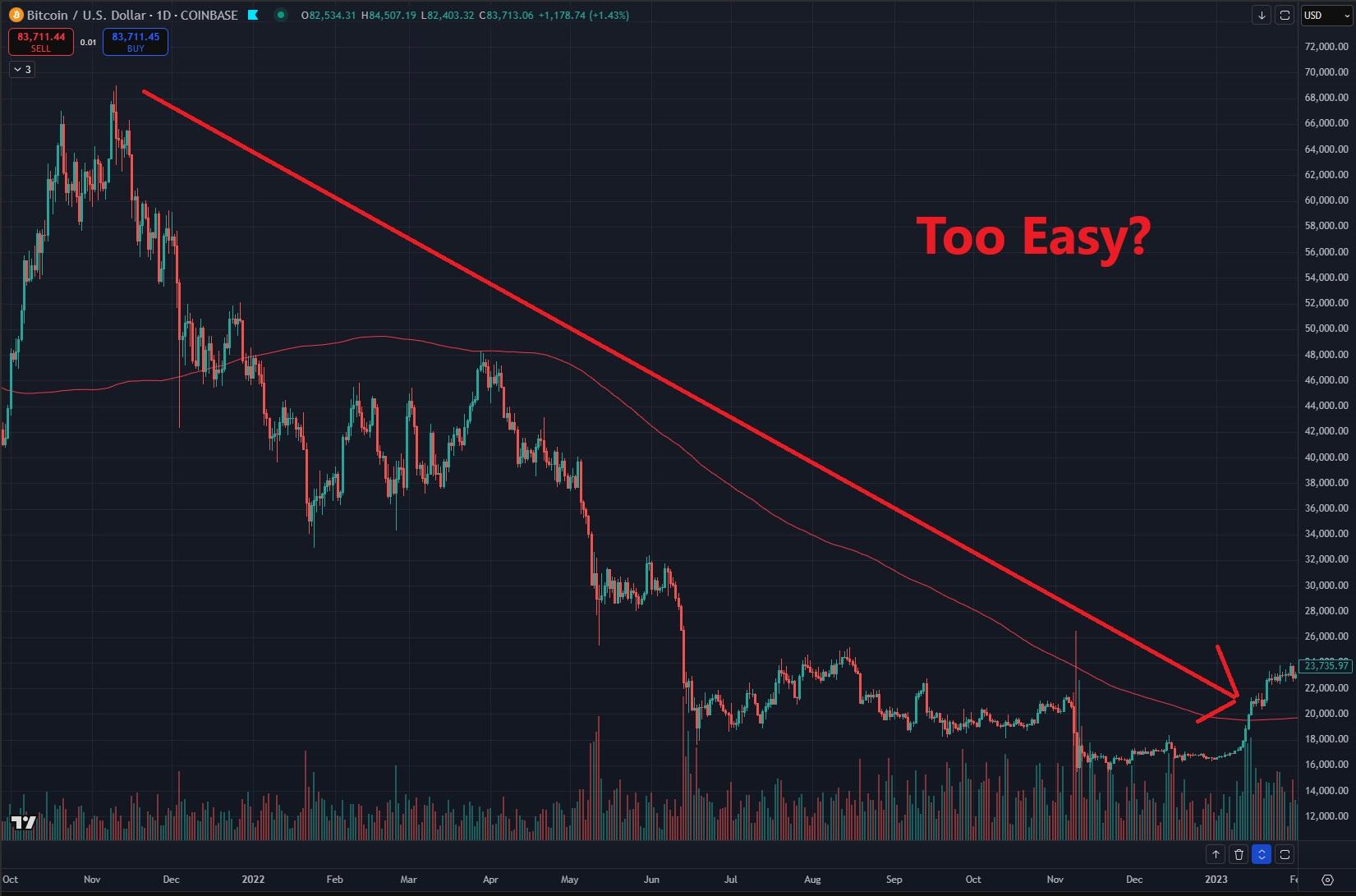
It seems too easy. In a declining market, just wait for $BTC to drop below its SMA 200 (the red line) and short it. You can expect some volatility, but look at those potential gains! You can use $SBIT in the stock market to do this, or you can try Index Coop's -1x $BTC as a possibility. Our Art of the Bubble course explains a better approach than mere shorting, and I don't recommend any of it if you're not a professional.
 3 Dollar Cost Averaging?
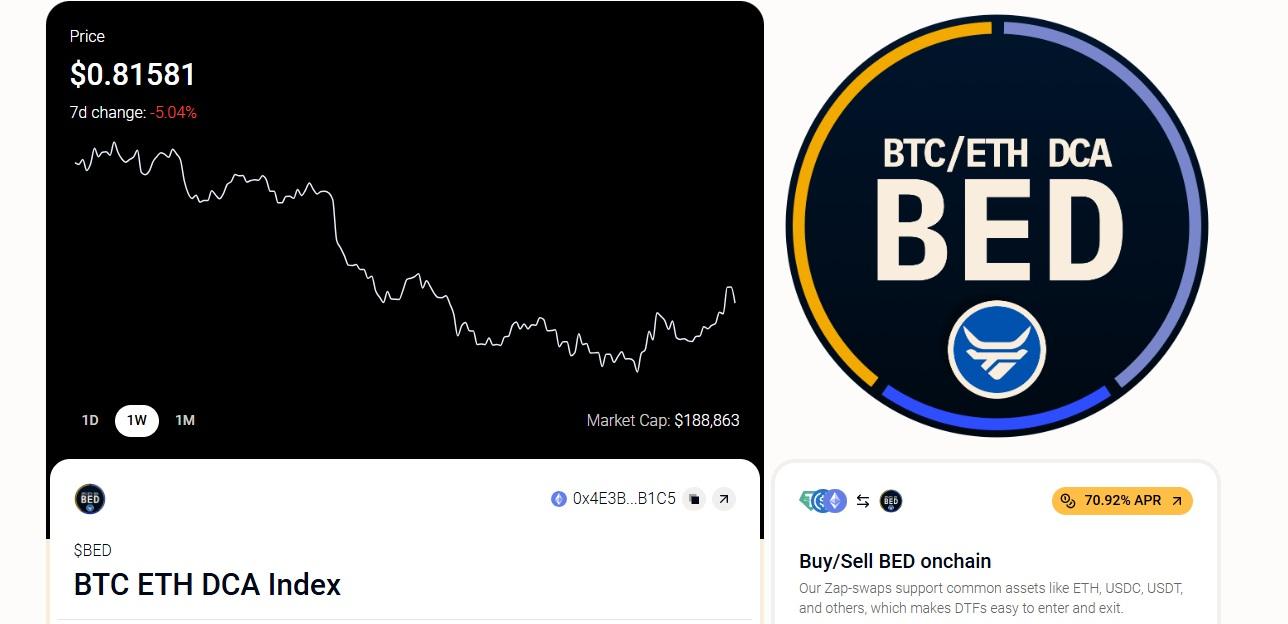
If you're not going to short, then at least you can buy cheaply, right? Dollar Cost Averaging might be the right way to approach this -- buying a little bit every week or so. Reserve Rights has an interesting index that does this for you called BED. It also earns yield on your $ETH and $BTC while, effectively, automating a dollar cost averaging approach.
 4 Crash Cost Averaging
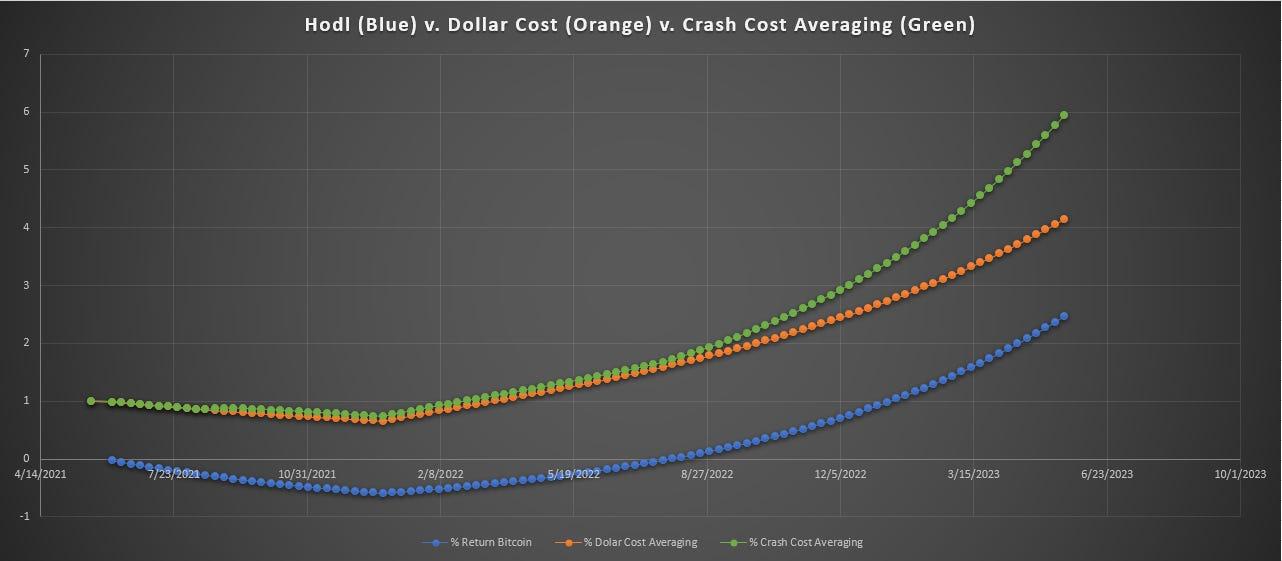
A better approach that I developed for high-volatility assets is crash cost averaging. Below is the original simulation and the performance has been fantastic. The green dotted line is the CCA strategy. The orange dotted line is DCA-ing through a crash. The blue dotted line is HODL-ing. The gist of the idea is to divide your potential buys into 10 positions and buy larger amounts as $BTC declines more. I have a Free article about this for you to read here: https://onepointtwolabs.com/how-to-crash-cost-average/
 5 Concluding Thoughts
There are other ideas, such as taking a builder's long-term approach or liquidity farming. But I do think that DCA and CCA will serve most people better. They're easy, limited-risk options (all things considered). Also, historically, they've performed exceptionally well. Wealth is made in a bear market, riches in a bull run. Focus on building wealth.
NFA. DYOR.
Happy Trading!
-Sebastian Purcell, PhD
👉Join our Trading Community’s newsletter!👈
Finally, if you learned something, give us a THUMBS UP 👍
Disclaimers and Disclosures
This post is provided for educational and entertainment purposes only and should not be relied upon for business, investment, taxation, or legal advice. You should consult your own advisors for those matters. References to any securities or digital assets are for illustrative purposes only and do not constitute an investment recommendation or offer to provide investment advisory services. Furthermore, this content is not directed at nor intended for use by any investors or prospective investors, and may not under any circumstances be relied upon when making a decision to invest in any fund managed by 1.2 Capital Management. (An offering to invest in a 1.2 Capital Management fund will be made only by the private placement memorandum, subscription agreement, and other relevant documentation--all of which should be read in their entirety.) Any investments or portfolio companies mentioned, referred to, or described are not representative of all investments in vehicles managed by 1.2 Capital Management, and there can be no assurance that the investments will be profitable or that other investments made in the future will have similar characteristics or results.
The views expressed here are those of the individual author and are not the views of 1.2 Capital Management, 1.2 Labs, or their affiliates. Certain information contained herein has been obtained from third-party sources. While taken from sources believed to be reliable, 1.2 Labs and affiliates have not independently verified such information and make no representations about the enduring accuracy of the information or its appropriateness for a given situation.
Finally, as the author of this report, you should recognize that I do actively invest. Many of my trades are quick and I do write about many investment items, whether stocks, digital assets, collectibles, and the like which I do not own. For the purposes of disclosing any conflicts of interest, assume that if it is covered, I own the investment item. Or if my coverage is negative that I am short the investment item.






