What's a "burn"?
"Burning" as used by many people in the crypto space is a fascinating process adopted by crypto projects to reduce the number of tokens/coin issued. As the name suggests, the process entails the permanent removal of a predetermined number of tokens or coins from circulation, thus reducing the total supply. The mechanism is common to the majority of altcoins to achieve stability in price and incentivize token holders.
How does token burn work?
The token burning process varies among blockchains and the most important being the reason for the burn. Some are simple as sending the desired number of tokens/coins to a "burn address" which no one on earth has private keys to. It is similar to sending a cryptocurrency to an address that does not exist. This renders the token unusable.
Alternatively, a token holder can call a burn function and specify the number of coins he/she wants to burn. The function then validates the operation by confirming if the holder has the said number of coins in his wallet. The function, when fed with an invalid parameter (negative numbers) will not execute, the same will happen if the token holder does not have enough amount of coins in his wallet. The total supply of the underlying coin is updated accordingly and the number of coins is deducted from the wallet that executed the function.
Examples
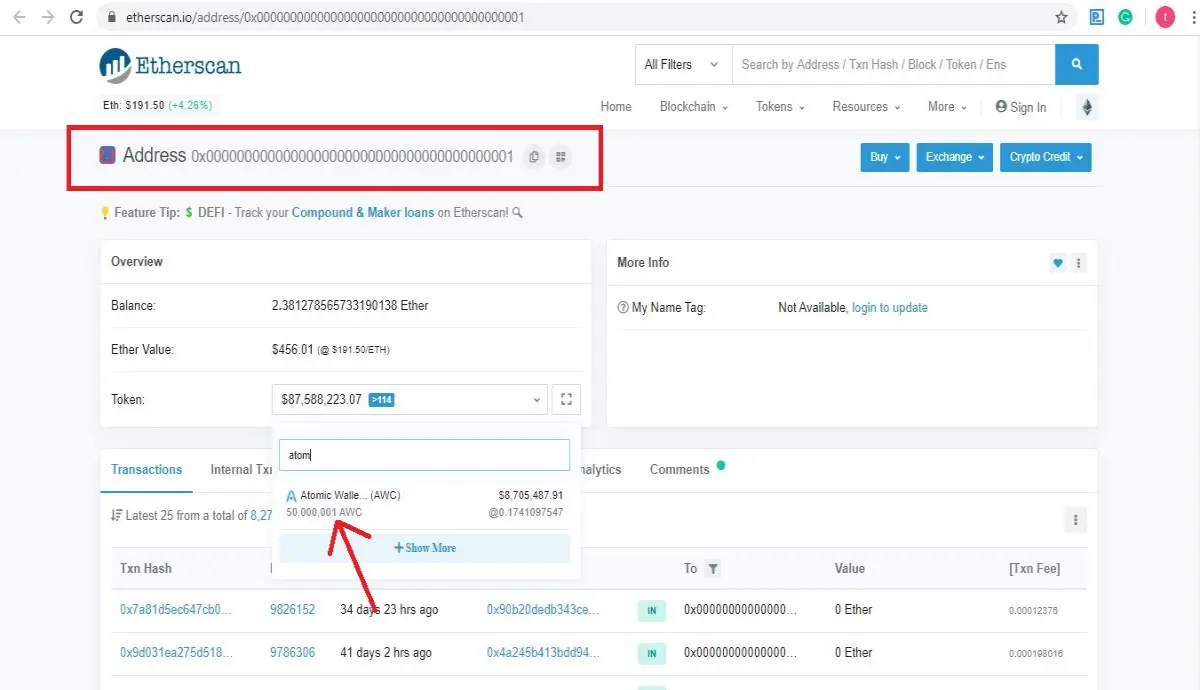
Atomic Wallet Coin (AWC) which was initially issued on the Ethereum network had to burn half of the total supply and re-issue the same amount of token on Binance Mainnet. A total of 50,000,001 AWC was sent to the address: 0x0000000000000000000000000000000000000001 in three transactions.The token burn can be found here
Binance also performs the periodic token burn where they burn a number of the BNB token depending on the trading volume in a given quarter (3 months). The cycle is scheduled to occur until 50% of the total BNB supply is destroyed. i.e. 100,000,000. The BNB token was first issued on the Ethereum network which used the smart contract "burn function". However, BNB on Binance Mainnet uses a special command rather than smart contracts.
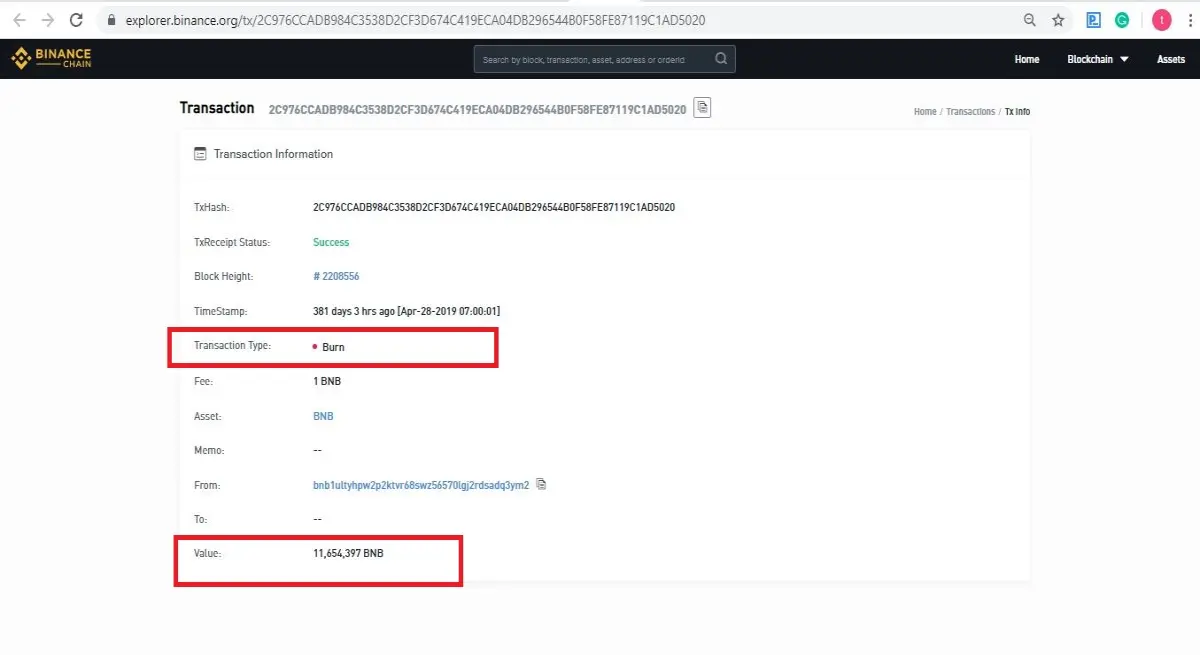
A burn transaction on the Binance Chain
Some Cryptocurrencies like Ripple employs the "Burning During Each Transaction" mechanism. Fees set by users to prioritize their transactions are sent to an "eater address" when the transaction is completed.
Why do companies burn tokens?
Each and every company has a reason for a burn. In most cases, the burning process will have something to do with increasing the value of an asset. This can be further explained as, the burned tokens/coins are removed from circulating supply resulting in a significant decrease in the token supply. When there happens to be shortage in supply, demand for the underlying asset increases accordingly.
In addition, it becomes necessary for a company to burn their token due to migration to a different blockchain. Let us take Binance as an example, while BNB was on the Ethereum network, they performed period burns. When they fully switched to their mainnet, they had to burn on Binance mainnet the same amount of BNB previously burned throughout the years on the Ethereun network.
Furthermore, others might choose to burn unsold tokens after an Initial Coin Offering (ICO) whereas token burning can serve as a solution to rectify an error in the case of excess issuance of an asset. Tether at some point mistakenly created USDT worth $5 billion and had to burn the token to avoid future implications.
Is burning tokens Worth it?
Token burning can be benefiting to project owners and token holders in so many ways. As the process is geared towards the value increase of an asset, the majority of stakeholders will be excited about it. How would you feel if the token/coin you've held for sometime starts to moon? Burning also ensure stability in the value of an asset which can encourage investors to hold on to the coin/token.
BNB's steady price growth can be related to its quarterly burning process. Other factors like the token's use cases might have contributed to the price of BNB. Bitcoin Suisse in a report revealed a finding from its research about the BNB periodic burns:
Binance’s quarterly token burns do not have a significant impact on the Binance Coin (BNB) price, but they do affect positively the rate of change/growth rate in BNB’s price.
We have witnessed instances where burning has contributed greatly to the price of token/coins. The case of EIdoo token could be a perfect example. An interesting fact about burning is that, it's transparent. Everyone can check on the blockchain. This helps maintain trust and safety between projects and their respective investors as it is crucial in the initial stages of a project's growth.






