
Quick Takeaways:
The Domino Effect: Rising crude oil prices act as an immediate driver for global consumer inflation.
Fed Hawkish Stance: Persistent energy costs eliminate expectations for Federal Reserve interest rate cuts, pushing benchmark yields higher.
Liquidity Drain: Investors pull capital out of speculative assets (crypto) into yield-bearing baseline assets like US Treasuries.
Miner Pressure: Energy spikes increase operating expenses for Bitcoin miners, forcing them to sell BTC holdings into weak market order books.
If you have been watching the crypto charts over the past few days, you have likely noticed a familiar frustration: Bitcoin and major altcoins are struggling to maintain upward momentum, stuck in a tight range while sell pressure mounts on every relief rally.
While many traders on social media blame whale manipulation or localized liquidations, the real catalyst is happening far outside the Web3 ecosystem.
Crude oil prices are surging toward the $100 mark amid intensifying Middle Eastern geopolitical tensions and logistics bottlenecks across key trade routes like the Strait of Hormuz. For traditional macro investors, high energy costs mean one thing: sustained inflation. And when inflation surges, risk assets led by crypto are usually the first to get hit.
Here is a deep dive into the underlying macro mechanics driving this market pressure and what it means for digital assets moving forward.
The Macro Chain Reaction: From Oil to Bitcoin
To understand why a barrel of Brent crude dictates the price of a digital token, you have to look at institutional capital allocation. The transmission mechanism follows a predictable four-step process:
[Geopolitical Escalation]
│
▼
[Crude Oil Spikes toward $100]
│
▼
[Higher Transport & Production Costs (CPI Inflation Rises)]
│
▼
[Federal Reserve Delays Rate Cuts / Keeps Rates High]
│
▼
[Liquidity Drains from Crypto & Risk Assets into US Yields]
1. Energy Costs Drive CPI Re-Acceleration
Energy is the foundational input for global transport, manufacturing, and food production. When oil breaks key resistance levels ($85–$95+) and approaches triple digits, the Consumer Price Index (CPI) inevitably turns upward. Central banks cannot ignore headline inflation spikes caused by raw commodity shocks.
2. The Fed's "Higher for Longer" Wall
Earlier this year, crypto markets priced in aggressive interest rate cuts. However, with oil-driven inflation risks reappearing, central bank officials are forced to maintain hawkish monetary policy. High interest rates mean risk-free yields on short-term US Treasury bills remain attractive (often 4.5% to 5%+).
When institutional money managers can lock in a guaranteed 5% return backed by a government, the incentive to hold volatile, zero-yield assets like Bitcoin or Ethereum drops significantly.
3. The Mining Economics Squeeze
There is also a direct operational impact on the Bitcoin network itself. Mining facilities consume significant power. As global energy benchmarks rise, electricity costs for industrial mining operations increase. When mining profit margins compress, miners are frequently forced to sell a higher percentage of their freshly minted BTC reserves to cover operational overhead, creating constant sell-side liquidity in the spot market.
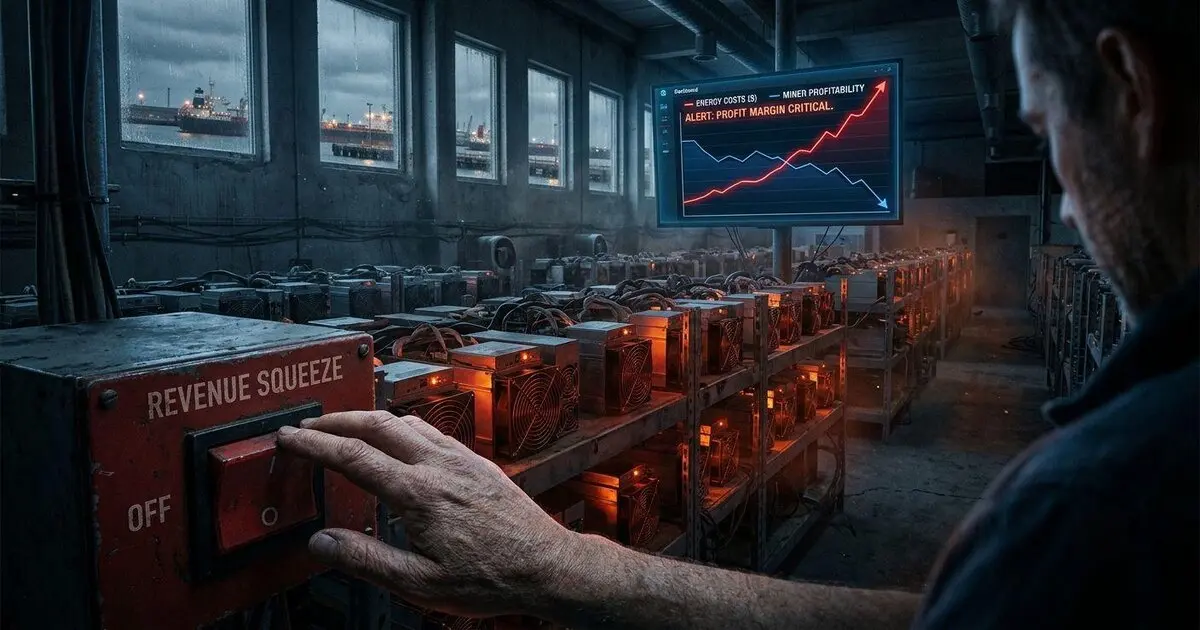
Miners face a double squeeze: plunging profitability on high energy costs.
Market Data & Key Observations
Data across global financial markets highlights the current capital shift:
Cross-Asset Market Trends
-
Crude Oil ($90–$100 Target): Surging on supply concerns and geopolitical friction.
-
US 10-Year Yields: Trending higher due to inflation fears and hawkish Fed expectations.
-
Bitcoin ($63K–$65K): Range-bound as institutions shift into risk-off mode.
-
Altcoins (ETH, SOL, etc.): Dropping harder due to thin liquidity and capital flight.
What Should Crypto Investors Watch Next?
If you are navigating this market, watching crypto charts alone will give you an incomplete picture. Keep an eye on these three critical indicators over the coming weeks:
-
WTI & Brent Crude Futures: A sustained close above $95–$100 will likely prolong market weakness across equities and crypto. Conversely, any diplomatic progress or supply relief that drops oil back below $80 will trigger a strong short-squeeze in risk assets.
-
U.S. Dollar Index (DXY): The Dollar Index typically trades in lockstep with global risk aversion. A spiking DXY signals that global capital is moving into cash and out of risk markets.
-
CME FedWatch Probabilities: Shifts in interest rate expectation probabilities directly influence institutional crypto inflows into products like spot BTC and ETH ETFs.
Research Sources & References
To verify the macroeconomic and market data cited in this analysis, consult the following industry research sources:
-
TradingEconomics Commodity Data: Real-time tracking of Brent & WTI Crude oil price benchmarks.
-
CME Group FedWatch Tool: Institutional interest rate probability metrics and FOMC rate expectation tracking.
-
Federal Reserve Economic Data (FRED): Historical CPI inflation rates and US Treasury yield curve metrics.
-
CoinMetrics / Glassnode On-Chain Analytics: Miner reserve tracking and exchange net-flow metrics.
Disclaimer: This post is for educational and research purposes only and does not constitute financial advice. Always do your own research (DYOR).
⚡ Never miss an urgent market shift: I post daily real-time crypto setups, micro-analyses, and exclusive charts. Follow My Daily Updates Here
🚀 Duplicate CryptoVault Now: Grab your automated Notion Trading Journal here for 50% OFF with code LAUNCH26
👉 Stop trading blindly: Secure your CryptoVault on Gumroad now to master your risk analytics and protect your capital.
🎥 Bonus Creator Tools: Free Crypto Editing Assets
If you create crypto updates, TikTok reels, or YouTube Shorts based on today’s market analysis, use these editing templates:
-
Free CapCut Crypto Presets (Notion Library) – Download customized editing presets on Notion to style your charts & market reels.






