
Introduction
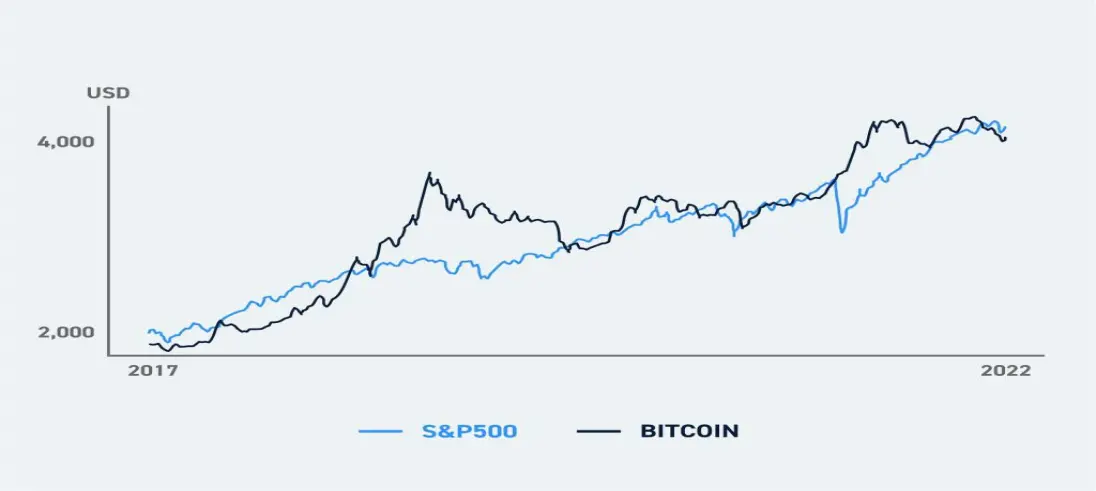
Bitcoin (BTC) has grown from a margin digital asset to a mainstream financial instrument, over the last decade. As cryptocurrencies have entered the portfolios of institutional and retail investors. (BTC) correlation with traditional financial markets, particularly the U.S. stock market. This article explores the nature of this relationship, its evolution over time, and the key factors driving the correlation between BTC and U.S. equities.
Bitcoin & The U.S. Stock Market Historical Background
The Early Days of Bitcoin (2009–2017)
Bitcoin was considered an alternative asset that was largely uncorrelated with the financial markets. This period was marked by (BTC) association with the slowest movement and its use as an obstacle against traditional currencies. With minimum institutional involvement, BTC was more closely aligned with risk-on speculative investments, yet remained largely unaffected by movements in the U.S. stock market.
The Rise of BTC (2017–2020)
As BTC gained more attention,& also I think it started attraction institutional investors. The launch of BTC futures in 2017 on the Chicago Mercantile Exchange (CME) was a central moment, It's role in traditional finance. This marked the beginning of BTC growing correlation with traditional assets, especially during market turbulence, as investors started to treat it as part of a large portfolio.
Correlation During Market Crashes
The COVID-19 Market Crash (2020)
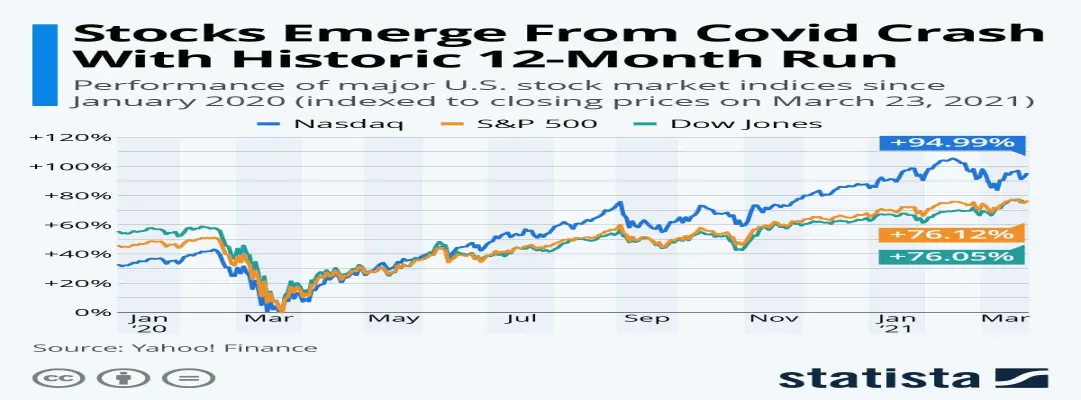
In early 2020, when the COVID-19 pandemic disrupted global markets, both BTC and the U.S. stock market experienced bad time. BTC, often regarded as "Digital Gold,"-(my personal opinion) was expected to perform as a barrier against financial uncertainty. However, during the initial market panic in March 2020, BTC price drop down next to the S&P 500 and other major stock indices. This episode highlighted that during moments of extreme market stress, assets across the board whether traditionally correlated or not can exhibit better correlation. Investors liquidated both stocks and cryptocurrencies to seek safety in cash.
Post-COVID Recovery and Positive Impact
Following the initial crash, the massive fiscal stimulus both the stock market and Bitcoin. As liquidity flooded the markets, risk assets including equities and BTC saw a significant rally. During this period, BTC showed a higher correlation with the stock market, as the inflow of institutional capital and investor optimism drove prices in both markets.
Correlation Between Bitcoin and U.S. Stocks
Institutional Investment
The entry of institutional players like marginal funds, pension funds, and publicly traded companies has led to greater alignment between BTC and the large financial market. As more institutions treat BTC as part of their risk-on investment strategies, its correlation with traditional financial markets particularly the stock market has increased.
Macro-Economic Factors
The Federal Reserve’s monetary policy, inflation rates, and macroeconomic trends affect both stocks and BTC. During periods of loose monetary policy and high liquidity, both markets tend to benefit, resulting in a positive correlation. As central banks tighten monetary policy to barrier inflation risk assets like BTC and stocks often face downward pressure.
Global Risk Famine
What do you think about global risk famine? The Global Risk Famine is BTC and equities are influenced by the global risk sentiment. In times of market optimism (risk-on), investors seek higher returns, driving up both the stock market and BTC. During times of fear or uncertainty (risk-off), both assets may see sell offs, though BTC volatility tends to amplify these movements.
The Role of Bitcoin as a Obstacle
BTC as "Digital Gold"
BTC has often been referred to as "Digital Gold," it functions as a hedge against inflation and a store of value. However, unlike gold, BTC correlation with the stock market suggests it behaves more like a high-risk, high-reward asset, particularly during periods of financial instability.
Limited Barrier in Times of Crisis
The COVID-19 pandemic and subsequent market reactions revealed that BTC performance as a hedge can be inconsistent. While it may act as a hedge during prolonged inflationary periods, in the short term, it tends to move with large risk markets. For example, during the banking crisis of 2023, BTC rose as inflationary fears grew but struggled during large market.
Recent Trends and Data (2021-2024)
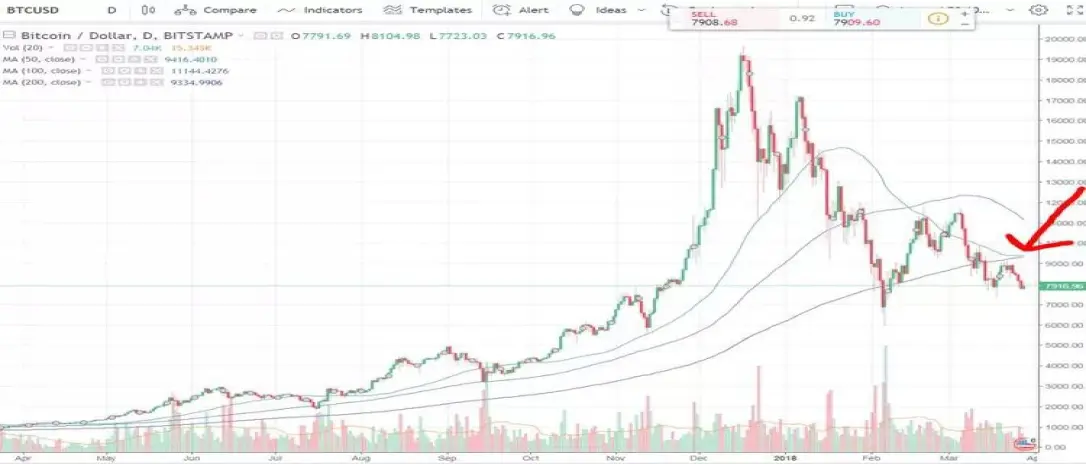
In recent years, BTC and U.S. stock market correlations have surged during periods of macro economic uncertainty. For instance, during the high inflationary environment of 2021–2023, BTC showed a moderate to strong correlation with the tech-heavy Nasdaq index. Rising interest rates and a tightening policy impacted both assets similarly, reducing their attractiveness to risk of investors.
Conclusion
The relationship between Bitcoin and the U.S. stock market has evolved over the past decade, shifting from minimal correlation in its early days to more significant in recent years. While both markets are impacted by macro economic factors and investor sentiment, BTC volatility and unique role as a potential hedge against inflation mean that its correlation with the stock market may fluctuate over time.





