
The consensus layer of blockchain is clearly shifting from PoW (Proof of Work) to PoS (Proof of Stake, proof of interest or proof of pledge) in recent years.
Along with Ether having shifted from PoW to PoS, among the top 15 public chains in terms of market capitalization, only BTC, DOGE and LTC still use PoW consensus, while most of the remaining public chains use PoS consensus. Currently, the top ten PoS public chains in terms of pledge amount have pledged more than $180 billion cumulatively, and can obtain an average pledge yield of more than 7%.
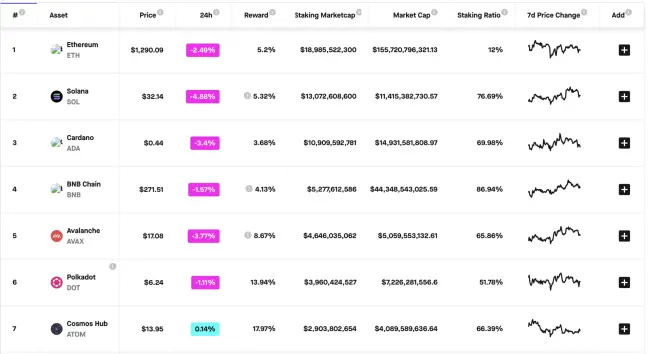
Data source: stakingrewards.com
With the support of PoS consensus mechanism, Staking is becoming more and more mature, and after the "pass economy", "Staking economy" has become the most talked about topic in the blockchain investment market. Under the background of global inflation and Fed rate hike, people are thinking how to improve the utilization rate of capital?
Here is a comparison of the returns of Staking products on the mainstream platforms in the market.
Binance Staking (https://www.binance.com)
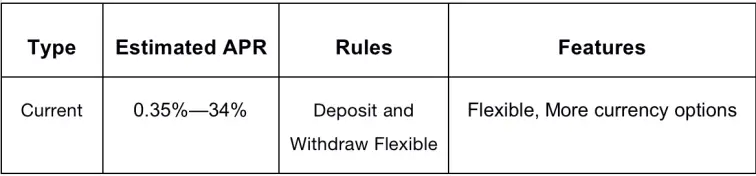
OKX Staking(https://www.okx.com)
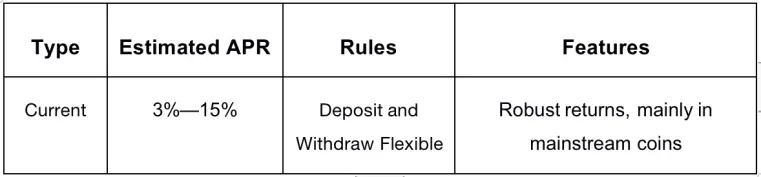
Pancakeswap Staking(https://pancakeswap.finance)
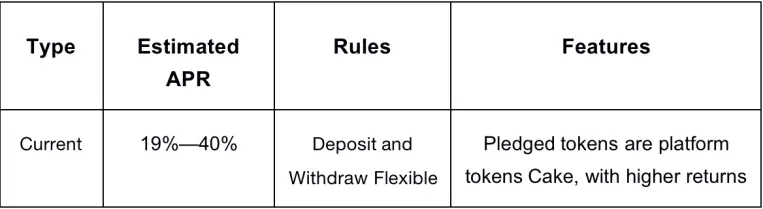
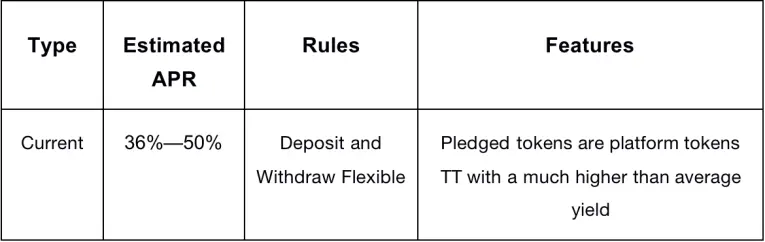
MetaTdex Turbo Mining(https://www.metatdex.com)
In essence, Staking can only change the number of coins held, and it is difficult to ignore the impact of the price of the coin, even after taking into account Staking's cryptocurrency income, but of course if the price of the coin and the cryptocurrency income are both positive for the user holding the coin, Staking can have a significant gaining effect. When the price of the coin falls, then Staking can play a role in reducing losses.
As you can see, MetaTdex Turbo Mining and Pancakeswap's Staking are designed more around their own platform tokens, in addition to higher expected annualized returns, while the centralized platform's Staking is more dominated by mainstream coins. Overall, Staking has a more robust level of return risk than coin holding.






