

You could say that both festivals speak of the same timeless narrative — in the deepest, darkest night of the year, light and hope are reborn.
I always suspected that “Christmas” and “Yalda” both have common origin, so I searched a bit and came up with some interesting facts.
For those unfamiliar with Yalda, a AI generated answer is "Yalda Night is an ancient Persian celebration marking the longest night of the year. In Iran and other Persian cultures around the world, Yalda night, families gather to share simple food, poetry, and stories, celebrating light, hope, and togetherness.
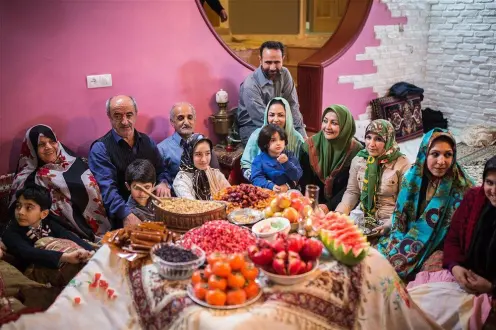
Both Yalda and Christmas are deeply connected to the Winter Solstice — the longest night and shortest day of the year in the Northern Hemisphere (around December 21–22). In ancient cultures, this moment is marked the "rebirth" of the sun: after the solstice, days begin to grow longer again.

This astronomical event was celebrated across many ancient Indo-European and Near Eastern cultures as the victory of light over darkness.
Ancient Iranian Roots: Mithraism and Yalda
In ancient Iran (pre-Islamic Zoroastrian and Mithraic traditions), the sun god Mithra (aka Mehr) was believed to be born on the night of the winter solstice. Needless to know that Mehr means (love and kindness in Persian language).
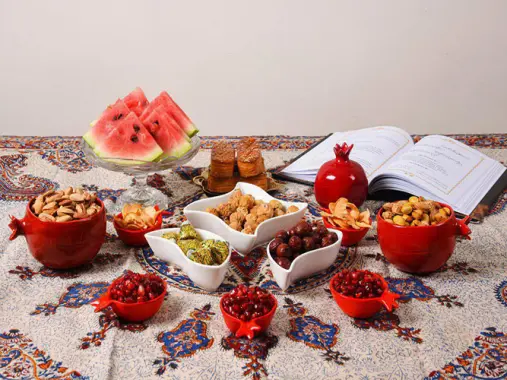
The name Yalda literally means "birth" in ancient Persian languages, referring to the birth of the sun or Mithra.
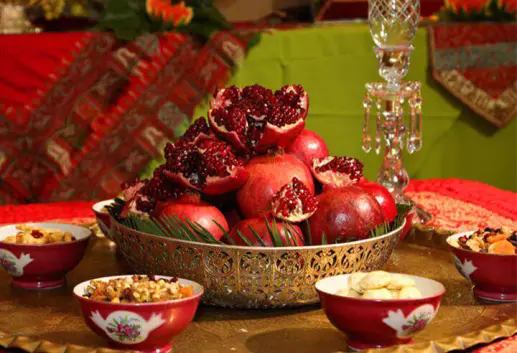
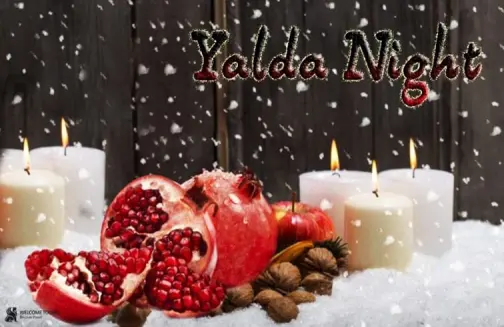
People stayed awake all night, lit fires, ate red fruits (pomegranate and watermelon symbolizing the sun’s blood and life), and celebrated the return of light.
Roman Roots: Saturnalia and Sol Invictus Saturnalia (December 17–23): A major Roman festival honoring Saturn, God of agriculture. It was a time of feasting, gift-giving, role reversals (masters and slaves switched places), and joy — very similar to the communal and festive spirit of Yalda.
Sol Invictus ("Unconquered Sun"): In 274 CE, Emperor Aurelian officially established December 25 as the birthday of the invincible sun god. This was a direct solar celebration tied to the solstice.
How Christmas Adopted December 25
Early Christians did not know the exact date of Jesus’ birth. In the 4th century, the Church deliberately chose December 25 to celebrate Jesus’ birth, aligning it with: The Roman festival of Sol Invictus (birth of the sun).
The end of Saturnalia.
The symbolic idea of Jesus as the "Light of the World," which perfectly matched the ancient solstice theme of the sun’s rebirth.
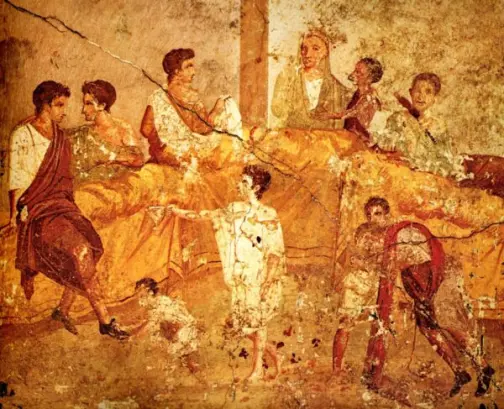
(The midwinter Roman festival of Saturnalia was celebrated by banqueting with friends and family, similar to that shown in this first century AD wall painting from Pompeii.)
Broader Indo-European Connection
Many Indo-European peoples (including Iranians, Romans, Germanic tribes, Celts, and Slavs) had similar solstice festivals:
Yule (Germanic): A long winter festival with logs burned, evergreens, and feasting — later absorbed into Christmas.
These shared rituals reflect a common cultural heritage of honoring the sun’s return after the darkest time of the year.
It seems that Yalda and Christmas are two different branches of the same ancient tree: the Indo-European and Near Eastern tradition of celebrating the winter solstice as the rebirth of the sun and the triumph of light over darkness. Yalda preserved the original Iranian/Mithraic form more directly.
Christmas adapted and Christianized many of the same ancient customs (lights, feasting, evergreens, gift-giving), overlaying them with the story of Jesus’ birth.
You could say that both festivals speak of the same timeless narrative — in the deepest, darkest night of the year, light and hope are reborn.






