
How to cope in a world where a day is twice too short and the duties are only increasing?
Meditation may be the answer. If you only associate with Buddhist monks, you are in the right place.
In this article:
- you will learn about the most popular types of meditation
- you will learn what meditation gives you and how to start meditating
- you will discover meditation techniques every day at home and at work.
Beginner Meditation
Meditation is known to every major world religion as well as to shamanism. Does this mean that only religious people can practice it? No!
Meditation has many varieties - you can choose a technique that is in line with you and your worldview.
And if you have practiced yoga before, meditation will not be completely new to you.
Before we get into practice, let's look at a bit of theory.
Types of meditation
Meditation is a very broad concept. There are many types of meditation. The most popular of them are:
Transcendental meditation is the simultaneous slow breathing and chanting of the mantra. The inhale should be shorter than the exhale. While breathing, attention should be focused on what happens to the body under the influence of the breath.
The repetition of the mantra is intended to help you achieve a state of full concentration. The mantra consists of monosyllabic sounds, untranslatable, without any meaning. The sound of the mantra can be repeated aloud or mentally only. Transcendental meditation can be practiced alone, e.g. at home or in a group.
Christian meditation is based on the repetition of mantras, as in transcendental meditation.
A mantra in Christian meditation can be a word, such as Jesus, Abba, or Maranatha (from Aramaic: "Come Lord Jesus"). If the repeated word comes from a foreign language, it does not stimulate the thoughts and imagination during meditation.
One of the supporters of Christian meditation was Saint Padre Pio.
Zen meditation (zazen) is a type of meditation used in Zen, which is one of the strands of Buddhism. Zen is difficult to classify unequivocally. It is on the border between religion and philosophy.
The basic form of zazen meditation is done in a sitting position with crossed legs. The main element of zazen is sitting in the right position, breathing, and not getting attached to the thoughts that appear in our heads.
Mindfulness is a philosophy of mindful presence. It is about focusing your attention on the present. One part of practicing mindfulness is meditation.
Mindfulness meditation is about focusing on the breath. As with zazen meditation, we notice the thoughts appearing in our head, but we let go of them and don't get attached to them.
Meditation is not the only mindfulness exercise. In fact, anything that can be done carefully can be a personal mindfulness exercise.
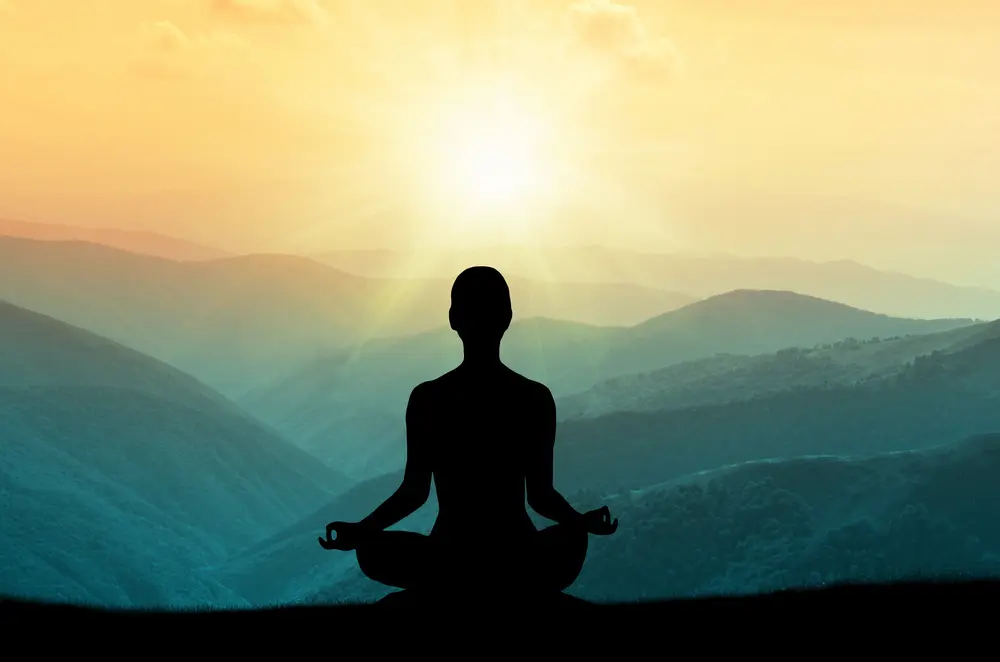
The times in which we live are quite different than those in which our ancestors lived.
We have more work and are expected to be more efficient.
Many more stimuli reach us from everywhere, and the number of professional and private tasks is piling up to the ceiling.
At this point, meditation allows us to be here and now.
This is a state called flow.
Our brain and our body are very fond of this condition.
In the era of everyday duties, it is difficult for us to stop for a moment and focus on the here and now. This increases the tension that meditation relieves.
How to meditate - tips for beginners
1. Be understanding with yourself
It's quite normal to have a lot of thoughts running through your head at first. Don't get frustrated about it. As time goes on, you will find that you can not get attached to the thoughts that appear in your head.
2. Meditate regularly
It's not about spending every free moment meditating right now. Build yourself a meditative routine. A few minutes a day is enough, but regularly.
3. Find your time of day and place
Morning meditation, evening meditation, bedtime meditation? There is no perfect time for everyone. Choose yourself. Find your time of day and place by trial and error. Also, consider group meditation outside the home.
Where to meditate?
The best place to meditate is one where you feel comfortable and you will not be disturbed.
At home, you can try sitting on the floor, on a pillow. When you meditate in the evening, you can dim the light or light a candle for a pleasant climate.
If at work you can sit in your armchair for 10 minutes in peace, then such a place will also be good.
Provided you are not doing mantra-repeating meditation, of course!
Meditation practitioners use various meditation techniques. The most important of them are:
- focus on a single object
- mindfulness meditation
- movement meditation
- repeating mantras
- visualizations
- staying vigilant
- body scan
Mindfulness meditation is the most universal. The techniques used in this meditation are completely non-invasive:
The technique of conscious breathing
Breathing has a huge impact on the body. Rapid and shallow breathing is associated with stress caused by exertion, stress or rush. Deep breathing relaxes and is natural for us.
Working with the breath is therefore the most important aspect of meditation. It allows you to deal with stress.
So focus on your breathing. Count each exhalation in your head. Count down to ten, then start over. If a thought pops up in your head, don't get attached to it. Don't be distracted. Just count your breaths.
Tip: Inhale should be shorter than exhale.
You can also attach visualizations to work with the breath. Imagine breathing in the clean, light, refreshing air. Which one do you exhale? Imagine it is worn out, dark - like car exhaust fumes. In this way, you visualize yourself getting rid of what is bad in your body. You also get charged with positive energy.
Body scan
This technique is called the body scan. If you are using the Headspace application, you must have already met it. The method of scanning the body is to focus on physical sensations, the stimuli that the receptors in our body receive.
Focus on every single part of your body such as the ears, forehead, shoulders, fingertips, calves, etc.
Scan from top to bottom. You will notice signals from your body that you are not aware of on a daily basis. Your muscles will feel tired.
You may feel other parts of your body relax as you breathe deeply. When you sit in a chair, you can feel your body pressing against the seat or back of the chair.
This method enables you to become one with your own body and relaxes you a lot.
Both body scanning and breathing work can be used anywhere, also at work.
Once you have mastered the basic meditation techniques, you will not need guided meditation. In such a situation, the voice of the teacher leading the meditation may be replaced by the meditation musician.






