
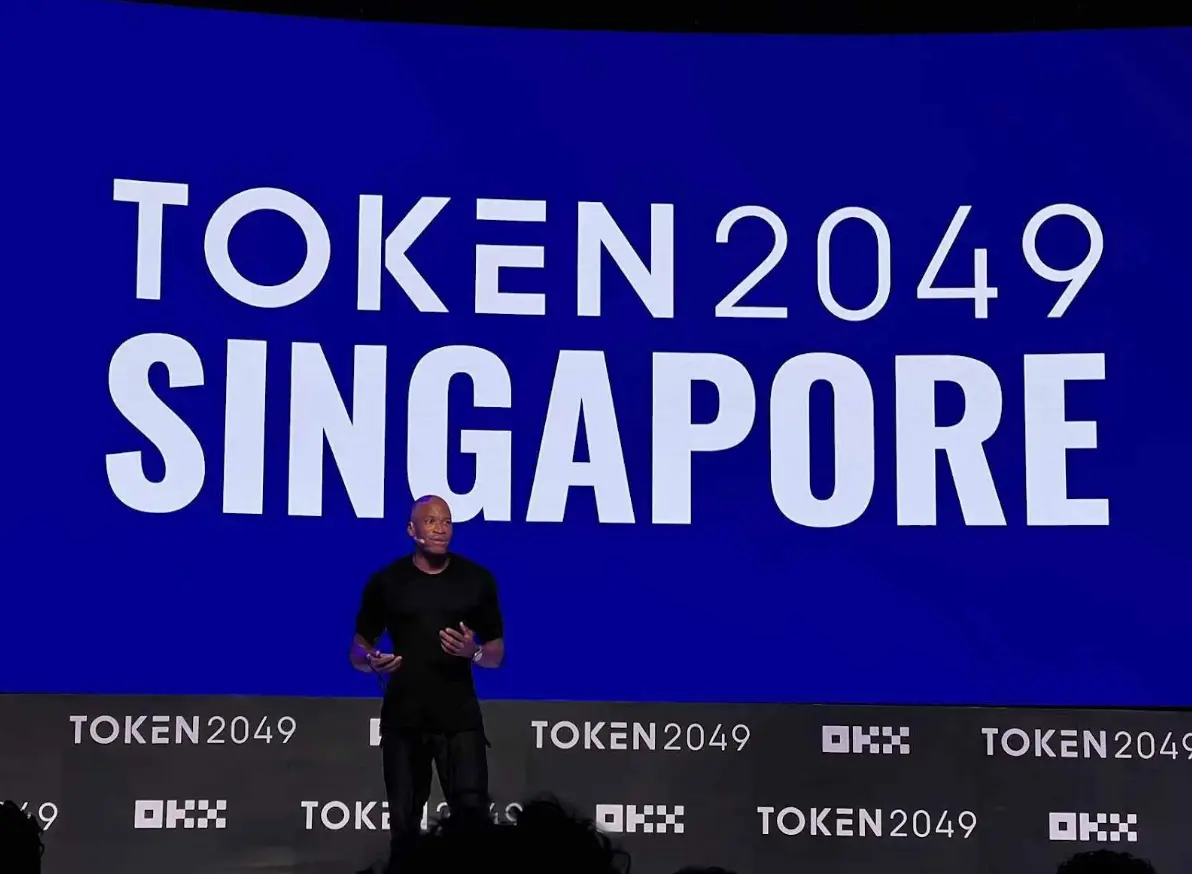
The cryptocurrency event TOKEN2049 concluded successfully in Singapore. This event attracted nearly 10,000 people, including project developers, investors and industry experts from all over the world, and various topics were discussed enthusiastically. Whether at the main venue of TOKEN2049 or at more than 300 side events, there are two keywords that are constantly mentioned: bull market and regulation. Many people have a question on their minds: When will the bull market arrive? In the face of an increasingly stringent regulatory environment, how should projects develop?
When will the bull market arrive?
The topics discussed are constantly changing in different conferences, from Gamefi, Layer2, payment projects to the recent cutting-edge RWA. Everyone has different views on different fields, but in the end many topics will converge on one point: When will the bull market arrive?
BitMEX co-founder and former CEO Arthur Hayes made a bold prediction at TOKEN2049 and gave a speech titled "Money Printing, AI, and Crypto: Fueling an Epic Bull Market Mania", stating that the next bull run could begin in early 2024, which would be the largest bull run in cryptocurrencies and all risk assets since World War II and the Great Depression.
Cobo co-founder and CEO Shenyu predicted that the price of BTC next year may be between 40,000 and 60,000 USDT.
Mature players in the industry have full confidence in the arrival of the bull market and have high hopes for 2024. Judging from the reactions of the attendees, many people are quite optimistic about the arrival of the bull market in 2024, even in the context of an increasingly strict regulatory environment.
Looking for a way out under strict regulations
With the collapse of FTX last year and more and more projects experiencing RUG scandals, institutions around the world have paid more and more attention to the regulatory issues of cryptocurrency. Compliance issues have gradually become one of the keys to the survival of crypto projects. Different countries have also successively introduced relevant cryptocurrency policies:
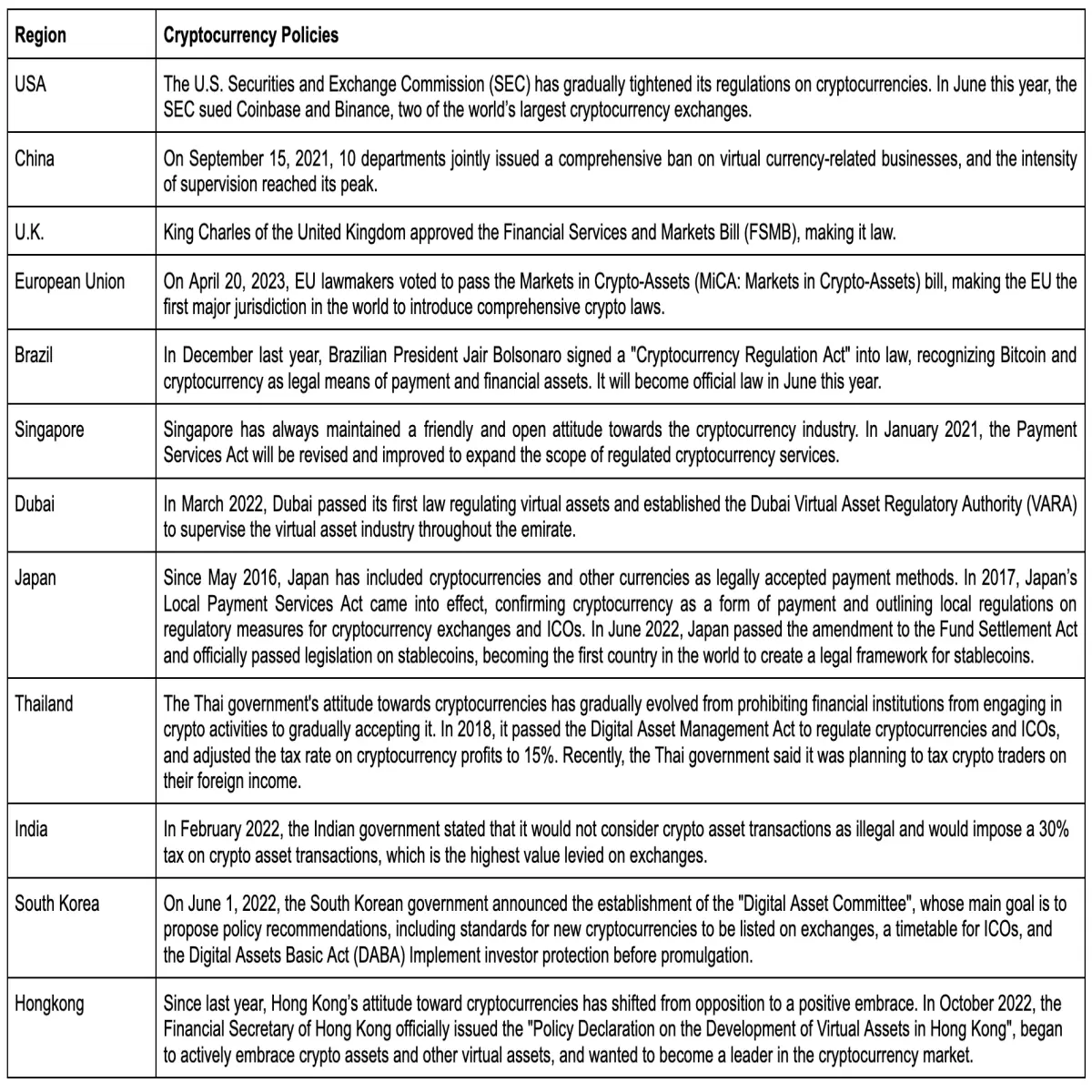
Different countries have different attitudes towards cryptocurrency, and the complicated regulatory environment has naturally become one of the focus issues at the TOKEN2049 conference:
Hong Kong has shifted towards a cryptocurrency-friendly stance since late last year, but Ethereum founder Vitalik Buterin remains skeptical about the stability of the policy. He said in TOKEN2049: “For me, the sustainability of Hong Kong’s encryption-friendly policies is a key variable. It is difficult for me personally to judge this issue. It is very challenging for local regulation to make people believe that encryption-friendly policies are a sustainable thing."
As the president of Gemini stated, “companies can be repercussed for misleading the public and can get into a lot of trouble, but the SEC doesn’t seem to mind anymore, they don’t really have a vision for how they will regulate in the future, so they’re just trying to slow it down or stop it through enforcement. Therefore, the question is that why they don't put rules and regulations in place. I think it's because they actually don't have a vision or concept of what the crypto market should be, and they can't keep up with the pace of crypto and artificial intelligence.”
Faced with a volatile regulatory environment, people hold very different views. However, for the vast majority of projects in the early stages of entrepreneurship, it is crucial to maintain a forward momentum. Even in this increasingly stringent regulatory environment, user growth and community building are still top priorities to ensure that the project can continue to grow.
The author has noticed that most projects choose to circumvent the impact of regional supervision by means of limiting specific regions and shifting positions to achieve user growth.
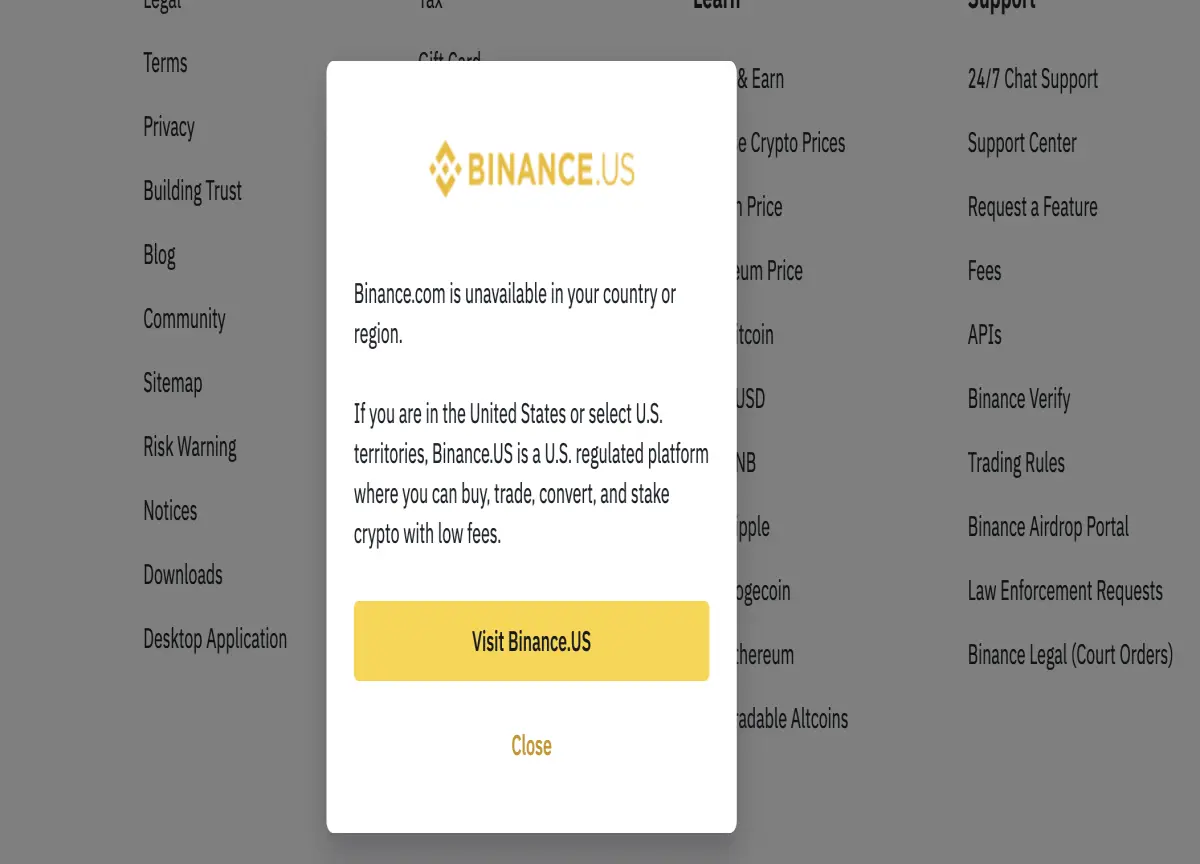
- Binance, which was charged by the SEC, took a series of measures to minimize and isolate its risks in the United States: they created an independent Binance.US platform specifically to serve American customers and kept most of their business outside the United States. Users in restricted regions will receive pop-up prompts when they access the Binance main site.
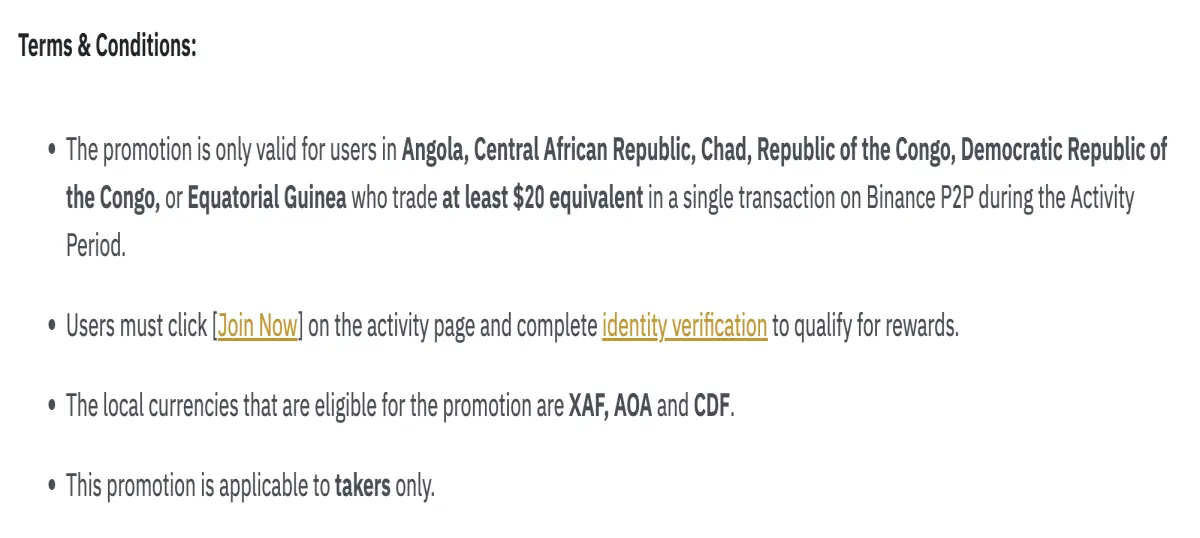
- We can find from the Binance Announcement Center that Binance plans to launch activities in specific regions and avoid risks through copywriting: clearly indicate the applicable specific regions in the "Conditions" section of the activity.

- There are also companies that choose to gradually shift their business to more cryptocurrency-friendly regions, such as Singapore. Recently, two major events in the blockchain industry, TOKEN2049 and Permissionless II, were held in Singapore and Austin, USA respectively. Interestingly, however, compared with the lively scene of TOKEN2049, the scene of Permissionless II was slightly deserted, and some sponsors were even dissatisfied with this.
- At the TOEKN2049 event, Ripple CEO Brad Garlinghouse expressed a view consistent with that of BitGo CEO Mike Belshe, which is that cryptocurrency startups are recommended to avoid the United States. And he will look to more friendly regions to find talents and will not recruit a large number of new employees in the United States.
- There are also some projects that choose to avoid risks by prohibiting access from specific regions’ IP addresses and restrict users from accessing the official website. When holding events, they set conditions to filter out users from restricted regions.
Affected by US regulations, MakerDAO has adopted a governance decision to ban US IP addresses on the front-end of its products.
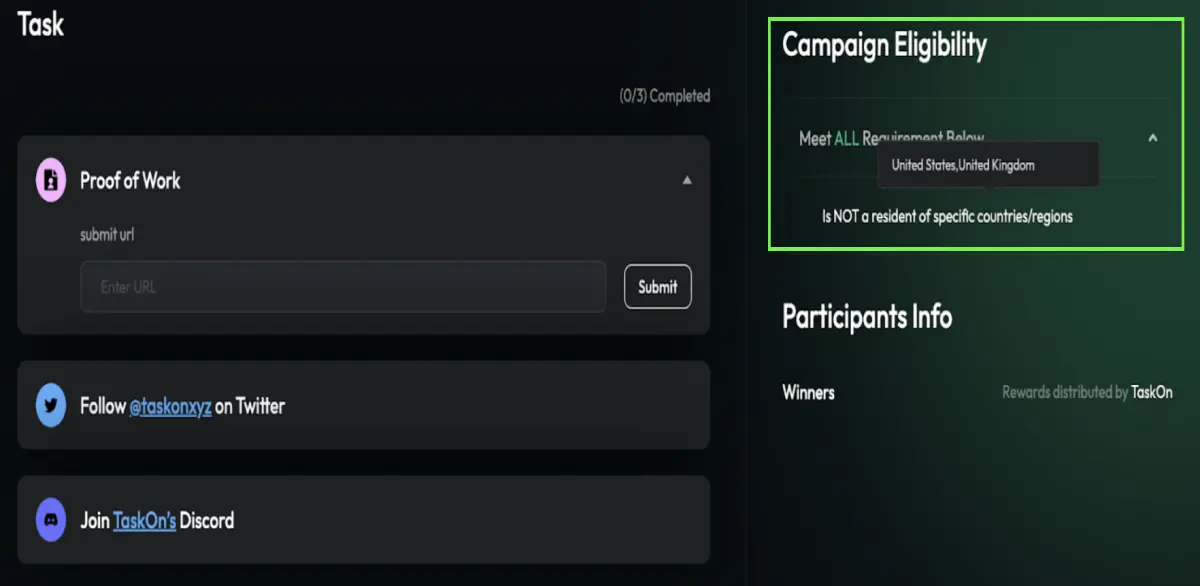
The author has noticed that more and more projects are beginning to use Web3 growth platforms to publish activities, and some growth platforms, such as TaskOn, have also launched regional restriction functions to help projects avoid regulatory risks, which to a certain extent reduces the need and workload for projects to screen users in regulated regions.
Through the function restrictions of Web3 growth platform activities for specific regions, even if the activity is promoted on global channels such as Twitter and Telegram, there will be no risk of violating regional laws.
The challenging times before the bull market arrives
Although some industry leaders are optimistic about a promising bull market, it is undeniable that the complicated regulatory environment has caused market anxiety. There is no consensus on when a bull market arrives. What is certain, however, is that the next bull market will inevitably be subject to more stringent regulatory constraints. In this context, projects need to be more cautious when expanding globally in a strong regulatory environment.
Facing the harsh regulatory environment, some people actively embrace supervision and develop projects on the basis of compliance; others choose to shift their positions and move their business to more friendly areas in order to seek broader development space. At the same time, some people have adopted innovative methods to reduce regulatory risks and achieve more refined regional operations by restricting access to regional IPs and flexibly using growth tools.
Although the strategies are different, what they have in common is that everyone is doing their best under the severe regulatory environment to ensure that when the bull market arrives, they will not be left behind by the market.






