
Frequent hacks of cryptocurrency exchanges have seriously undermined the credibility of holding assets in an exchange wallet. Users are more and more often paying attention to wallets where only you have access to assets. The most popular wallet of this type, which can be used directly in the browser, where it can be installed as an extension - Metamask. The number of users of this wallet is off the charts, and the daily number of transactions made with it is incredibly high. But is Metamask so good to enjoy such popularity? In my opinion not, and further in this article I will describe in detail why I think so and why Tally Ho wallet can become its competitor.
A brief look at the disadvantages of Metamask and what Tally Ho has to offer to improve it

In today's world, the average cryptocurrency user has a wallet that works with EVM (Ethereum Virtual Machine) networks, interacts with WEB 3.0 solutions, and collects NFT. More experienced users use hardware wallets to store cryptocurrencies. All this allows Metamask to do, but this seemed to be a good wallet has a number of disadvantages.
First, the world of cryptocurrency is about decentralization. Projects run by a community are much more trustworthy than centralized products from large companies. But MetaMask is managed by one company - Consensus. For me, this is the first disadvantage.
Secondly, for the swaps made through the wallet Metamask is charged an additional commission of 1% (on top of the network commissions per transaction), which is certainly a minus.
Thirdly, it is the code of the wallet, namely that Metamask is not an open source product. In the world of WEB 3.0 is simply considered good practice to make products open source, so users have more confidence in the product they use, and developers show that they have nothing to hide.
Fourthly, these are archaisms of the Metamask wallet. For example, users often notice imperfect transactions system (sometimes it is unreasonably high), yes, this parameter can be adjusted manually, but for the mass user this is inconvenient. Also tokens that come to your wallet need to add manually using their contract (to display them in the wallet), when most popular wallets working in other networks automatically show tokens.
These are the main disadvantages of Metamask and until recently we had to put up with them because there was no normal alternative. But now there is a Tally Ho wallet that can really compete with Metamask and provide the user with a better user experience.
Tally Ho is an EVM wallet that at the time of writing is in test, but everyone can already download an extension for their browser and use it. At this stage, only two networks are available: Ethereum and Polygon. A little bit above were listed the main disadvantages of MetaMask, but how is Tally Ho doing with these issues?
Tally Ho is a wallet, which will be managed not by one company, but by DAO users, wallet code is open source, commissions for swaps are 0,5%, wallet uses improved algorithm for calculations by Blocknative, tokens are automatically displayed in wallet, without need to add them via contract.
Which means that most of the significant disadvantages of Metamask are fixed in Tally Ho wallet! But can it become a real competitor to Metamask or even beat it in popularity? For that, it is worthwhile to elaborate on Tally Ho and deepen our study of it.
More about Tally Ho
Roadmap of the project and its main goals
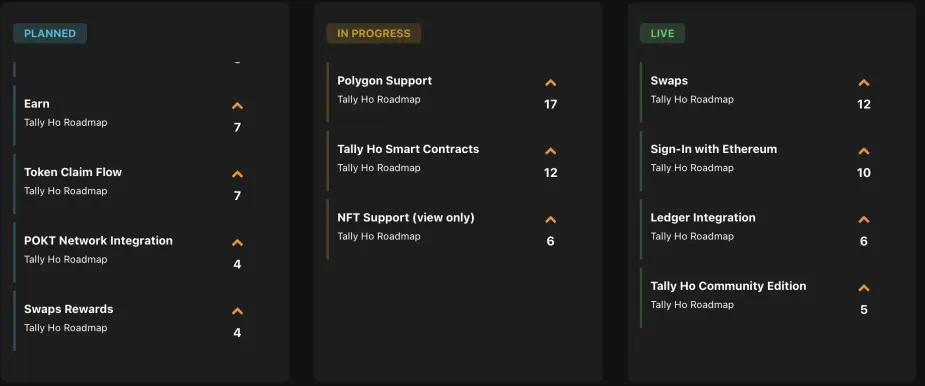
We can find the Roadmap on the project website. At the moment, already implemented: swaps, Ledger integration, ETH and Polygon support. Smart contracts and NFT support are in development. In planes are Delegation (delegate system), support for Optimism, Arbitrum, custom RPC, WalletConnect, integration of the referral system, rewards for exchanges, claiming tokens and much more. Let's elaborate on some of the items.
All existing wallet features and features under development are present in the leading EVM wallets in one way or another. Much more interesting to talk about planned features.
The first thing that interested me was the Delegation system. As said before, Tally Ho is an open source community managed wallet, which means this management needs to be implemented somehow.
Obviously not all users will have the time or desire to constantly vote for these or other decisions made within the DAO. So there will be a system of delegates. You, as a member of the community, can simply delegate your vote to one of the chosen delegates, and he will vote for important decisions for the project. The system is somewhat like delegating your vote to MPs, who later vote for laws in parliament. Definitely, it is a very interesting system and if the developers manage to implement the idea - users will be happy to be able to delegate their vote.
Also interesting are the planned roadmap items that add rewards for different actions in the wallet. There are no details, but it is known that the project wants to reward users for swaps in their wallet. In my opinion this will be implemented through project token (which we will talk about later in this article).
A referral program will also be added. I consider that this is a very clever decision on the part of the developers. Users will be financially interested in bringing new users who will use the wallet in the future. A Win-Win situation: Users get rewarded for the invited users and Tally Ho increases its audience and popularity. For projects under development, this is really important!
To sum up the intermediate summary of this subsection of my article, I want to express my confidence in the team's realistic plans. I've been observing the project for only a week, and during that time the developers managed to add Polygon support and hold a few community events. The team knows how to set smart goals and then achieve them. By the way yes, who is a member of this team...?
Developers Team
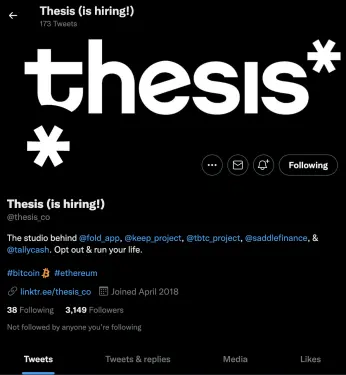
The Thesis team is working on the wallet. For people unfamiliar with the world of cryptocurrencies, this name says nothing. But for knowledgeable people, it means a lot. Thesis team worked on Fold, tBTC_Project, Saddle and of course Keep network. The team has a good experience in AMM DEX, they've created a project that helps to use BTC and ETH in WEB 3.0.
Obviously such team can create a good wallet and develop it. Experience will allow them not to make mistakes, and eliminate the possibility of “holes” in the wallet.
$DOGGO - Project Token
Since the developers have set a goal for the community to manage the wallet, they need a management token, and that token will be $DOGGO. Here is a brief summary of the token:
- The token will have a limited issue of 30 billion $DOGGO.
- More than a third of all tokens will be distributed through merkeldrop
- Tokens will be distributed through pools and the community will be able to choose what to spend the tokens allocated for project development within a year
- There is no allocation for developers and investors
The most important point for me is the last one. Often investors and the team having a huge amount of tokens can greatly affect the price of a token.
Having tokens on the team also creates an additional threat in the form of a possible Rug Pull.
All of these threats are simply non-existent in the case of $DOGGO, which is definitely a benefit.
What stage is the project at now and what are its drawbacks?
In the previous section I described the Tally Ho wallet in some detail, the possibilities it offers and what is planned for the future. But let's look at the project at its current stage, can you use it or not?
The quick answer is yes, but right now your experience with Tally Ho may not be complete. The project is in the testing phase, bugs are not ruled out (although I have not encountered them). The biggest problem with wallet, is the lack of comprehensive support for different platforms in WEB 3.0. Yes, many large projects already support wallet:
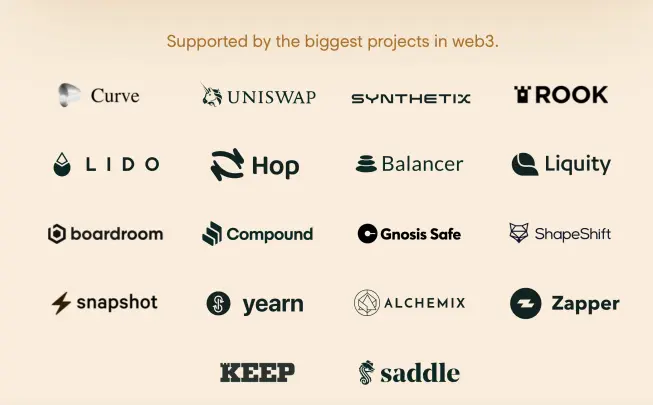
But it's still a significant limitation.
Obviously, at the current stage in the wallet there are only two networks, which will not suit many users.
Otherwise, the wallet is really good! My opinion is that when the wallet will be fully launched and all plans of developers will be implemented it will be able to compete with Metamask!
I hope that you, just like me, feel the spirit of Tally Ho wallet and already want to download it, then here's a little guide.
How to install Tally Ho?
To download a browser extension, go to the developer's website and select the browser you want
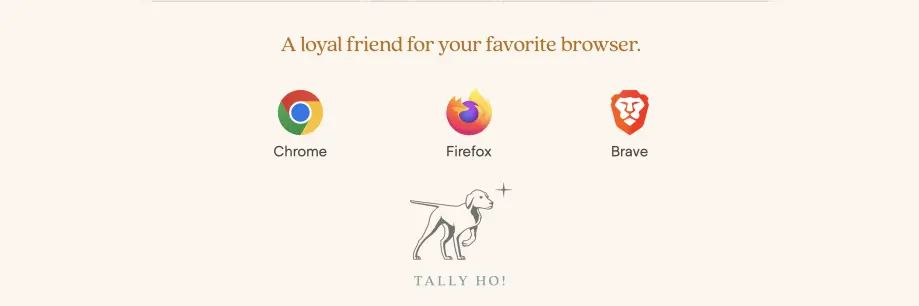
After that you'll be able to download the extension you need. After installing the extension, run it and read some information about the wallet

After that, the wallet will offer you to either log in to an existing wallet or create a new one. If you don't have a wallet, create one! By clicking on "Create New Wallet"
Now come up with a password, which you will enter each time you open the extension.
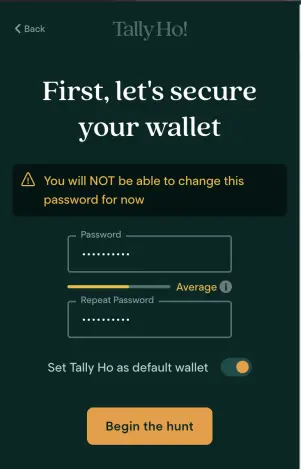
Finished with the password? Now you will be explained a little bit what is the SEED phrase and how it should be stored, click next and write your SEED phrase. It is 24 words by default, this is made for more security.
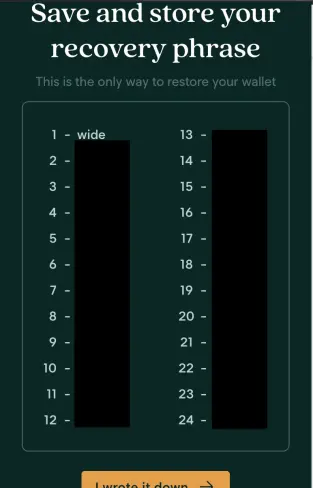
Once you have written it down, confirm it in the wallet and pass a small test of knowledge of the SEED phrase.
After the check, you will be congratulated on your successful wallet creation and you will get into the wallet.

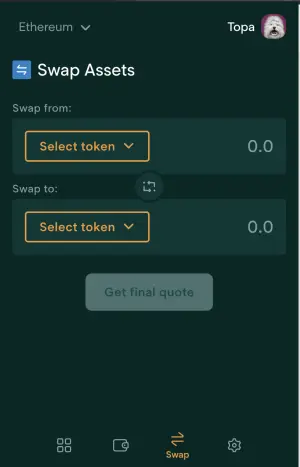
This is what the interface looks like, you can manage your account (or accounts), swap your tokens right in the wallet and much more.


To summarize
After reading my article you briefly got acquainted with Tally Ho project and also learned how to install it. I hope the project will have a good future and it will create a worthy competition to Metamask. And as we know, competition is the engine of progress! So I truly believe that Tally Ho can change the EVM wallet industry.
Thanks for reading this article, you can find more information about the project on the official website.





