
Infinadeck and C-Infinity represent two distinct but pioneering approaches to enhancing the virtual reality (VR) experience. Each technology aims to solve a crucial problem in VR—how to navigate virtual spaces in a way that feels natural and intuitive while minimizing the physical and physiological constraints that typically detract from immersive experiences.
Infinadeck: The Omnidirectional Treadmill
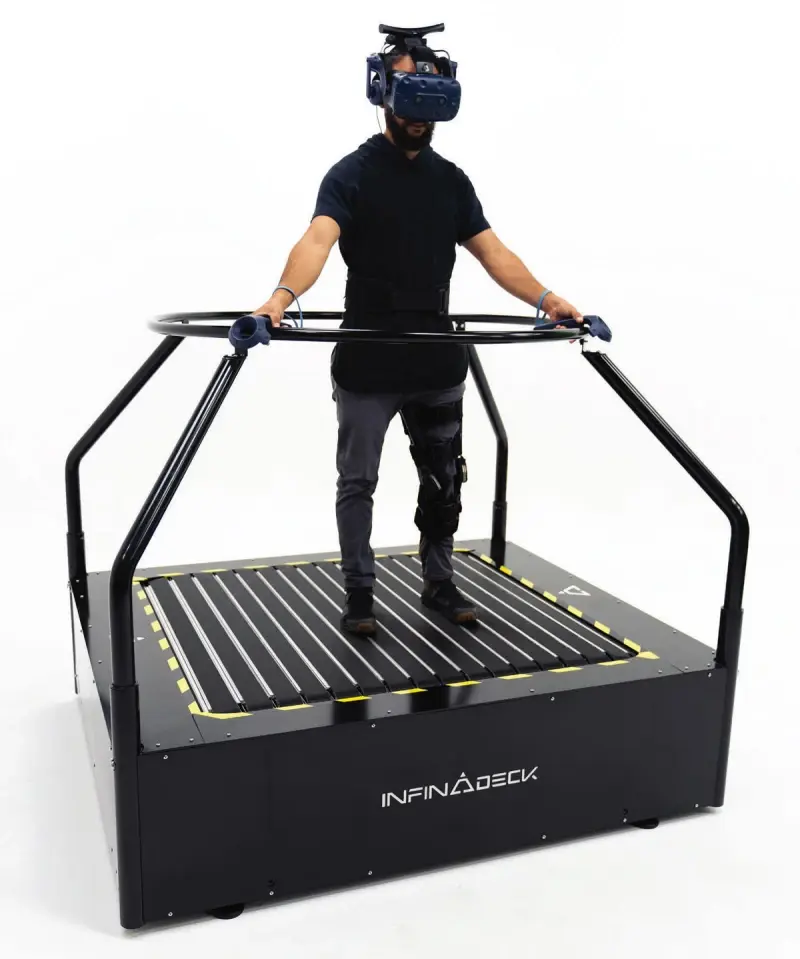
Infinadeck is best known for its omnidirectional treadmill, a physical platform that enables users to walk in any direction within a virtual environment. The technology stands out for its ability to provide a truly unrestricted walking experience, crucial for various applications such as training simulations, physical therapy, and immersive gaming. The treadmill's unique mechanism involves a moving surface that adjusts dynamically to the user's walking direction, enabling continuous movement in all directions—forward, backward, sideways, and diagonally.
The treadmill's primary advantage is its ability to simulate endless walking in confined physical spaces, making it ideal for scenarios where physical movement is essential, such as military training or architectural walk-throughs. Moreover, it offers significant benefits for physical fitness and rehabilitation by allowing natural walking motions, which are critical for muscle engagement and coordination.
C-Infinity: Neuro-Digital Interface for VR
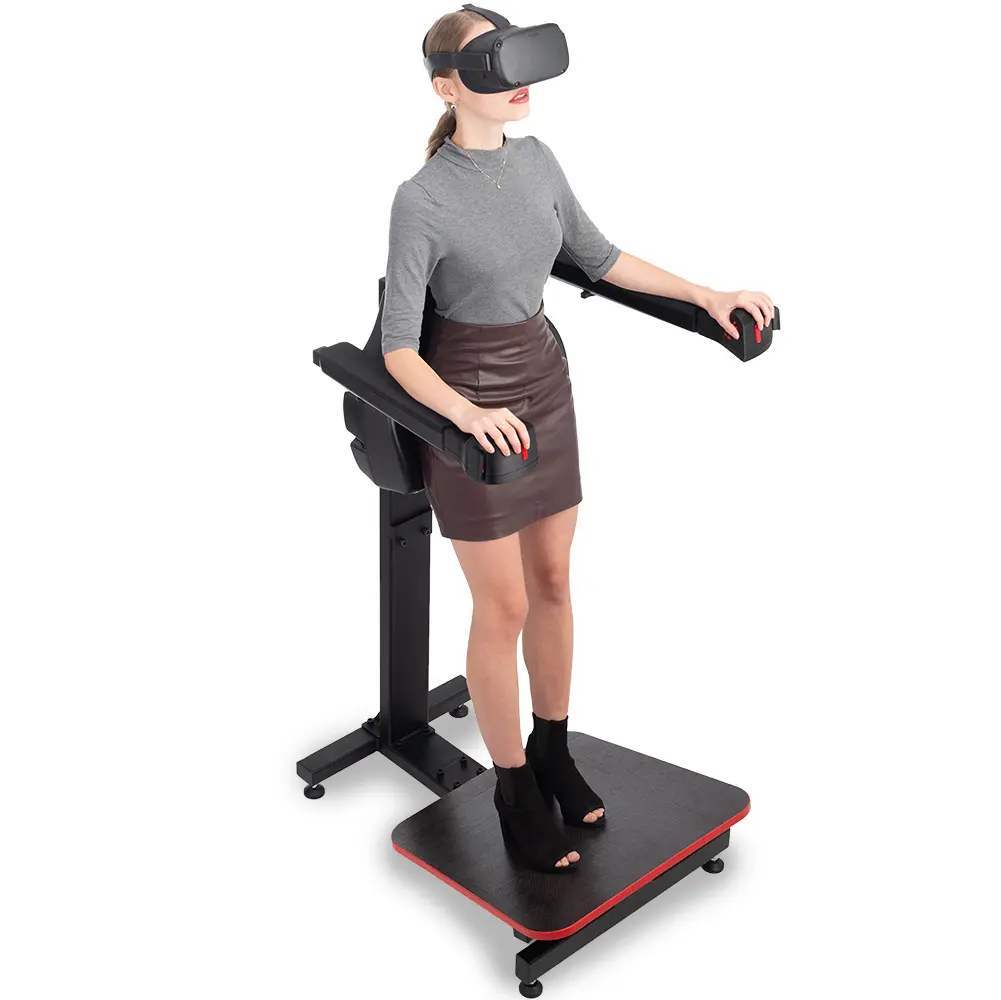
On the other hand, C-Infinity, developed by Neurosync Laboratories, takes a different approach. Rather than focusing on physical movement, C-Infinity is a neuro-digital interface designed to integrate the user's physical actions with the virtual environment more seamlessly. Its primary goal is to enhance the VR gaming experience by addressing one of the most common issues in VR: motion sickness.
C-Infinity uses advanced sensors and algorithms to detect and interpret the user's physical movements, translating them into virtual actions without the lag or disorientation that often leads to nausea. By focusing on the neurological aspects of VR interaction, C-Infinity aims to create a more comfortable and accessible VR experience. It is particularly suited for users who may find extensive physical movement cumbersome or for gaming scenarios where rapid and diverse movements are required.
Comparative Analysis
While both Infinadeck and C-Infinity enhance VR immersion, they cater to different needs and scenarios:
- Application Scope: Infinadeck is highly effective in training, simulation, and fitness applications where physical movement is integral to the experience. C-Infinity, however, shines in gaming and entertainment contexts where reducing motion sickness and enhancing user comfort are paramount.
- Technological Focus: Infinadeck's technology is mechanically intensive, relying on physical apparatus to enable movement. C-Infinity employs a blend of hardware and software to enhance neurological synchronization with the virtual world, making it less about physical exertion and more about enhancing sensory perception and interaction.
- User Experience: Users of Infinadeck physically move through space, which can be highly engaging but also physically demanding. C-Infinity users experience VR through a different lens, where the focus is on reducing the physical strain associated with VR technologies and enhancing long-term usability.
- Market Appeal: Infinadeck's appeal lies in its ability to offer realistic training environments and therapeutic settings, potentially attracting sectors like defense, healthcare, and architecture. C-Infinity appeals to the mass market of gamers and casual users looking for an enhanced, nausea-free VR experience.
Both Infinadeck and C-Infinity represent significant advancements in making VR more practical and enjoyable. By addressing different aspects of the VR experience—physical freedom versus sensory integration—each offers unique solutions that push the boundaries of how we interact with digital worlds. Whether through a physically expansive treadmill or a neurologically attuned interface, the future of VR looks promising as technologies like these continue to evolve and address the medium's inherent challenges.






