

As there are rising financing needs for larger encryption projects, the emerging new projects stir up investors’ strong appetite for investment. According to crypto bank, 1,841 financings have taken place on the IDO platform and 192 are about to kick off. The token has also become the hot focus of the capital market.
However, the encryption market has been long bothered by information asymmetry. This problem is particularly evident in the primary market: for ordinary investors, investment opportunities are monopolized by capital firms and big investors, and many retail investors have no effective access to investing in high-quality projects; some potential projects seeking financing are still in their infancy, but lack of effective financing channels. This runs counter to Web3’s idea of returning rights to the individual. Even though some centralized platforms or exchanges provide financing channels, they only raise funds for the project. The follow-up development of the project and the risk management of investors are a toss-up. To solve this problem, many decentralized financing platforms come thick and fast. Their aim is to provide a low-risk investing model to engage global retail investors in venture capital. Some of them not only help raise funds for start-up projects but also provide support in the community ecosystem, model of tokenomics, decentralized governance, and other aspects to boost the projects, enhance the confidence and increase the actual income of venture investors.
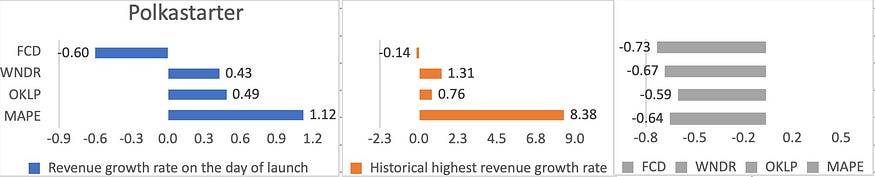
This report will analyze and compare several noticed decentralized financing platforms to understand the advantages and disadvantages of decentralized financing platforms. The report mainly explains the threshold, project application, and audit rules of the IDO platform; it also displays the composition of their token distribution*and gives a detailed interpretation of the IDO platform with a unique tokenomics*. The report also presents the revenue growth rate * * of some financing projects on the IDO platform; However, it should be noted that the revenue growth rate is based on the closing price and the instantaneous highest price only as of the reference range.
Raydium
Raydium is the first IDO platform on Solana. Based on the Serum Exchange, it increases liquidity in the Solana ecosystem by combining on-chain order book and automatic market maker (AMM). Now it can make use of the current order flow on Serum and add to the liquidity of others with its own capital pool. The current mathematical model used by Raydium is “k=y/x”, and orders will be placed in the Serum’s order book accordingly to share liquidity. In addition, liquidity providers can get benefits from direct transaction costs, and get some RAY tokens from important liquidity pools according to the total incentive.
Raydium does not need KYC authentication. Platform users can choose different duration and amounts of pledges for lottery tickets. The longer the pledge is, the more lottery tickets will be given. It has a higher threshold of pledge amount. The user’s return is determined by the lucky number.
Raydium uses Google form on the official website to collect the application of IDO projects and evaluate and launch new projects. Generally, the new projects are launched at a moderate pace. The screening and checking by the platform ensure the quality of IDO projects; its approach is closer to what centralized exchanges do.
Token Distribution:

IDO Revenue:

-
YAW: Yawww
-
ZBC: Zebec
-
ANA: Nirvana
-
HAWK: Hawksight
DAO Maker
Dao Maker is an IDO platform supporting multiple chains to help projects raise funds at an early stage. Daomaker integrates its currency Dao into the overall ecological business, including incomes of pledges, the claim of sales, and dividends. It aims to create growth-driven technology and support infrastructure for new projects and minimize the risk to investors. The platform is driven by the ERC20 token. DAO, the native token, has been widely used in network, application, and governance.
DAO Maker requires KYC authentication. Users must pledge at least 2,000 DAO to participate in SHO projects, otherwise, they are limited to public projects; it has a higher threshold of the pledge. To obtain all distributed tokens, users must retain their claimed shares throughout the accounting period. Users can re-acquire their tokens within 72 hours if they want to change or extend their pledge period without losing their vested tokens.
The user tier depends on the number of DAO pledged by users. Higher tiers will bring higher chances of winning and more distribution.
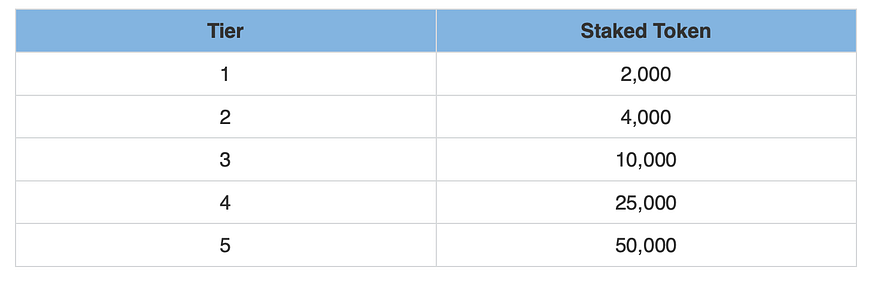
DAO Maker audits whether a new project is launched or not and controls the quality of new projects to maximize the benefits of users. Like Raydium, it also adopts a centralized audit approach, but its new projects are launched faster.
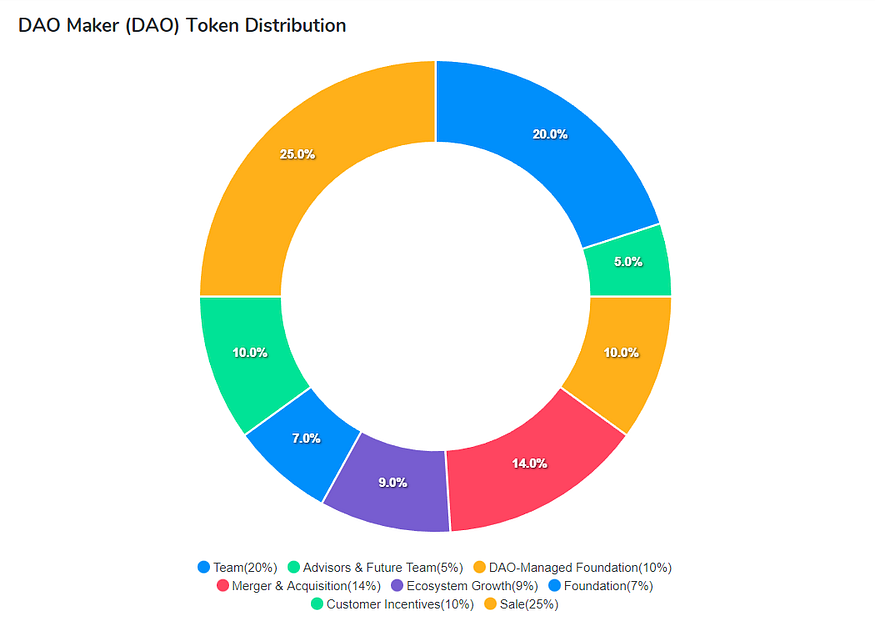
Token Distribution:
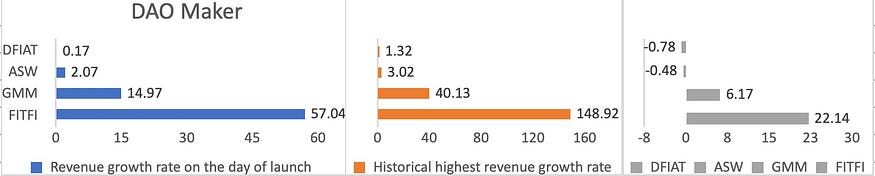
IDO Revenue:
-
DFIAT: DeFiato
-
ASW: AdaSwap
-
GMM: Gamium
-
FITFI: Step App
Cult DAO
The Cult DAO is an investment-based DAO, that is, to invest in other encryption projects with treasury funds. The community votes and passes the proposal, and members invest in crowdfunding in a decentralized way, and the pledgors of CultDAO token gain the return in the form of dividends.
But CultDAO is more than an ordinary investment-based DAO. CultDAO has its provocative manifesto (white paper), fully decentralized model of proposal and voting, destruction of the private key, and irrevocable contract, which has thoroughly showcased the consensus of decentralization. It has fundamentally set up a DAO-centered mechanism and delegated the rights to guardians and other participants.
There are only two ways to propose any project on the Cult DAO. One way is that the project purchases a large number of CULT for the pledge and becomes the Top 50 CULT owners as a guardian to make a proposal, or the project encourages the existing guardians to initiate proposals for it in other ways. In terms of IDO, the CULT community decides the project. There is no need to list the costs. The guardian selects the project.
Tokenomics:
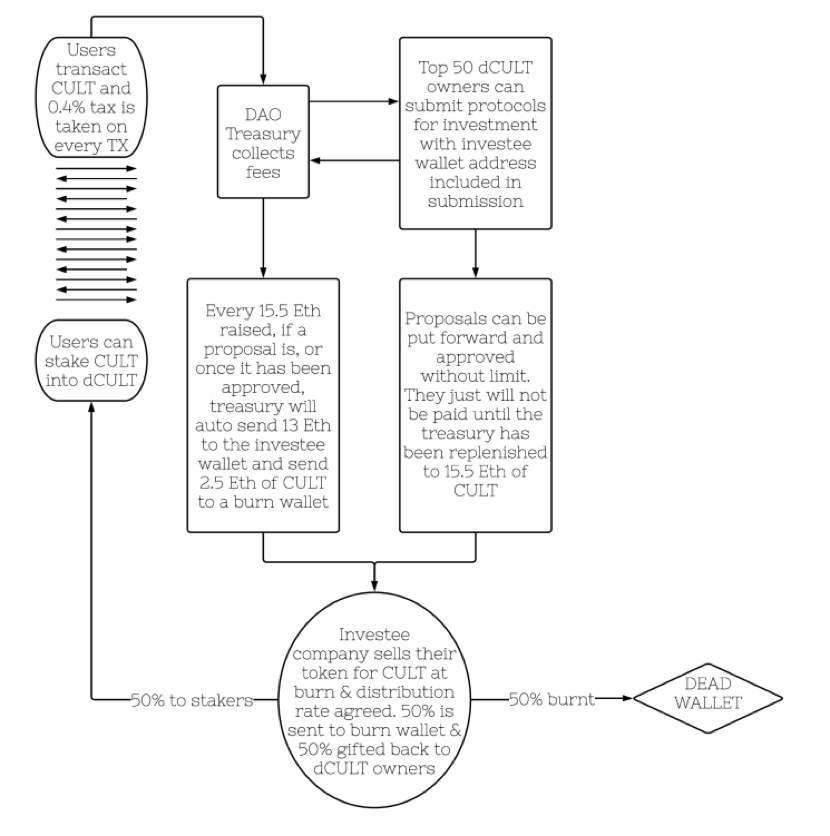
The token model of Cult DAO is designed interestingly. It is a tight and self-consistent closed loop. In theory, guardians and voters work together to invest reasonably to gain high returns; then more funds are attracted to the market to buy CULT and pledge dCULT for more revenues. In this process, the value of tokens increases while CULT is less circulated. Due to the destruction mechanism, this theoretical process will further strengthen deflation, benefit token holders, and stimulate trading in the secondary market.
But the theory is not the reality. As we all know, the financial market is largely affected by the cycle of the bull market and bear market, which cannot be ignored. In a bull market, Cult DAO will run as the theory explained: as the price of tokens rises, every project rushes to get launched to raise funds. Then the high-priced project creates much wealth, triggering more people to buy the CULT, which pushes up the price of the CULT. However, if in a bear market, the projects produce less wealth, and no one wants to buy them. It is less likely to increase the value of CULT, so the token is only used for pledges; but the rewards from the pledge may be sold further, initiating a vicious circle.
In addition, the decision-making mechanism of Cult DAO is not smart enough. Investment requires more professional background. Those investment decisions with high returns often run against the public cognition of the market at the beginning. The proposal-voting mechanism of CultDAO decentralizes the power to more people. It seems that the whole community is brainstorming to make decisions on the investment plan. In fact, it lacks the final decision-maker. The lack of insight and wisdom of top investors may lead to extremely mediocre results.
It is not difficult to see that Cult DAO has a fairly inefficient proposal-voting process, considering the recent disputes arising from the Cult DAO and the Panda DAO. The proposal library is like a star’s social media account. When the guardians select the project and the voters begin to vote on them, the project begins to become more popular. Before the projects raise the fund from Cult DAO, they are hot enough to attract offerings from other investors; Cult DAO fails to react and is reduced to the cat’s paw.
As a phenomenal investment-based DAO, the Cult DAO should be respected and admired for trying its best to fulfill the mission of decentralization through various methods; in other words, the Cult DAO is the pioneer who ventures into an unparalleled path inspired by the philosophy of Web3.
Polkastarter
Polkastarter is a DEX protocol created on Polkadot on cross-chain token pool and auction transactions. It enables the project to raise funds in a Polkadot-based, interoperable, and decentralized environment. Polkastarter allows decentralized projects to raise funds in a low-cost and fast way, as well as by auction and supports OTC trading. Based on its rules, users can participate in project fundraising with current ERC20 and other standard assets. Polkastarter has two highlights: one is to launch a fixed exchange pool where the projects can set a fixed price for the token auctioned; Second, the projects can set a whitelist for token auction to allow specific addresses to access the auction. To qualify for the whitelist, users need to complete a series of tasks set by the projects or sign up for the lottery.
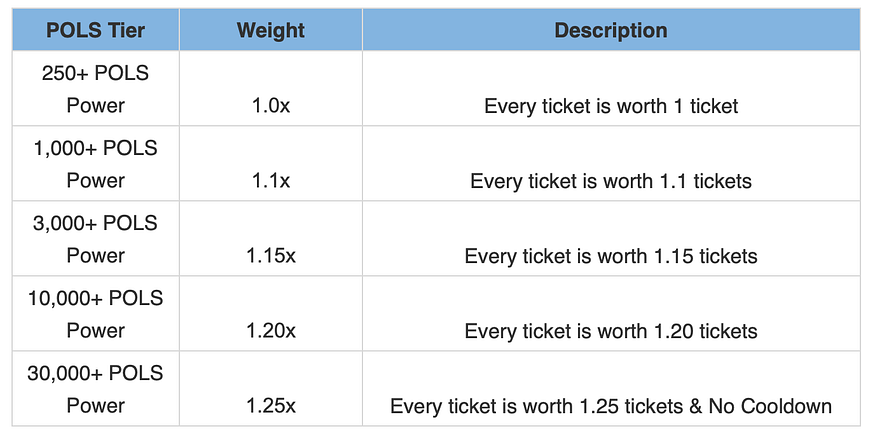
Firstly, users are eligible to invest in the projects only after they have purchased and held POLS for more than 7 days, or immediately pledged them for more than 7 days. KYC authentication is required for users to take part in project financing on Polkastarter. The threshold for the pledge is high. The total revenue of users will be calculated in different weights for different tiers of OPLS held or pledged. After participating in IDO, users will have a 7-day cooling-off period. They can continue the next IDO project till the cooling-off period ends.
According to Polkastarter’s rules, the project needs to register on the platform and fill in the information to apply for financing. Polkastarter Council investigates and reviews the applications. Each council member has the right to vote. Projects that have obtained more than 60% of the votes of the Council will be approved for launch. Once the projects are approved, they will be given detailed instructions on preparing IDO, and the whole process is faster.
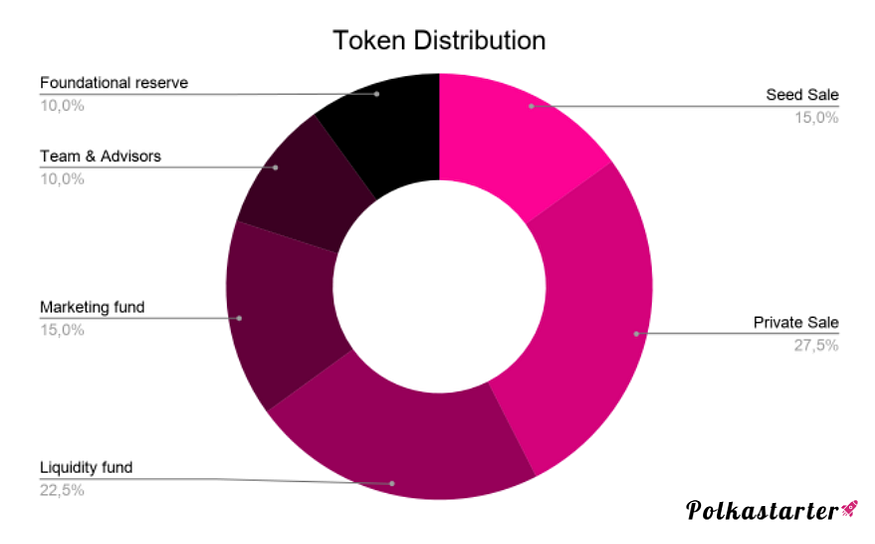
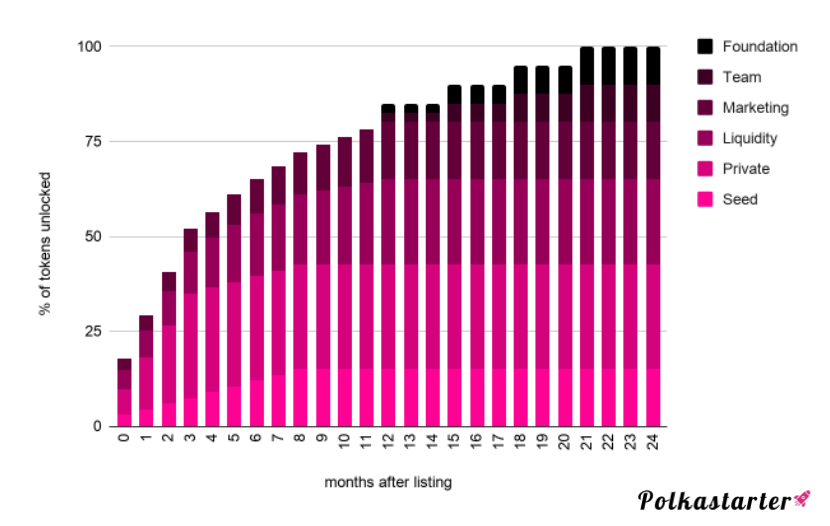
Token Distribution:
IDO Revenue:
-
WNDR: Wonderman Nation
-
OKLP: OkLetsPlay
-
MAPE: Mecha Morphing
-
FCD: FreshCut Diamond
Seedify.fund
Seedify is an incubator and IDO (or IGO) platform for blockchain games and metauniverse start-ups that evolved from a DAO. On the platform, community members completely vote on the use of funds to support innovators and project developers. Its complete support system contributes to blockchain games and metauniverse projects. Seedify released the Seed Staking in early April 2022. The new function enables SFUND, Seedify’s native token, to obtain seed tokens free of charge from the metauniverse project incubated and supported by it.
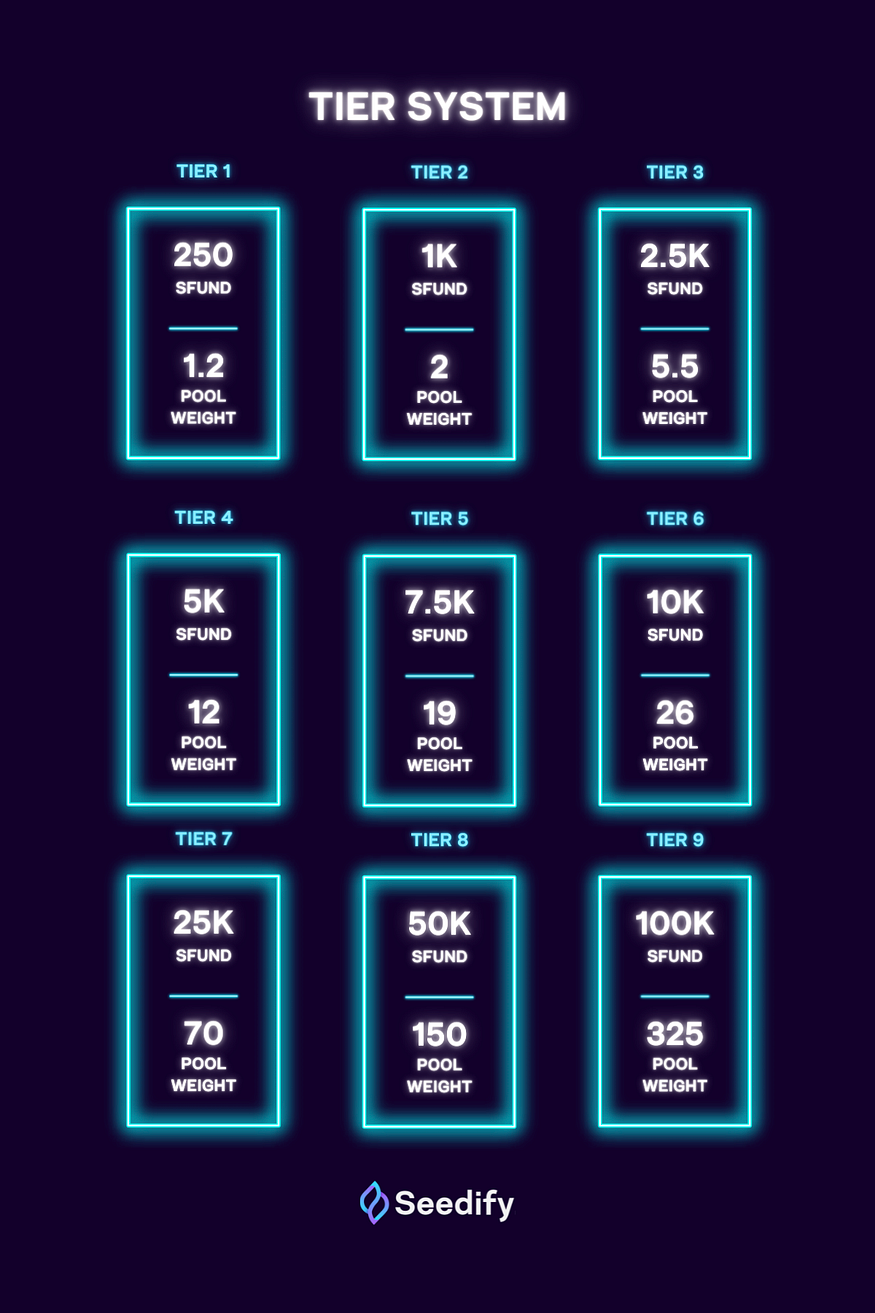
KYC authentication is a must for users before they are qualified for the next operations. After pledging SFUND, users are eligible to participate in IDO. The more SFUND users have, the more tokens they will get from the initial game product. Seedify allocates tokens in a form of lot drawing for users in the lowest layer (i.e. Tier 1) and provides them with access to the allocation options in Tier 2 according to the pool weight formula shown below.
Projects expecting to join the Seedify incubation program (IDO) must first apply on the Seedify website. Approved projects can raise funds from Seedify’s DAO vault. In addition to funding, these projects will also receive continuous support and guidance from community feedback and expert advice. After the initial incubation, the projects can initiate IDO in Seedify; Projects can also apply for IDO directly without incubation. Compared with other IDO platforms, Seedify’s project incubation process gradually increases its experience and value. In this way, it is not only selecting high-quality projects but also cultivating them. which will increase users’ income in the long term; However, it remains to be seen whether this kind of project will eventually become a centralized financing model despite the participation of DAO since they are deeply connected with the IDO platform.
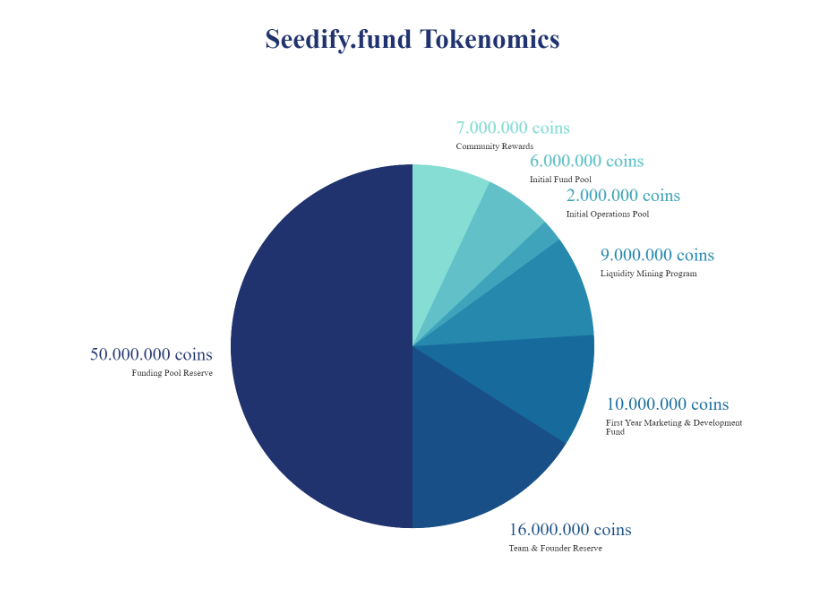
Token Distribution:
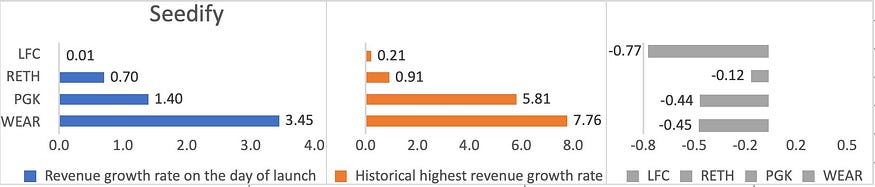
IDO Revenue:
-
RETH: Realms Of Ethernity
-
PGK: PenguinKarts
-
WEAR: MetaWear
-
Supernova(LFC)
Conclusion
It can be concluded that these decentralized financing platforms have distinctive advantages and disadvantages in different dimensions. In summarizing, these IDO platforms stand out with the widest popularity because of the following factors:
-
Engage more people in the investment of early encryption projects. The IDO platform allows community users the opportunity to invest in start-up projects, handle the selling pressure of traditional venture capital or big investors, and get the benefits of early-stage projects.
-
Enable more flexible involvement and withdrawal of investors through smart contracts. Some IDO platforms have loose withdrawal rules, and they encourage users to hold tokens through incentives rather than rules.
-
Use the wisdom of crowds to add value to investment through the DAO decision. DAO brings together people of different identities around the world. Inspired by collective goals, Dao can better make valuable decisions and contributions.
-
Make investment more transparent. Some IDO platforms use DAO communication and voting to manage investment funds or vaults and make and implement decisions. Many on-chain behaviors, such as voting with multiple signatures or token pledges, are must-have steps to fund projects. Therefore, the movement and decision of funds are open and transparent, further reducing the risk of investment.
However, the analysis of the above-decentralized financing platform also reveals some drawbacks:
-
High cost and complicated lottery winning mechanisms cause an unfriendly user experience. Some IDO platforms have high barriers to entry, such as complex KYC mechanisms, expensive token holding or pledges, and difficult rules of the whitelist. In addition, although the complex lottery winning mechanism aims to incentivize users and protect fairness whenever possible, it still limits users’ understanding and engagement.
-
The threshold for project application is high and the financing process is opaque. Most IDO platforms audit the application, which separates the project and investors, making themselves a centralized third party. Thus, it not only causes inconvenience to the projects but also makes slows down the launch of projects.
-
DAO members have fewer flexible roles, so some of them have low decision efficiency. Most DAO platforms have a fixed membership structure, and there are no separate roles so they don’t have the division of labor and teamwork; they simply vote; its flexibility is limited; thus they are unable to make decisions beyond the traditional one through the wisdom of crowds and elite’s insight.
veDAO is precisely built on the continuous analysis and experience from the top IDO platform. Besides, it also optimizes their strength and research and addresses the industry’s weaknesses and pain points. veDAO and its community members have the confidence to build an entry-level, fair, and accessible decentralized investing and financing platform for all, making it the source of future top projects.
veDAO’s Solution
By setting up a complete operating mechanism, veDAO builds an open, transparent, unmanaged, unlicensed, and multi-chain investing and financing market to power a professional, efficient, large-scale collaborative, and autonomous investing and financing community.
veDAO is built on the governance and decentralized smart contracts of DAO. Whether the project can raise funds on the platform is entirely decided by veDAO community governance; voting governance, fund-raising process, token distribution, and income distribution are all available in a decentralized manner through smart contracts to achieve a truly decentralized IDO mode in all links. veDAO combines the advantages of the decentralized financing platform. Its flexible roles of members, the most active DAO, and the entry-level and simple lottery winning and application mechanism also address the problems which are common to decentralized investing and financing platforms.
Flexible roles of DAO membership
veDAO is completely owned and governed by DAO members since its establishment, so everyone can gain a fair return according to their own abilities. The merit of veDAO is to distribute the maximum and fair benefit. The diversified identify system, segment roles, and more flexible DAO enable members to give full play to their strengths. Each member can choose one or more roles depending on their abilities and needs to ensure each effort is rewarded. veDAO divides membership into six categories.
Those in need of financing can choose the role of financier; those wanting to invest can become the investor; those expecting to gain revenue through pledge should become the pledging user. In addition, members can choose to be voters, referees who identify projects, and business managers who connect with the projects. The multiple role system is veDAO’s way to maximize the use of DAO: it brings together different roles. Members make the decision for their own interests, and each separate decision forms the wisdom of the crowds, which redefines the model of production and distribution of interests to avoid Matthew’s effect.
The transparent and efficient operation mechanism
Also, through the segmented DAO autonomous governance, veDAO fully combines the wisdom of the public and the insight of the elite. The elite investors become a part of DAO to build the wisdom of crowds; they are neutral, objective and professional in determining projects and creating new investing and financing patterns that remain true to Web3.
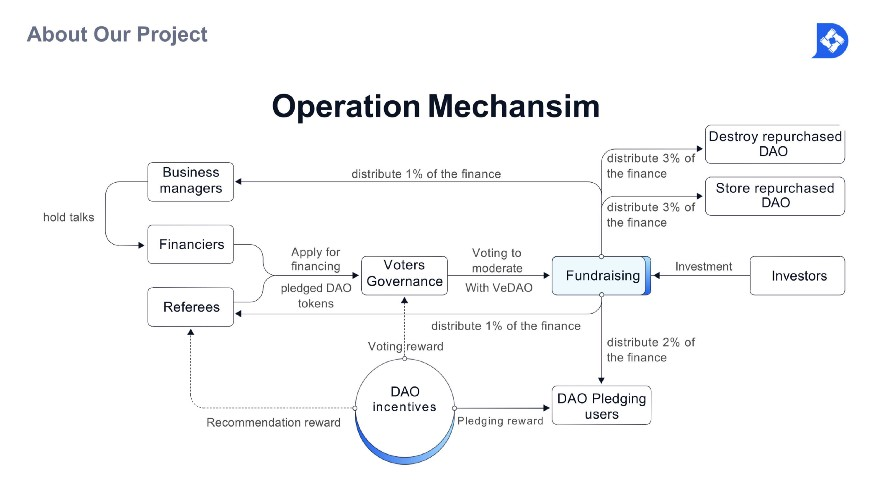
veDAO provides different types of rewards for users in different roles. It can not only satisfy the needs of the projects and investors. Pledging users can earn income from mining, voters obtain revenue from voting, referees get 1% of income for recommendations and another 1% for financing, and business managers get 1% for financing.
veDAO ensures effective voting governance by setting up a reward and punishment mechanism, so elites can stand out and gain better governance benefits. The voting power of voters is determined by the veDAO power and the voting weight. The voting weight is bound to the voter’s non-negotiable wallet address. Each voter has the same initial voting weight. The voters who make correct votes will have a higher voting weight, and those who make wrong votes will have a lower voting weight. As more elites come to the fore, veDAO will allow voters to delegate their voting power to proxies — the damocleser who vote on behalf of the voters. Only damocleser can be delegated by the voters.
[*] Token Distribution and Tokenomics are sourced from the white papers published on corresponding IDO platforms
[**] The data used to calculate IDO’s initial price, the closing price on the initial day, and the current closing price (subject to June 6) are sourced from the official website of the IDO platform, such as cryptorank.io, and coinmarketcap.com





