
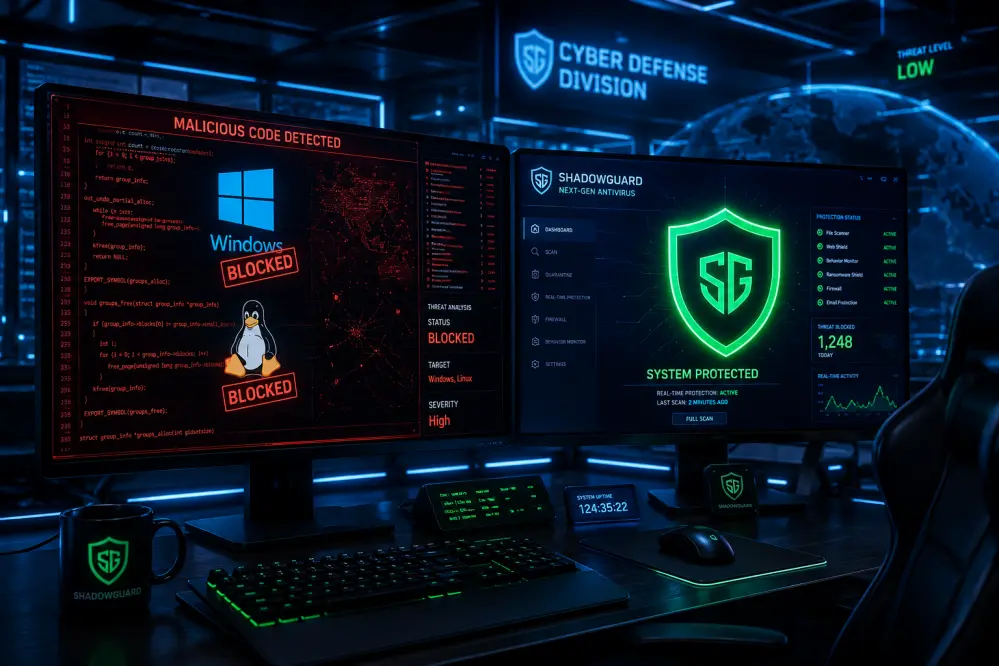
Unveiling SkyC2: How SkyAuctus is Engineering Next-Gen Defenses Against Cross-Platform RATs.
In the rapidly evolving landscape of cyber threats, cross-platform malware has become the holy grail for threat actors. Advanced Persistent Threats (APTs) and modern Remote Access Trojans (RATs) no longer confine themselves to a single operating system. Recognizing this critical shift, SkyAuctus, a premier cybersecurity research and IT firm based in Bangladesh, has been conducting extensive internal threat-modeling and reverse-engineering on a sophisticated Command and Control (C2) simulation framework known as SkyC2.
Our objective? To understand the deep architectural mechanics of next-generation malware in order to build an impenetrable, multi-OS antivirus defense system capable of neutralizing them in real-time.
The Anatomy of the Threat: Understanding SkyC2
SkyC2 represents a highly versatile, multi-platform Remote Access Trojan (RAT) and C2 framework. During our active threat analysis, the research wing at SkyAuctus mapped out how this specific architecture poses a significant threat across various environments:
-
Universal OS Targeting: Unlike traditional malware, SkyC2 exhibits native execution capabilities across Windows 10, Windows 11, and all major Linux distributions (including Ubuntu, Debian, CentOS, and Arch).
-
Stealth & Persistence: It utilizes advanced evasion techniques to bypass standard signature-based detection, establishing deep persistence within system processes.
-
Remote Execution Blueprint: Once a system is compromised, a C2 framework like this allows threat actors to execute remote commands, exfiltrate sensitive data, and maintain silent surveillance over the infected network.
Reverse-Engineering for Better Defense
At SkyAuctus, our philosophy is clear: To defeat an advanced adversary, you must understand their blueprint.
Our research into SkyC2 is entirely defensive. By simulating and pausing the behavior of this multi-platform threat within controlled, isolated sandbox environments, our engineering team has successfully mapped out its indicators of compromise (IoCs), network beacons, and memory injection patterns.
We are leveraging these findings to develop a proprietary, lightweight Next-Generation Antivirus (NGAV) Engine.
Engineering the Shield: The SkyAuctus Multi-OS Antivirus
Standard antivirus solutions often fail when malicious binaries shift from Windows PE formats to Linux ELF binaries. The upcoming defense ecosystem from SkyAuctus is being built from the ground up to solve this exact bottleneck:
-
Cross-Platform Behavioral Analysis: Our engine doesn’t just look at file signatures; it monitors real-time process behavior across both Windows and Linux kernels simultaneously.
-
Anti-C2 Beaconing Rules: By analyzing the communication patterns of SkyC2, we have developed heuristic rules that can instantly detect and block unauthorized outbound C2 server connections before data exfiltration occurs.
-
Kernel-Level Protection: Tailored defenses designed specifically to secure core operations in Windows 10/11 and protect critical system paths across diverse Linux distributions.
Conclusion
The boundary between operating systems is blurring for modern cybercriminals, and modern defense strategies must adapt. The research being conducted at SkyAuctus on frameworks like SkyC2 is a testament to our commitment to global cybersecurity resilience. By proactively dissecting cross-platform threats, we aren't just reacting to the landscape—we are actively reshaping the future of digital defense.
Stay tuned to the official SkyAuctus channels for technical whitepapers and updates on our upcoming security solutions.






