Rome, the capital of Italy, is a large cosmopolitan city with an artistic, architectural and cultural history that has influenced the whole world and which dates back to almost 3000 years ago. Ancient ruins such as the Forum and the Colosseum testify to the power of the ancient Roman Empire. In Vatican City, home of the Catholic Church, there are St. Peter's Basilica and the Vatican Museums, which host masterpieces such as the Sistine Chapel frescoed by Michelangelo.
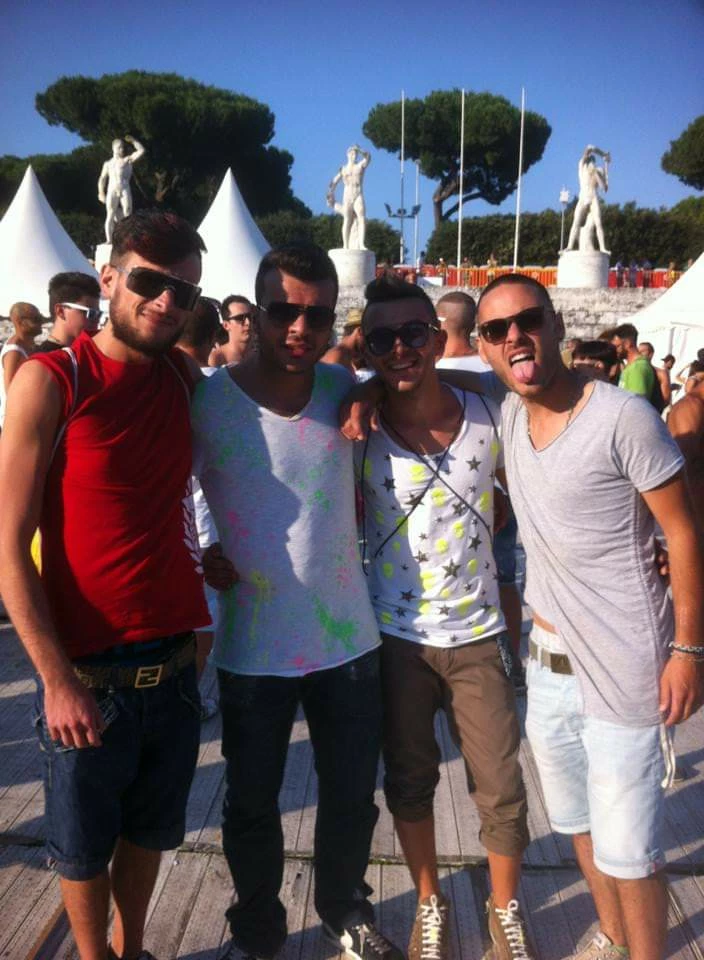
The "Pietro Mennea" stadium of the Marbles is a sports facility in Rome dedicated mainly to athletics.
Built between 1928 and 1932 and inaugurated as the Stadio dei Marmi, it stands inside the Foro Italico and was born as an extension of the fascist male academy of physical education for the daily training of its students.
From 12 September 2013, alongside its original name, the title was given to Pietro Mennea, the Italian sprinter who held the world record for 17 years on the 200 flat meters for 17 years.
The Cinecittà Studios are a complex of film studios in Rome and represent the symbol of the Italian film industry.
Many famous Italian directors and actors have worked at Cinecittà such as Federico Fellini, Ettore Scola, Sergio Leone, Roberto Benigni, Luchino Visconti, Anna Magnani, Alberto Sordi, Vittorio De Sica, Sophia Loren, Gina Lollobrigida, Claudia Cardinale, but also directors and actors foreigners, including Martin Scorsese and Francis Ford Coppola.
Over 3,000 films have been shot here, 90 of which received an Oscar nomination, won by as many as 47 films.
In July 2017 the Cinecittà Studies returned under public control managed and coordinated by Istituto Luce Cinecittà, a public company, fully owned by the Ministry of Economy and Finance, which takes care of its expansion and enhancement.
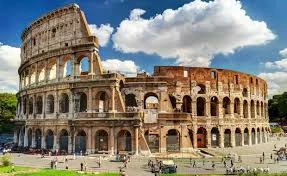
The Colosseum, originally known as Amphitheatrum Flavium (in Italian: Anfiteatro Flavio) or simply as Amphitheatrum, is the largest amphitheater in the world, located in the center of the city of Rome. Capable of holding an estimated number of spectators between 50,000 and 87,000 units, it is the most important Roman amphitheater, as well as the most imposing monument of ancient Rome that has come down to us, known worldwide as a symbol of the city of Rome and one of the symbols of Italy.





