The city of Naples, in southern Italy, stands in the heart of the bay of the same name next to Vesuvius, the volcano still active today and known for having destroyed the ancient Roman city of Pompeii. Dating back to the second millennium BC, Naples has centuries of art and architecture history behind it and its cathedral, the Cathedral of San Gennaro, is full of frescoes. The most interesting historical places are the sumptuous Royal Palace and the Maschio Angioino, a 13th century building.
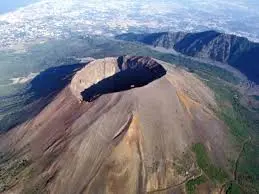
Vesuvius is a volcano located in Italy, in a dominant position with respect to the Gulf of Naples. It is one of the two active volcanoes in continental Europe and one of the most studied and dangerous in the world due to the high population of the surrounding areas and its explosive characteristics.
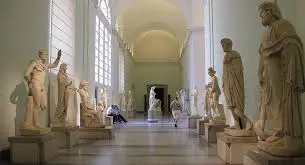
The National Archaeological Museum of Naples is a historic museum, among the most important in the Neapolitan city.
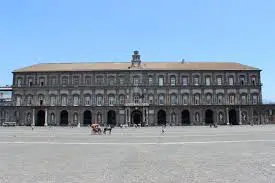
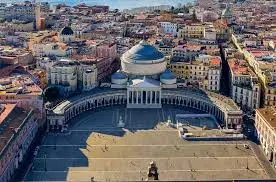
The Royal Palace of Naples is a historic building located in Piazza del Plebiscito, in the historic center of Naples, where the main entrance is located: the entire complex, including the gardens and the San Carlo theater, also overlooks Piazza Trieste and Trento, Piazza del Municipio and via Acton.
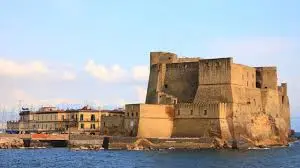
The Castel dell'Ovo is the oldest castle in the city of Naples and is one of the elements that stand out most in the famous panorama of the gulf. It is located between the districts of San Ferdinando and Chiaia, facing via Partenope.
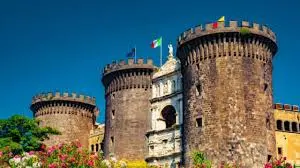
Castel Nuovo, also called Maschio Angioino or Mastio Angioino, is a historic medieval and Renaissance castle, as well as one of the symbols of the city of Naples.
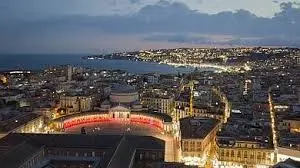
Piazza del Plebiscito is a square in Naples positioned at the end of via Toledo, as soon as it passes Piazza Trieste and Trento.
Naples is an Italian municipality of 954 244 inhabitants, third in Italy by population, capital of the Campania region, of the metropolitan city of the same name, and the center of one of the most populous and densely populated metropolitan areas in Europe.
Founded by the Cumans in the eighth century BC, it was among the most important cities of Magna Grecia and played a significant commercial, cultural and religious role towards the surrounding Italic populations. After the collapse of the Roman Empire, in the 8th century the city formed an independent duchy independent of the Byzantine Empire; later, from the thirteenth century and for about six hundred years, it was the capital of the Kingdom of Naples; with the Restoration it became the capital of the Kingdom of the Two Sicilies under the Bourbons until the unification of Italy.
Seat of Federico II, the oldest university in the world born through a state provision, it also hosts the Orientale, the oldest university of sinological and oriental studies of the continent, and the Nunziatella, one of the oldest military academies in the world elected historical heritage and cultural heritage of Mediterranean countries by the Parliamentary Assembly of the Mediterranean.
Place of origin of the Neapolitan language, it has covered and plays a strong role in numerous fields of knowledge, culture and collective imagination.
Protagonist of humanism and enlightenment center of European level, it has long been a global reference point for classical music and opera through the Neapolitan music school, giving rise, among other things, to the opera buffa.
City with an imposing tradition in the field of figurative arts, which has its roots in the classical age, has given rise to original architectural and pictorial movements, such as the Neapolitan Renaissance and the Neapolitan Baroque, caravaggism, the Posillipo school and liberty Neapolitan,
as well as minor arts but of international importance, such as Capodimonte porcelain and the Neapolitan crib.
It is at the origin of a distinctive form of theater, a world-famous song and a peculiar culinary tradition that includes foods that take on the role of global icons, such as Neapolitan pizza, and the art of its pizza chefs that has been declared by UNESCO intangible heritage of humanity.
In 1995 the historic center of Naples was recognized by UNESCO as a world heritage site, for its exceptional monuments, which testify to the succession of cultures from the Mediterranean and Europe. In 1997 the Somma-Vesuvius volcanic apparatus was elected by the same international agency (with the nearby Golden Mile, in which the eastern quarters of the city also fall) among the world's biosphere reserves.





