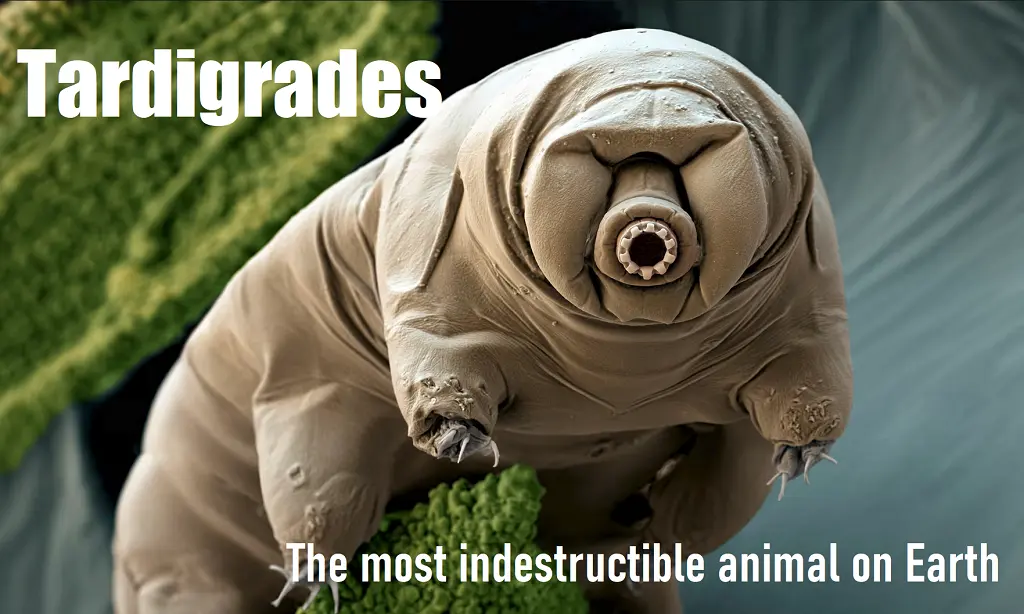
My son had an assignment at his school, where he has to talk about a bug, insect or a microorganism that he likes. I have been reading about these near-microscopic animals that can survive extreme conditions and can be almost considered as immortal. After showing few of the news articles and YouTube videos on this moss piglets I was able to drag his attention towards them.
Alright so with out wasting any time lets talk about these water bears.
Tardigrades or Moss Piglets or Water Bears are small segmented invertebrates of the size 0.05mm - 1.2mm and can be found in almost every habitat of the World.
They have over 900 described species and can be found living in:
- Film of water or Mosses
- Sand Dunes
- Sediments
- leaf Litter
- Soil
They can very well survive on Mountain Tops with low pressure and low oxygen, to the very Bottom of the Sea with very high pressure and low temperature, even in conditions of total-dehydration, long famine, even in Outer space with high radiation and vacuum.
They are also found in the tropical rainforests, freshwater, semiaquatic terrestrial environment, to the Antarctica.
Go ahead and freeze them, heat them, blast them into vacuum of an empty space, however you can never kill them, they will waddle away perfectly intact on their eight stubby little legs. Tardigrades do this by converting their insides to gel when they are hit by an unavailable condition. They enter a form of hibernation called biostasis when they are stressed.
Researchers introduced Tardigrade proteins to the human cells in lab environment to make an astonishing discovery that the human cells slowed down and entered a stage sort of hibernation - just like those done by the 'indestructible' creatures. When tardigrades get stressed, their whole body begins to slow down, including on a microscopic level. This discovery is a massive breakthrough in the field of biology which can help us fight the war against human aging.

Where can we find them?
They are everywhere. The most easy place you can look for is in the films of water on lichens and mosses.






