
Roman Bridge Building During the Empire
How Roman engineers used arches, concrete, and clever construction techniques to connect an empire.
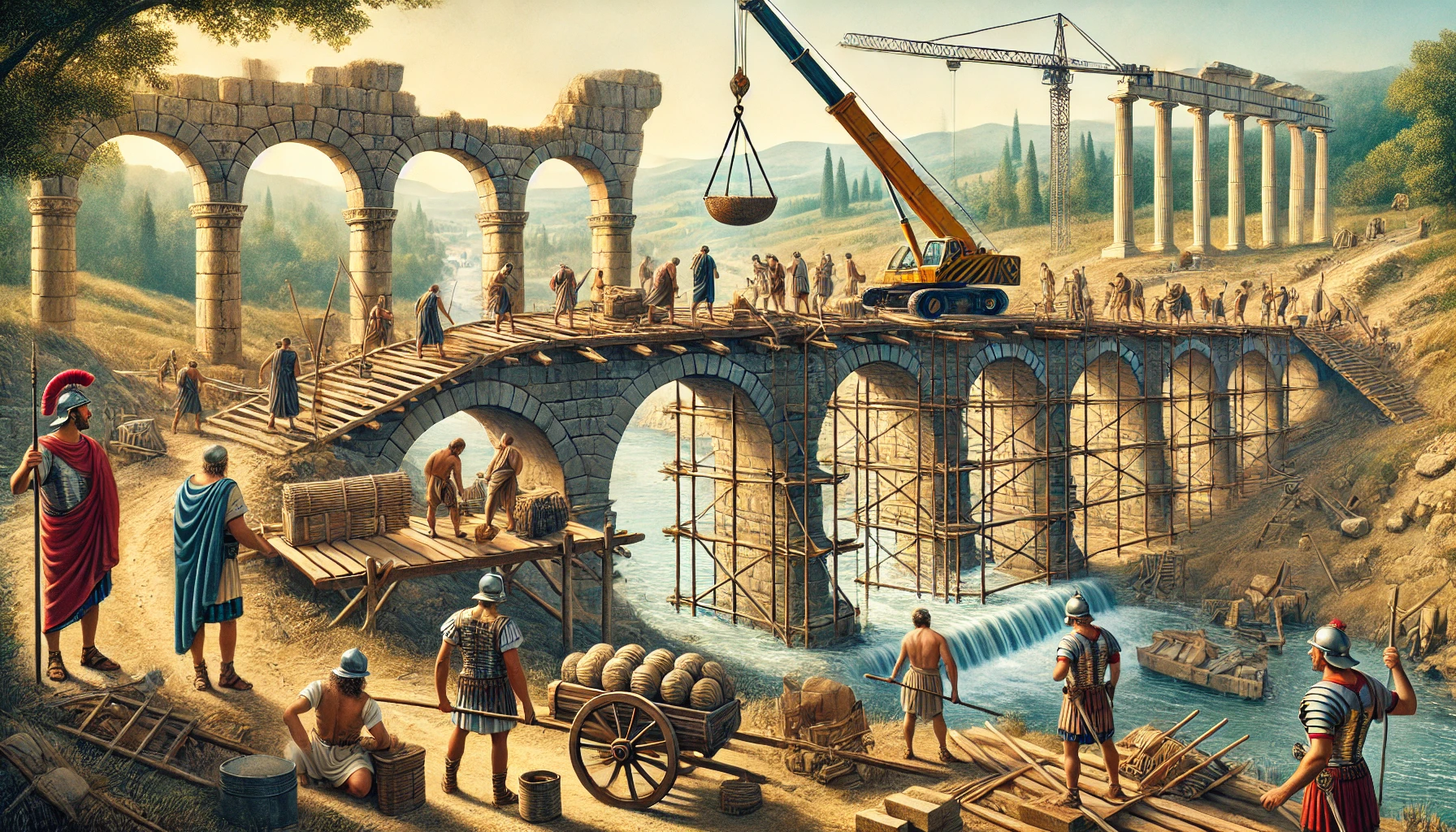
At the height of the Roman Empire, roads were essential to the movement of armies, merchants, officials, and ordinary travelers. But roads could not simply stop at a river. To connect the enormous territories controlled by Rome, engineers had to find ways to carry roads across streams and major rivers. The Romans became remarkably skilled at bridge building. They produced structures that were strong enough to survive floods, heavy traffic, and centuries of use. Their bridges were not only practical transportation links but also impressive demonstrations of Roman engineering.
Roman bridge building developed over many centuries. Early bridges were often made from wood, which had the advantage of being relatively quick to construct and easy to dismantle. This was especially useful for military campaigns. Julius Caesar famously demonstrated this approach in 55 BCE, when his army constructed a wooden bridge across the Rhine in only about ten days. The bridge allowed Roman troops to cross the river before it was dismantled behind them in order to appear almost by magic before disappearing - something that alarmed Caesar's enemies!
During the imperial period, however, permanent stone bridges became increasingly important. Roman engineers favored the arch, a design that allowed them to construct strong structures without relying on long horizontal beams. An arch works by transferring weight outward and downward through its wedge-shaped stones, known as voussoirs. The final central stone, the keystone, helped lock the arch into position. Because stone performs particularly well under compression, the arch was an excellent solution for building durable bridges. It is why we can see so many standing still today, thousands of years later!
Building a bridge began with its foundations. This was often the most difficult part because engineers had to work in or beside moving water. Where solid rock was unavailable, Romans could construct cofferdams. These temporary enclosures were made using wooden piles and other materials to hold back the water. Workers could then create a relatively dry working area and construct a strong pier foundation, sometimes using Roman concrete. This was one of their simplest yet most enduring creations, the real glue that held the republic and later Empire together.
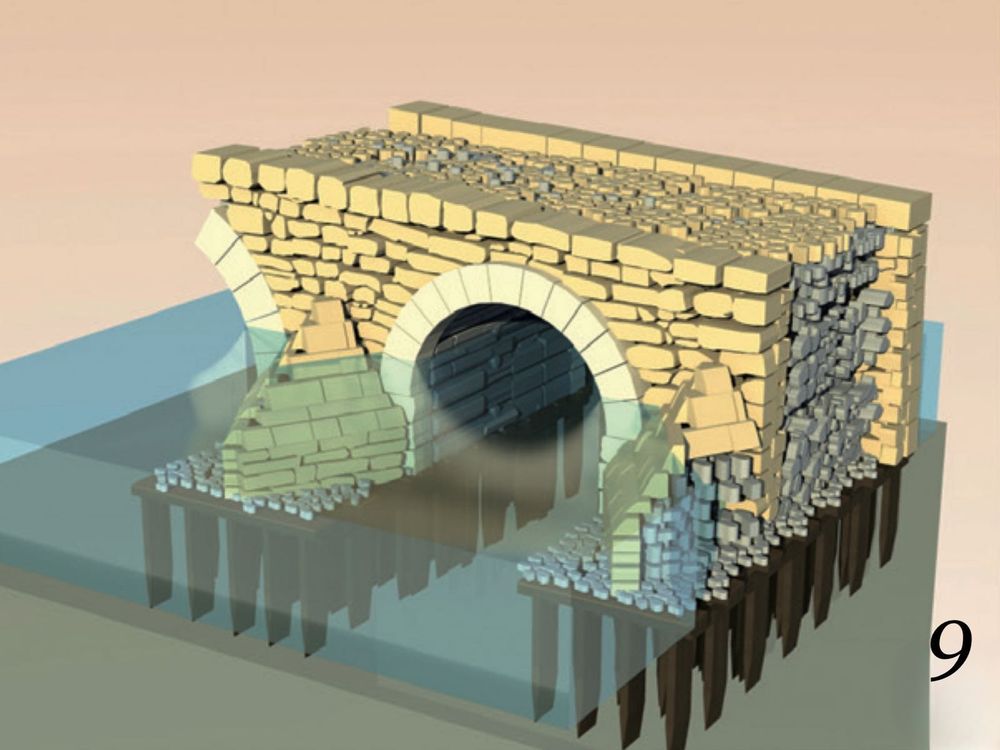
Roman concrete, known as opus caementicium, was another important part of their engineering success. Roman builders combined materials including lime, aggregate, and volcanic material called pozzolana. Certain forms of this concrete could resist water, making them particularly useful for foundations, bridge piers, and other structures exposed to moisture.
Once the foundations and piers were ready, workers could construct the arches. Wooden frames called centring temporarily supported the stones while an arch was being assembled. Workers placed the voussoirs around the curve until the keystone could be inserted. When the arch was structurally secure, the wooden centering could be removed, leaving the completed stone arch to support itself.
Some Roman bridges became enormous. Trajan's Bridge over the Danube, completed during the reign of Emperor Trajan in the early second century CE, was one of the most ambitious. It combined substantial stone piers with a timber superstructure and stretched for roughly half a mile. Its construction demonstrated how bridge building could become an important tool of imperial power, allowing Roman armies and supplies to cross a major frontier river.
Other bridges were designed to remain in service for generations. The Alcántara Bridge in modern Spain is a famous example of Roman bridge engineering. Built in the early second century CE, it used massive stone arches and was positioned in a location that helped protect it from the most destructive river conditions. Its survival illustrates both the quality of Roman construction and the importance of maintaining useful infrastructure after the Roman period.
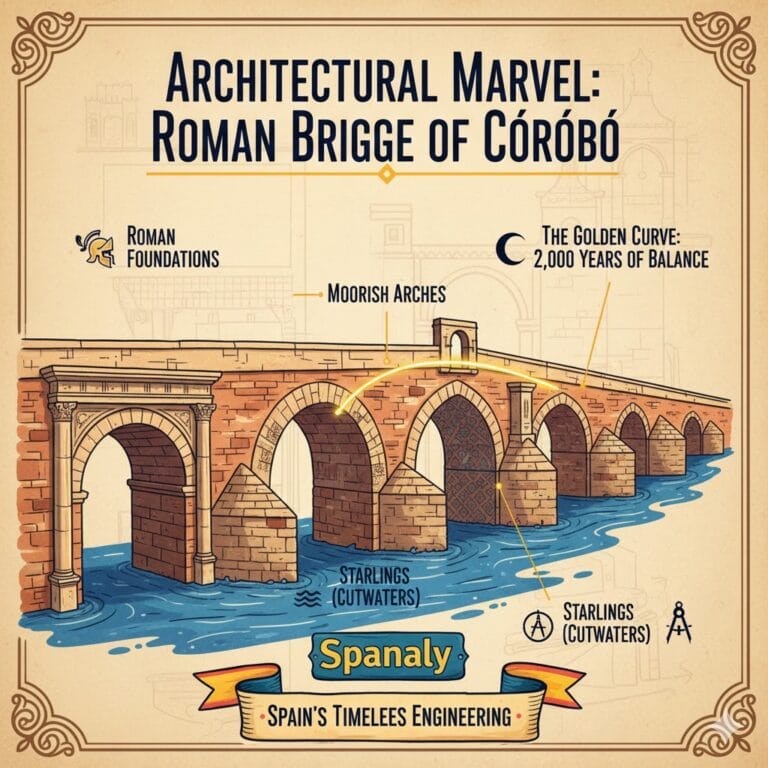
Roman bridges therefore served a purpose far beyond simply getting people from one riverbank to another. They helped integrate an empire stretching across Europe, North Africa, and the Middle East. Roads connected distant provinces, while bridges allowed those roads to cross the natural obstacles that otherwise slowed transportation. Soldiers could move more efficiently, merchants could transport goods, and officials could travel between cities.
The Roman achievement was not based on one invention. Instead, it came from combining surveying, materials, mathematics, practical experience, and careful construction. Their use of arches, cofferdams, concrete, and temporary wooden supports allowed them to solve difficult engineering problems with remarkable effectiveness. Many Roman bridges have disappeared, but surviving examples still provide evidence of the engineering knowledge that helped Rome build and maintain one of the ancient world's largest empires.
I hope you enjoyed this info as much as I did, and as always
I hope your time was wellspent
Sincerely,
Rom






